EN


10-Inch Solid Tires for Electric Scooters: A Fitment Guide for Replacement Buyers
Buying a 10 inch solid tire electric scooter replacement looks simple until the old tire is off the wheel. “10 inch” describes only one part of the fitment picture. For distributors, repair shops, and fleet buyers, the dependable approach is to compare the full tire marking, rim profile, clearance, and scooter version before placing an order. This guide turns that process into a practical buying checklist.
A solid tire is chosen primarily to avoid punctures and tube-related downtime. The trade-off is that a solid construction can feel firmer than a pneumatic setup, so the correct size, tread profile, and installation plan matter. Treat every 10 inch solid tire electric scooter request as a measurement-and-application check, not as a diameter-only purchase.
Start with the complete size marking, not “10 inch” alone
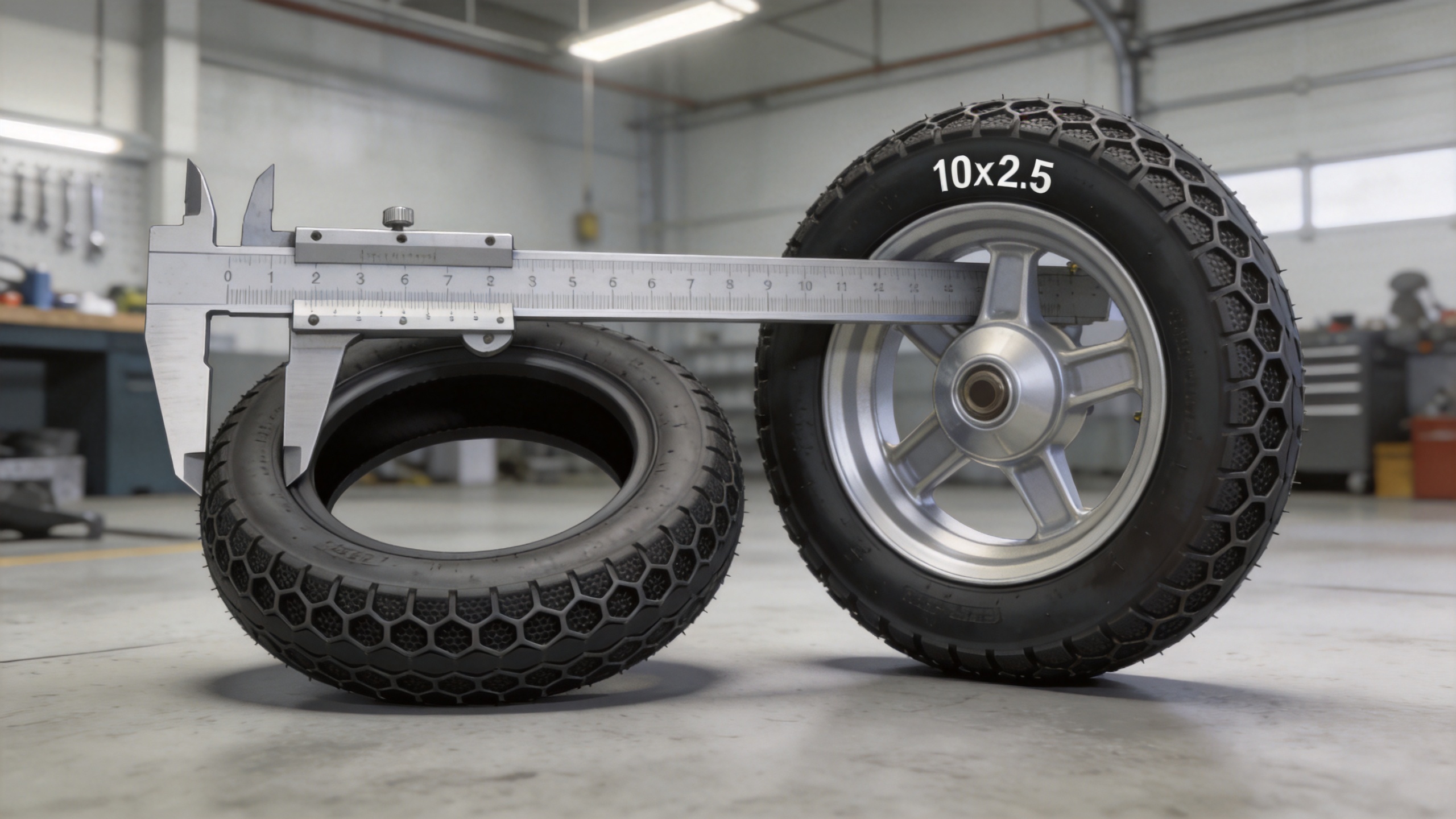
A buyer may describe an old tire as a 10x2 5 tire, 10×2.50, or 10×2.50-6.5. These descriptions can refer to closely related sizing conventions, but they should not be assumed to fit every 10-inch wheel. Search results also show 10×2.125, 10×2.70-6.5, and 10×3.0 options in the same broad category. That is why the full sidewall marking and a clear wheel photo are more useful than the outside diameter by itself.
When evaluating a 10 inch solid tire electric scooter replacement, record:
- the complete marking on the removed tire, including width and any rim-reference suffix;
- the measured rim bead area and wheel diameter where practical;
- the old tire’s overall width and the available fork or swingarm clearance;
- whether the wheel is front or rear; and
- the scooter brand, model, and version or production revision.
For example, a 10×2.5 request is not automatically interchangeable with a 10×2.125 tire simply because both are called 10-inch tires. The width, bead geometry, and clearances may differ. Confirming these details before procurement is usually faster than managing a return after installation begins.
Confirm wheel position and scooter version before selecting a solid tire
Front and rear wheel assemblies may have different clearance, brake hardware, motor-cable routing, or fender geometry. A 10 inch solid tire electric scooter may physically mount on a wheel but still create rubbing if its width or shoulder shape does not suit that position. Ask the end user or workshop to identify the location of the tire being replaced and send a photo of the complete wheel assembly.
Model names deserve the same level of care. A product description may mention a compatible model family, but model-year changes and regional versions can alter wheel components. For bulk purchasing, keep a simple compatibility record that ties each SKU to the customer’s stated model, tire marking, wheel position, and verification photo. This creates a traceable process for future repeat orders.
How honeycomb solid tires change the replacement decision
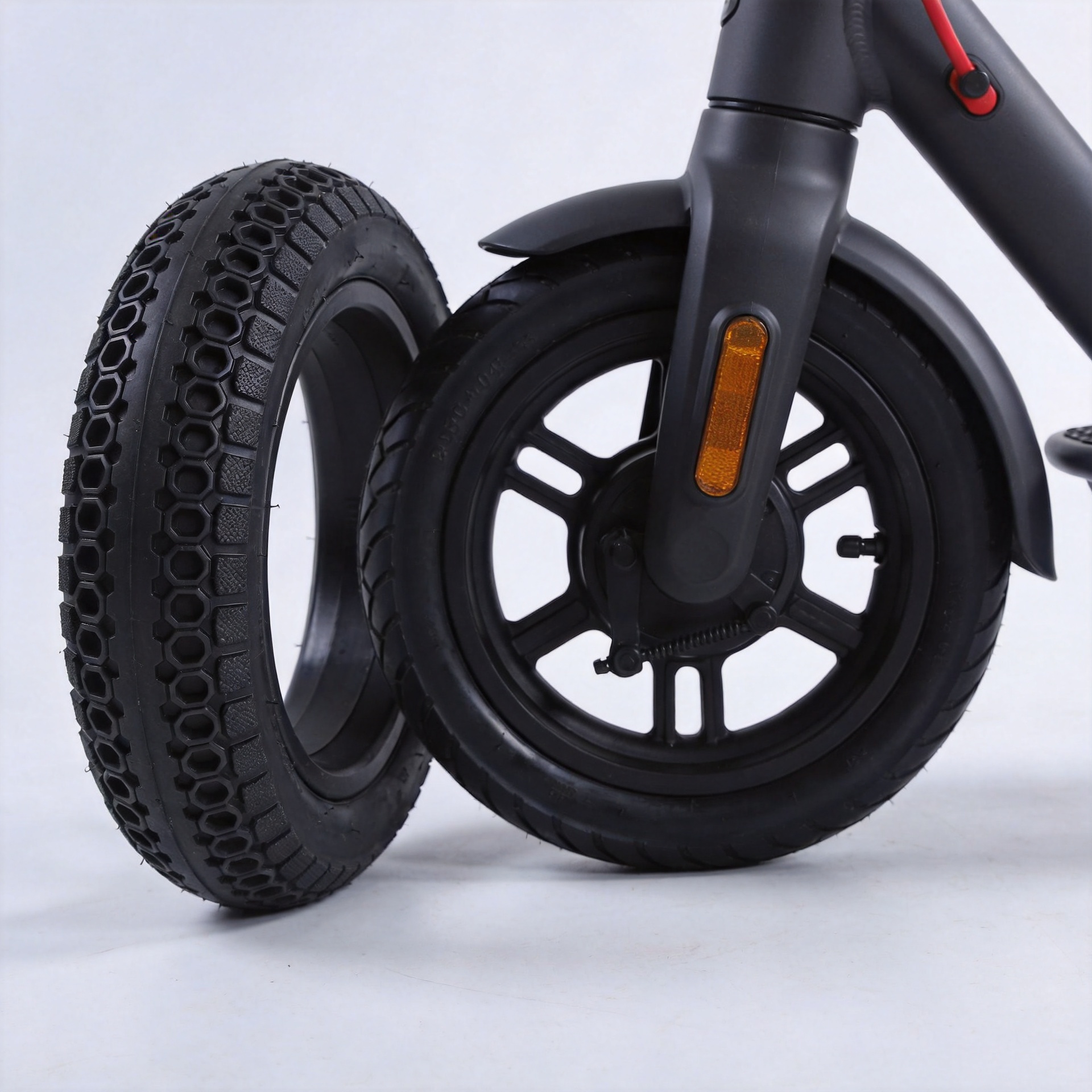
Many electric scooter solid tires use a honeycomb or hollow-cell internal pattern. The pattern is designed to provide some compliance while retaining the puncture-resistant advantage of a solid construction. It does not make all solid tires identical: tire width, rubber formulation, tread design, and the scooter’s suspension all affect the riding result.
For buyers moving from pneumatic tires, set realistic expectations. A solid tire can reduce service interruptions related to punctures, but ride feel, grip, and installation effort should be considered for the actual route and speed profile. Avoid promising that a 10 inch solid tire electric scooter will behave exactly like an air-filled tire. Instead, compare the duty cycle: shared fleets and commuter repair channels may prioritize reduced downtime, while other users may put greater weight on comfort or wet-condition performance.
A practical comparison: 10×2.5 fitment versus nearby size options
| Check point | Why it matters | What to request before ordering |
|---|---|---|
| Full tire code | Distinguishes a 10x2 5 tire from nearby width or rim variants. | Sidewall photo with every character readable. |
| Rim and bead profile | Determines whether the tire can seat correctly. | Wheel photo and, when needed, rim measurements. |
| Wheel position | Front and rear clearances may not match. | Front/rear designation and assembly photo. |
| Model version | Names alone may cover several wheel configurations. | Model label, version, or purchase-year information. |
| Tread and route | Helps align the tire with intended use. | Typical surface, load pattern, and service priorities. |
This comparison is especially useful when a purchasing team is sourcing several electric scooter solid tires at once. It separates confirmed matches from requests that need more information, helping avoid a single generic “10-inch” SKU being applied to incompatible wheels.
Use a supplier-ready purchase brief
For a faster quotation and fitment review, send a purchase brief with the following fields: required quantity; complete old-tire marking; scooter brand and exact model; front or rear position; clear photos of the tire and wheel; target market; and any packaging or repeat-order requirements. If a workshop has already removed the tire, add rim width and the available clearance near the fork, fender, or motor housing.
One available option for a verified 10×2.5 application is the 10 Inch 10×2.5 Max G30 honeycomb solid tyre. Use the linked product as a starting point for a fitment conversation, then compare the buyer’s wheel and model information with the stated application before finalizing the order. The product link does not replace confirmation for another scooter version or a different wheel specification.
Installation and post-fit checks reduce avoidable returns
A correctly selected 10 inch solid tire electric scooter still requires appropriate installation. Solid tires can need controlled heating or specialized fitting tools depending on their design; follow the tire and scooter manufacturer’s applicable instructions and use trained service personnel. Do not force a tire onto an unverified rim, as this can damage the tire, wheel, or cable routing.
After fitting, rotate the wheel by hand and check for consistent clearance around the fork, fender, brake components, and motor cable. Confirm that the tire is seated evenly, that the wheel turns freely, and that braking and steering components operate normally before returning the scooter to service. A short controlled test should follow workshop safety procedures.
Final checklist for replacement buyers
- Match the full sidewall marking, not only the 10-inch diameter.
- Verify whether the requested 10x2 5 tire uses the same rim-reference format as the removed tire.
- Confirm scooter model, version, and front/rear wheel position.
- Review width and clearance with wheel photos before ordering.
- Choose electric scooter solid tires based on downtime priorities, installation capability, and expected riding conditions.
- Keep the confirmed fitment record with the purchase order for repeat buying.
With that information in hand, a 10 inch solid tire electric scooter replacement becomes a controlled purchasing decision rather than a guess based on a broad size label. For B2B buyers, a more reliable result comes from documenting the fitment details once and using that record to streamline future replacement orders.