EN


Brushless Scooter Motor Supplier Questions for B2B Replacement Projects
For a distributor, repair-network buyer, or fleet service team, ordering a brushless scooter motor is rarely a matter of matching a voltage label and placing an order. A replacement project can fail on a small mismatch in the axle, wheel rim, cable exit, phase-wire order, Hall-sensor plug, or controller logic. That is why a supplier inquiry should turn a broad request for a brushless scooter motor into a documented fitment and supply plan before a purchase order is released.
This checklist is written for B2B replacement work, where the real question is not simply whether a motor can spin. It is whether the supplied scooter motor parts can be installed consistently across the target fleet or inventory, supported with clear records, and replenished without creating another compatibility problem.
Start with the replacement project, not the catalog
Send the supplier the exact scooter model, model year or revision where known, motor location, photos of the original motor and connector set, and the reason for replacement. A brushless scooter motor that looks similar to the old unit may still use a different rim profile, drop-out width, axle flat dimension, brake-disc mount, or cable length.
Ask the supplier to confirm the part number or a documented compatibility reference rather than relying on a product photograph. This is especially important when one product family has several controller revisions. Nominal voltage and wattage help narrow the search, but they are not fitment proof.
Ask for the electrical specification sheet
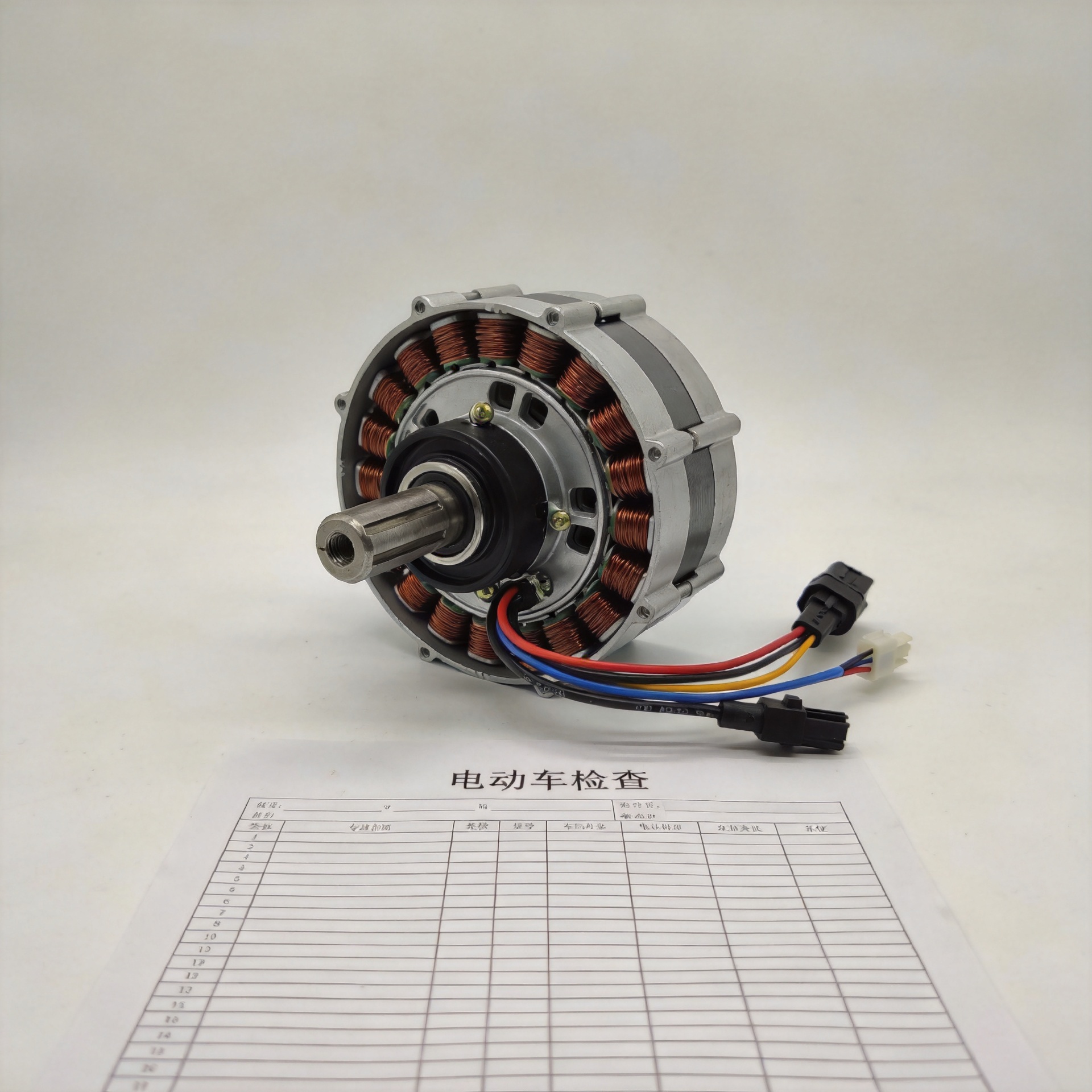
A complete inquiry for a brushless scooter motor should request the rated voltage, rated power, motor type, wheel or rim size, and controller compatibility. Then move beyond the headline values. Confirm whether the motor uses Hall sensors, how many phase wires and signal wires are supplied, the connector type and pin arrangement, cable exit direction, cable length, and any connector labels or wiring diagram available for the quoted version.
Use the controller as part of the compatibility review. The controller voltage range, current limit, connector family, and Hall-sensor arrangement all matter. A plug that physically mates can still have a different pin order. When the existing harness cannot be confirmed, request a sample or a clear wiring reference before approving volume production.
Turn mechanical fitment into a measurable checklist
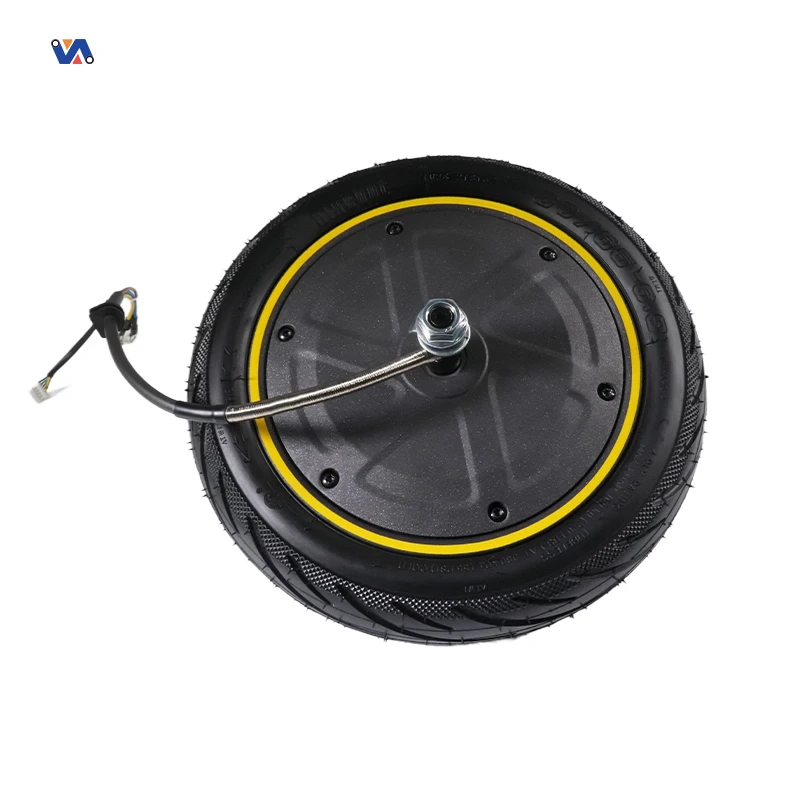
For scooter motor parts, mechanical details are often where replacement orders become costly. Ask for a drawing or a measurement table covering axle diameter and flats, axle length, dropout spacing, wheel diameter, tire compatibility, rim width, brake-disc mounting points, and cable-routing position. If the project uses a hub motor, clarify whether the quoted item includes the wheel assembly or only the motor core.
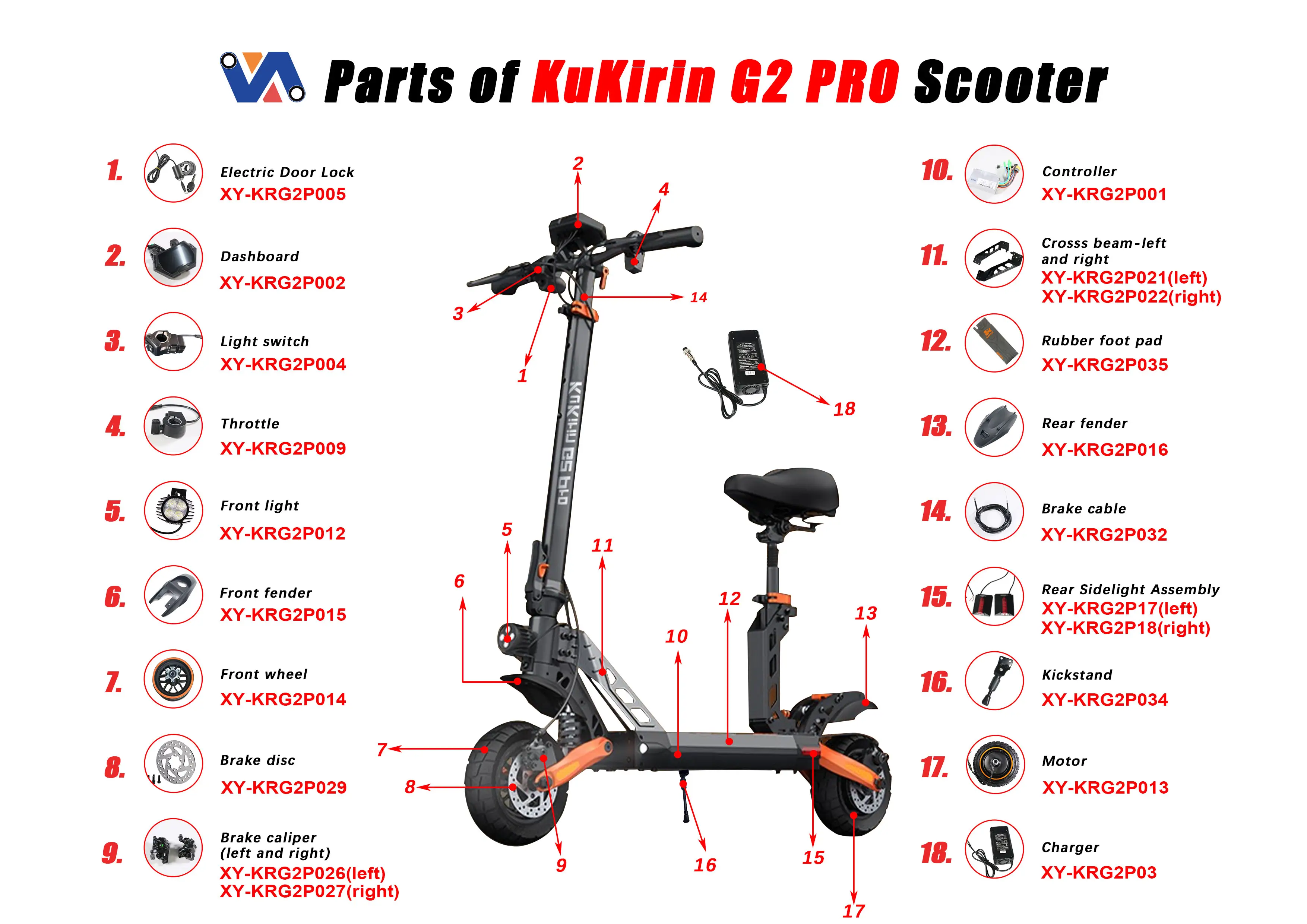
For example, the documented product record for a 36V 450W replacement motor for a Max G2 scooter identifies a model-specific replacement item. Buyers should still ask the supplier to validate the version against their original unit, because model naming alone does not capture every production revision.
A useful habit is to create a one-page fitment card for each SKU: original part photos, measured dimensions, connector photos, controller reference, approved supplier drawing, and sample-test result. This makes repeat orders more controlled when purchasing teams or repair technicians change.
Clarify what the quote includes
Supplier quotes for a brushless scooter motor can refer to different supply scopes. Ask whether the quoted unit includes the tire, rim, brake disc, bearings, axle hardware, cable, connector, waterproof sleeve, or only the motor assembly. Also clarify packaging method, unit labeling, carton quantity, spare-part labeling, and whether mixed scooter motor parts can ship in one consolidated order.
These questions are not administrative details. Missing hardware or an unsuitable connector can turn an otherwise compatible motor into an installation delay. If your downstream customers need retail-ready parts, ask what labeling or packaging information can be supplied and what approval is required before production.
Evaluate sample testing before a volume order
A sample should be treated as a fitment test, not merely a visual inspection. Install it on the target scooter, check wheel seating and brake alignment, inspect cable routing through the folding or suspension area, and verify start-up, direction, acceleration, noise, temperature behavior, and error-code response with the intended controller.
Document the test conditions and any changes made to the wiring or mounting hardware. If a modification is required, ask whether the supplier can reproduce that exact configuration in the batch. A replacement project is more reliable when the approved sample, specification sheet, and production instruction describe the same configuration.
Question batch control and quality checks
For B2B supply, a technically suitable first sample is only the starting point. Ask how the supplier identifies lots, what checks are made before shipment, and how a buyer can compare a received batch with the approved sample. Useful questions include whether motor labels carry traceable batch information, whether connector and cable checks are included, whether the supplier can share an inspection record, and how nonconforming units are handled.
Price should be reviewed together with consistency and serviceability. A lower quotation can lose its value if replacement units arrive with inconsistent wiring, unlabeled revisions, or unclear claim handling. For high-volume replacement programs, agree in writing on the specification revision that will be supplied and the notification process for material, connector, or labeling changes.
Confirm supply, communication, and after-sales terms
Before issuing a purchase order, request the minimum order quantity, sample lead time, production lead time, payment terms, shipping options, and documentation available for the destination market. Avoid treating a supplier's general catalog as a commitment to ongoing availability. Instead, ask which elements of the agreed brushless scooter motor configuration are stable and what notice will be given if sourcing changes.
For distributors serving Europe, North America, Oceania, or South America, it also helps to agree on a single technical contact and a standard format for compatibility questions. A supplier that can review photos, measurements, and connector details before shipment can reduce uncertainty; however, the buyer should retain final fitment approval through a sample test on the target vehicle.
A supplier inquiry template for replacement projects
Use the following points in an RFQ or technical inquiry:
- Target scooter brand, model, revision, and motor position
- Photos of the original motor, axle, rim, connectors, cable exit, and controller label
- Required voltage, rated power, wheel size, and brake mount
- Phase-wire, Hall-sensor, connector, pinout, and cable-length confirmation
- Axle, dropout, rim, tire, and mounting-dimension drawings
- Quoted supply scope, packaging, labels, and included hardware
- Sample availability and the method for locking the approved configuration
- Batch identification, pre-shipment checks, nonconformance handling, and change notification
- MOQ, lead-time range, shipping terms, and replacement-support process
Make the inquiry usable for repeat orders
The most effective B2B inquiry produces a reusable technical record, not just a price. Once the sample passes fitment, archive the approved drawing, connector photos, supplier quotation revision, inspection expectations, and internal SKU code together. That record gives purchasing, warehouse, and repair teams a shared reference when they reorder scooter motor parts months later.
For a brushless scooter motor replacement project, the practical standard is clear: verify the complete electrical and mechanical system, approve the exact supply scope, and document how batch consistency will be controlled. This approach helps buyers compare suppliers on more than price and gives both sides a clearer basis for a dependable replacement program.