EN


Electric Dirt Bike Conversion Kits: How to Compare System Components Before Buying
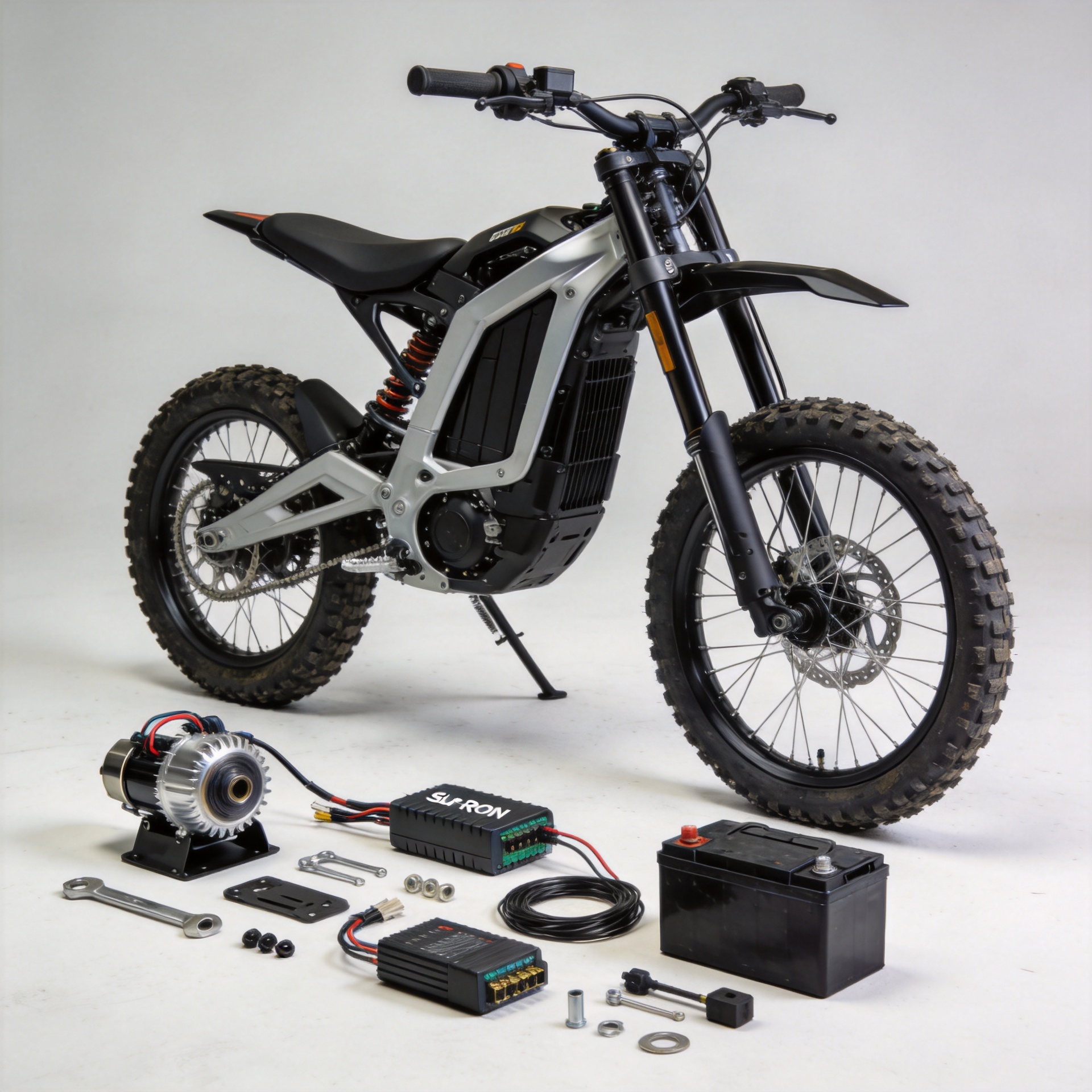
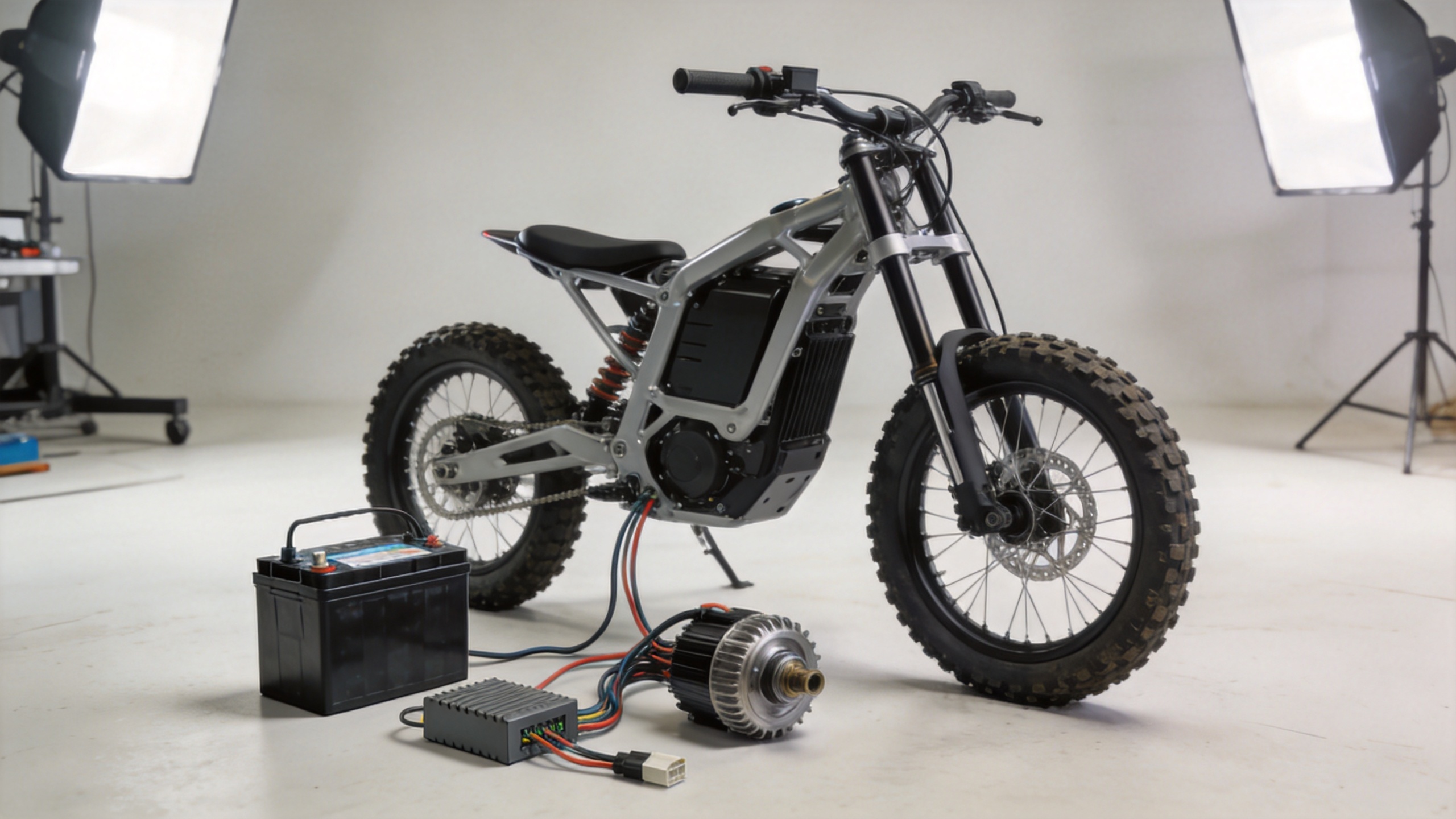
A dirt bike electric conversion kit is easiest to compare when you stop treating it as one product. It is a system: the battery supplies energy, the controller meters it, the motor turns it into torque, and the harness, connectors, chassis mounts, brakes, and controls have to work together. A powerful component can still be a poor purchase if it does not match the rest of the build.
For buyers researching Sur-Ron electric dirt bike modifications, a useful first question is not “Which part has the biggest number?” It is “Which constraints does this part introduce for the battery, controller, wiring, and sur ron chassis?” The framework below helps distributors, workshop buyers, and experienced riders compare a dirt bike electric conversion kit without relying on isolated claims.
Start with the system boundary, not the advertised peak figure
Before comparing quotes, write down what is included and what must remain compatible. A complete conversion path commonly involves a battery pack, motor, controller, throttle or sensors, high-current wiring, protection devices, mounting hardware, and the vehicle-side interfaces. Some offers bundle only a few of those pieces. Others include more parts but leave key fitment details unspecified.
Build a comparison sheet with four columns: included components, required existing components, verified interfaces, and open questions. This makes it easier to spot a kit that shifts cost or risk into unspecified cables, adapters, cooling, braking, or mounting work.
Compare battery and controller as one electrical decision
The battery and controller should be evaluated together. Confirm the nominal voltage range, the controller’s expected operating range, the battery-management system’s continuous-discharge capability, and the expected continuous current—not only a short peak claim. A voltage label alone does not show whether a pack can deliver the current the controller may request.
Ask for the connector family, polarity diagram, wire gauge or conductor specification, fuse or protection recommendations, and the connector’s intended current use. If an adapter is proposed, request its specification and routing plan. That conversation often reveals whether the supplier has matched the electrical path or simply made the plugs fit.
For a practical electrical-parts reference, buyers can review the Heavy-Duty High Current Battery Power Cable for Sur-Ron Light Bee. Its listing is relevant because a high-current cable is part of the system connection between power source and load; it should be verified against the build’s actual connector, cable-routing, and current requirements rather than selected by title alone.
Evaluate motor, controller, and cooling as a matched torque path
Motor comparison is not just a wattage exercise. Check motor type, mounting pattern, shaft or drive interface, expected voltage range, sensor arrangement, and the controller settings required for it. Then ask how the planned use changes the load: repeated climbs, sand, rider weight, cargo, and low-speed technical riding can create a different thermal demand from short flat-road runs.
A controller may offer tuning options, but a buyer should confirm which settings are supported for the selected motor and battery. Request a wiring diagram and an installation guide that identifies signal connectors separately from high-current connections. This helps prevent a build from being evaluated as a collection of upgrades when the real issue is an unverified electrical or thermal combination.
Check Sur-Ron chassis fitment separately from electrical compatibility
A part can be electrically compatible yet still create mounting or routing problems on a sur ron chassis. Compare dimensions, mounting points, cable exits, clearance around suspension travel, protection from debris, and service access. Verify the exact vehicle model, model year, and any existing aftermarket parts before ordering.
For harnesses and controls, ask where the cable will route, whether the connector can pass through the planned path, and how it will be supported away from moving or abrasive surfaces. The goal is not merely to make the part installable on day one; it is to avoid a layout that is difficult to inspect or maintain after off-road use.
Use brakes, controls, and protection devices as purchase gates
A conversion plan that changes acceleration or system mass deserves a parallel review of braking, throttle behavior, emergency shutoff arrangements, and protection devices. Rather than assuming a higher-output configuration is automatically suitable, document what remains stock and what needs separate assessment. Local rules, vehicle classification, and riding location can also affect whether a conversion is appropriate for a specific use case.
Procurement teams should treat diagrams, connector pinouts, bill-of-materials detail, and stated compatibility limits as decision documents. These materials are more useful than generic “high performance” wording because they let a workshop compare two offers on the same technical basis.
A buyer checklist for comparing a dirt bike electric conversion kit
- Confirm the exact vehicle model, model year, and current modification list.
- Map battery voltage and discharge capability to the controller’s supported range and expected current demand.
- Request motor mounting, drive-interface, sensor, and controller-setting details.
- Verify high-current connector type, polarity, cable specification, routing, and protection approach.
- Separate sur ron chassis fitment questions from electrical interface questions.
- Review braking, controls, heat management, service access, and local-use requirements as part of the same decision.
- Ask the supplier for a wiring diagram, compatibility statement, and clear list of included versus excluded components.
Turn component questions into a clearer sourcing conversation
A reliable comparison gives every supplier the same vehicle information and asks for the same evidence. Share the model and year, current battery and controller details, desired riding conditions, required connectors, and any existing chassis changes. Then compare the responses for completeness, not only price.
New Image focuses on electric mobility spare parts and provides pre-sales technical support to help buyers confirm vehicle compatibility. For wholesale sourcing, detailed specification documents and a model-specific compatibility discussion can reduce preventable ordering errors. A disciplined dirt bike electric conversion kit review turns a list of parts into a build plan that is easier to install, inspect, and support.