EN
EN


Electric Scooter Charger Wholesale Checklist: What Buyers Should Confirm Before Ordering
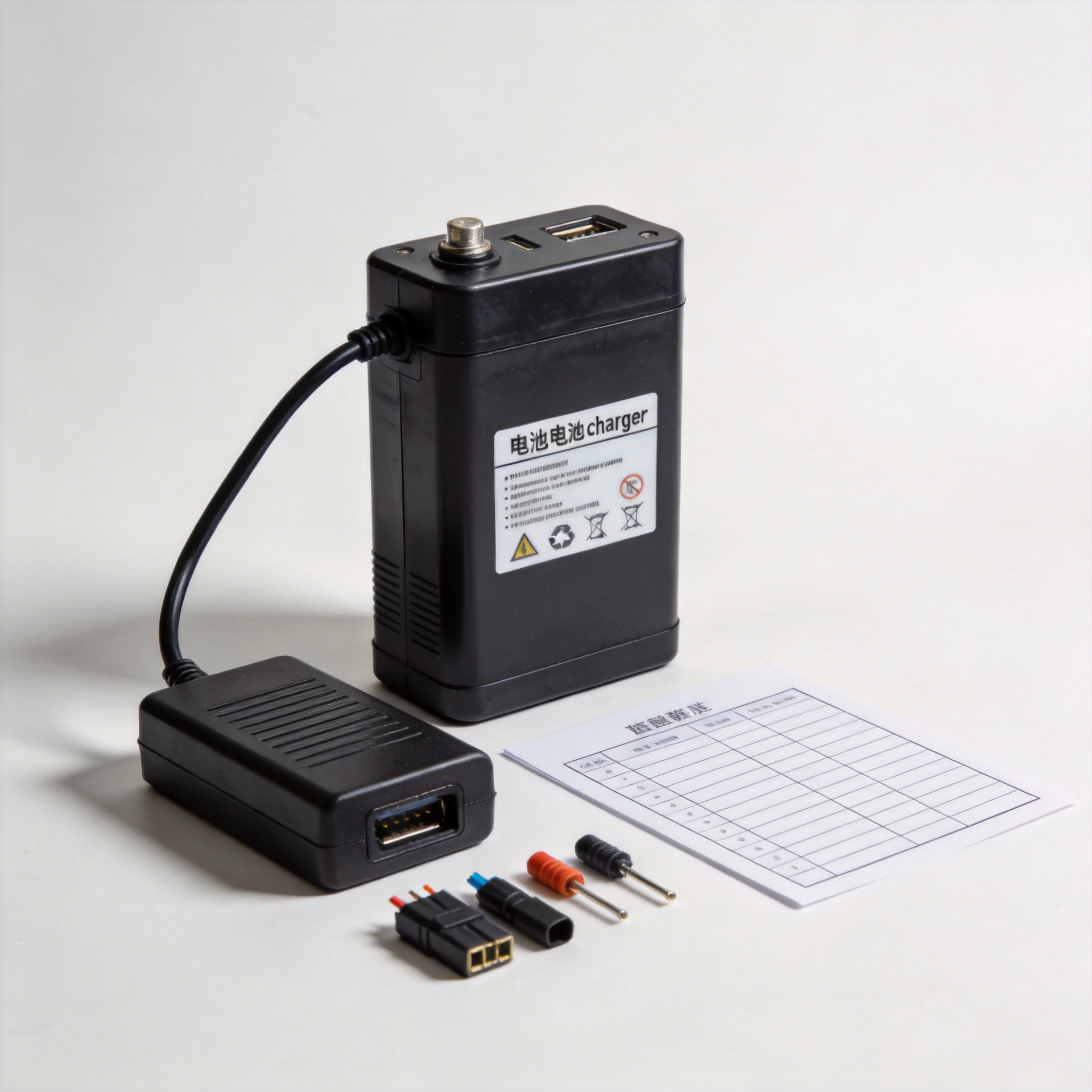
For a distributor, repair-chain buyer, or private-label sourcing team, a battery charger for lithium batteries is not a generic accessory. It is an electrical match between a battery pack, a scooter model, a plug system, and an after-sales replacement plan. A charger that looks correct in a catalog can still create returns, slow a repair counter, or put a battery at risk if its output profile or connector is wrong.
The practical way to buy is to turn every inquiry into a verification process. This checklist is designed for wholesale orders of scooter chargers and for buyers handling replacement demand, including requests for charging scooty battery applications.
1. Start with the battery pack, not the charger photo
The first question is: what battery system will the charger serve? Ask for a clear photo of the battery label and the original charger label, then record the nominal battery voltage, chemistry, capacity, and stated charge requirements. The wording “36V battery” or “48V battery” alone is not enough to release a purchase order.
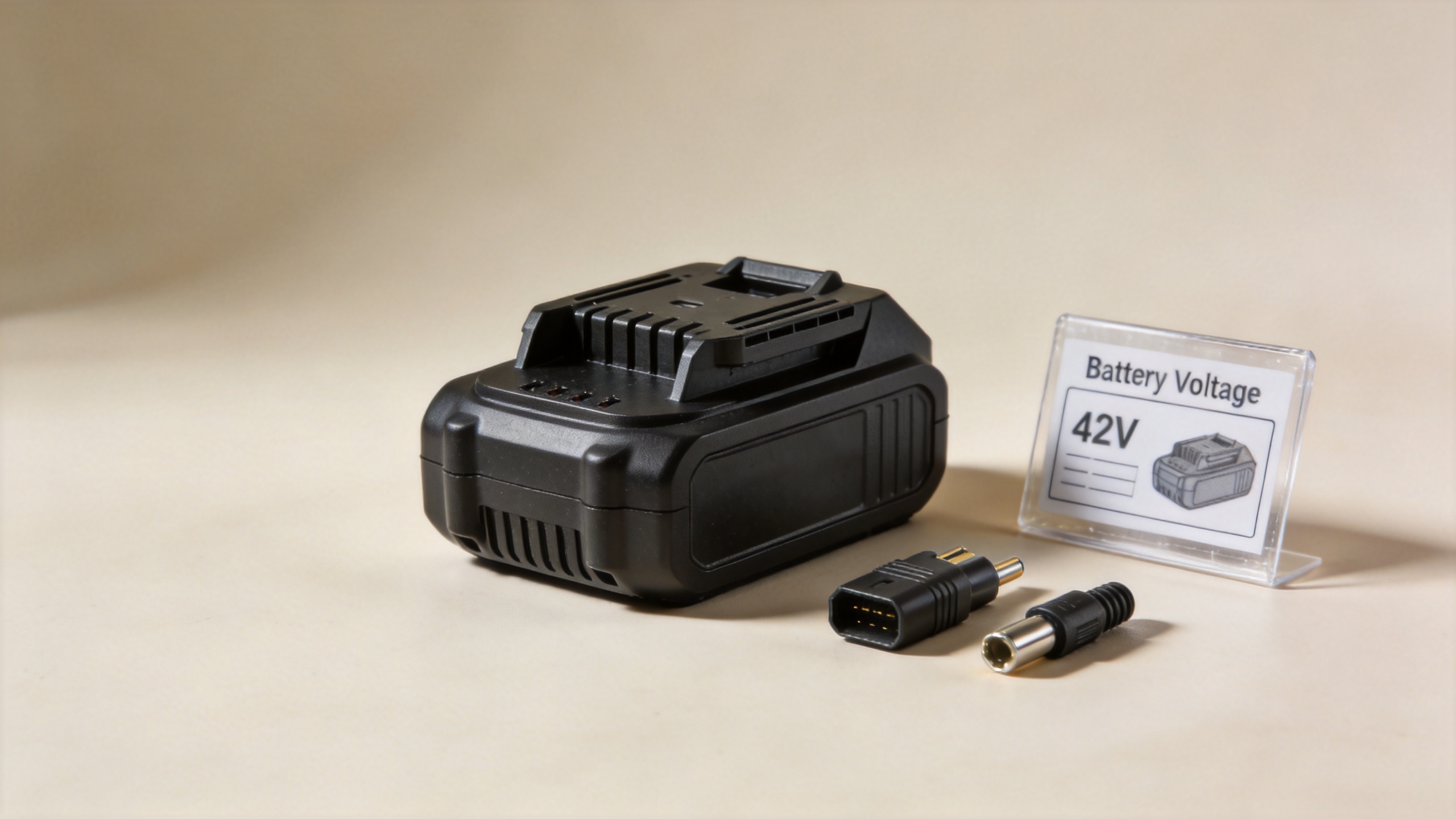
For example, a 36V nominal lithium-ion scooter pack commonly reaches a 42V full-charge level, while a 48V 13-series lithium-ion pack commonly uses a 54.6V charger output. These are examples, not substitutes for checking the actual pack specification. The output voltage on a battery charger for lithium batteries must match the battery system and its intended charging profile.
- Confirm nominal battery voltage and full-charge voltage.
- Confirm lithium chemistry and whether the pack has a BMS.
- Ask whether the battery maker specifies a maximum charge current.
- Keep a label photo and model code with the RFQ, not only in chat history.
A common purchasing mistake is to approve a charger because the connector fits. Electrical compatibility comes before connector compatibility.
2. Verify output voltage, current, and charging behavior
Next, request the charger’s rated output voltage, current rating, input range, and charging behavior. Current affects charging time and heat management; it should be chosen within the battery maker’s allowed range rather than simply selecting the highest available amp rating. For a wholesale program, ask the supplier to state whether the unit uses a lithium-appropriate charging profile and what happens at full charge.
Do not mix battery chemistries by assumption. A lead-acid charging profile and a lithium charging profile can differ. If the request is for a battery charger for lithium batteries, the quotation should identify the intended chemistry and voltage clearly on both the specification sheet and product label.
| RFQ item | What to confirm | Why it matters |
|---|---|---|
| DC output voltage | Exact voltage and tolerance | Prevents over-voltage or incomplete charging |
| Charge current | Rated current and battery-approved range | Balances charge speed, heat, and pack limits |
| Input specification | AC input range and destination-market plug | Prevents warehouse or end-market mismatch |
| End-of-charge behavior | Indicator logic and shutoff/maintenance behavior | Supports safe, understandable replacement use |
3. Treat the connector as a four-part compatibility check
Connector matching is more than “DC plug” versus “XLR.” Confirm connector family, outside and inside dimensions or pin layout, polarity, and the scooter-side socket position. Some fleets also use keyed or communication-enabled connectors, so a visual match by itself is not a release criterion.
For every target model, ask for front and side photos of the original plug, a measurement drawing where applicable, and a polarity confirmation. Put the information in a model-to-charger matrix. This extra step is especially useful when one buyer needs a mixed carton for several scooter models or when a repair shop orders recurring replacements for a charging scooty battery service.
- Plug type and dimensions or pin configuration
- Positive/negative polarity or pinout
- Cable length and strain-relief requirement
- Target scooter brand, model, model year, and battery revision
- Photo evidence of a successful sample connection
4. Confirm the target scooter models and sample-test the exact configuration
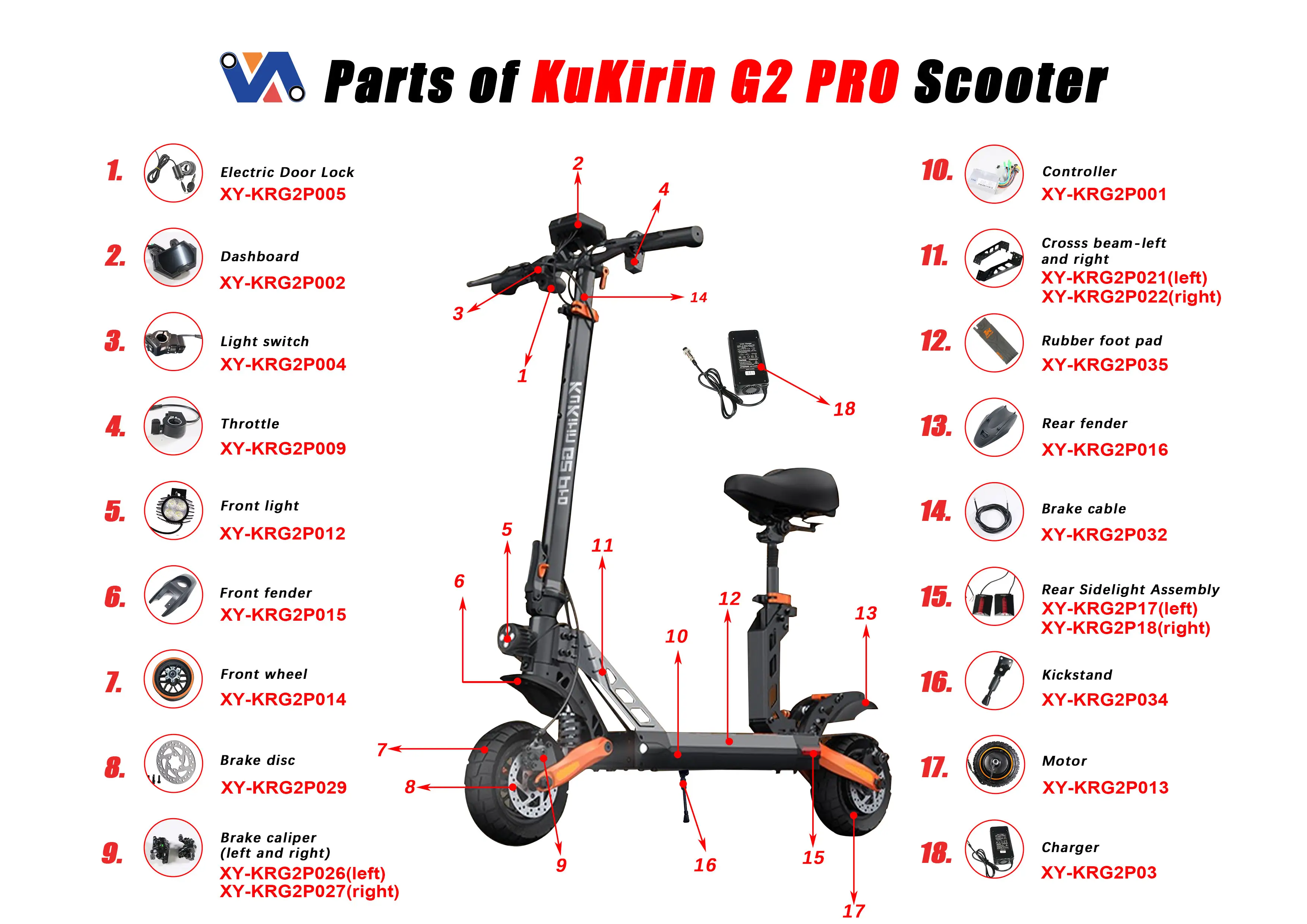
Electric scooter accessories are fragmented across brands and model generations. A compatible charger must be confirmed against the actual scooter and battery combination, not only a broad brand name. Before bulk approval, send the supplier a model list and require the quotation to identify each confirmed configuration, each exception, and any assumption that still needs buyer validation.
For buyers sourcing 42V 2A charger replacements, one available option to review is this 42V 2A scooter charger with DC 5.5 × 2.1 connector. Treat the listing title as a starting point for model confirmation—not proof that it fits every 42V scooter. Validate the specific Kugoo or other target-model battery label, connector, and polarity before placing the order.
A sample should test connection fit, indicator behavior, charging completion, surface temperature in normal use, label readability, and packing condition. Document the approved sample with photos and a revision number. Then make that sample the reference for the production order.
5. Specify the order, labeling, and destination-market details
After electrical compatibility is approved, turn the requirements into a purchase-order checklist. State the output specification, connector drawing, cable length, housing color if relevant, input plug, label language, carton quantity, spare-rate requirement, and inspection method. For Europe, North America, Oceania, and South America, the mains plug and label expectations can differ, so do not leave the destination market as an informal note.
Also ask what documentation accompanies the batch. You do not need to assume a certification applies; instead, ask the supplier which compliance documents, test records, and label information are available for the exact charger configuration and selling market. Match the documents to the final SKU rather than to a visually similar unit.
6. Plan replacements and after-sales support before the first shipment
Wholesale buyers often discover the real cost of a charger after the first replacement request. A low unit price is less useful if the connector revision is not traceable, replacement stock is unavailable, or support cannot identify the original configuration. Build a small replacement plan into the opening order: keep approved SKU codes, plug photos, label artwork, and model mappings available to your purchasing and service teams.
For a battery charger for lithium batteries, a useful supplier conversation should include how the buyer can reconfirm compatibility when a customer sends only a scooter photo or an old charger label. New Image focuses on electric scooter and e-bike spare parts and can support buyers who need to organize compatibility details before sourcing. The goal is not to promise a universal charger; it is to reduce avoidable mismatches with a documented confirmation process.
Compatibility record for every charger SKU
Use one controlled record for each battery charger for lithium batteries SKU. The record should connect the buyer’s model list to the approved output label, plug photograph, sample result, and packing instruction. This prevents a battery charger for lithium batteries from being substituted merely because the housing looks similar.
For a charging scooty battery replacement request, the service team should first retrieve the record before quoting. A charging scooty battery request without a model, battery label, or charger label should remain pending confirmation. That discipline makes battery charger for lithium batteries replenishment more consistent across warehouses and repair counters.
- Record the approved battery charger for lithium batteries SKU against each scooter and battery revision.
- Attach the exact connector image used for the charging scooty battery application.
- Record output voltage and current for the battery charger for lithium batteries order.
- State the input plug and market for each charging scooty battery replacement SKU.
- Keep the sample approval date for every battery charger for lithium batteries configuration.
- Note any connector exception reported during charging scooty battery service.
During reorder reviews, compare the proposed label and connector with the approved record. If either changes, treat the battery charger for lithium batteries as a new configuration and sample it again. This is also useful when a charging scooty battery program adds a new scooter revision under an existing model name.
Wholesale pre-order checklist
- Collect battery and original-charger label photos.
- Confirm lithium chemistry, nominal voltage, full-charge voltage, and allowed charge current.
- Confirm charger DC output, input range, and end-of-charge behavior.
- Verify connector family, dimensions or pinout, polarity, cable length, and scooter-side socket.
- Map every target scooter model and battery revision to an approved charger SKU.
- Approve an exact sample and retain photos, test notes, and revision details.
- Lock the PO specification, label, market plug, packaging, and inspection criteria.
- Reserve a replacement process and traceable records for service requests.
Final takeaway
The safest wholesale decision is not based on a universal-looking plug or a familiar voltage label. A reliable battery charger for lithium batteries order is built on confirmed battery data, charger output, connector details, scooter-model evidence, sample approval, and a replacement plan. Use the checklist for each SKU, and your team will have a clearer path from inquiry to a repeatable, lower-risk order.