EN


Electric Scooter Parts Catalog: How to Organize Parts by Model and System
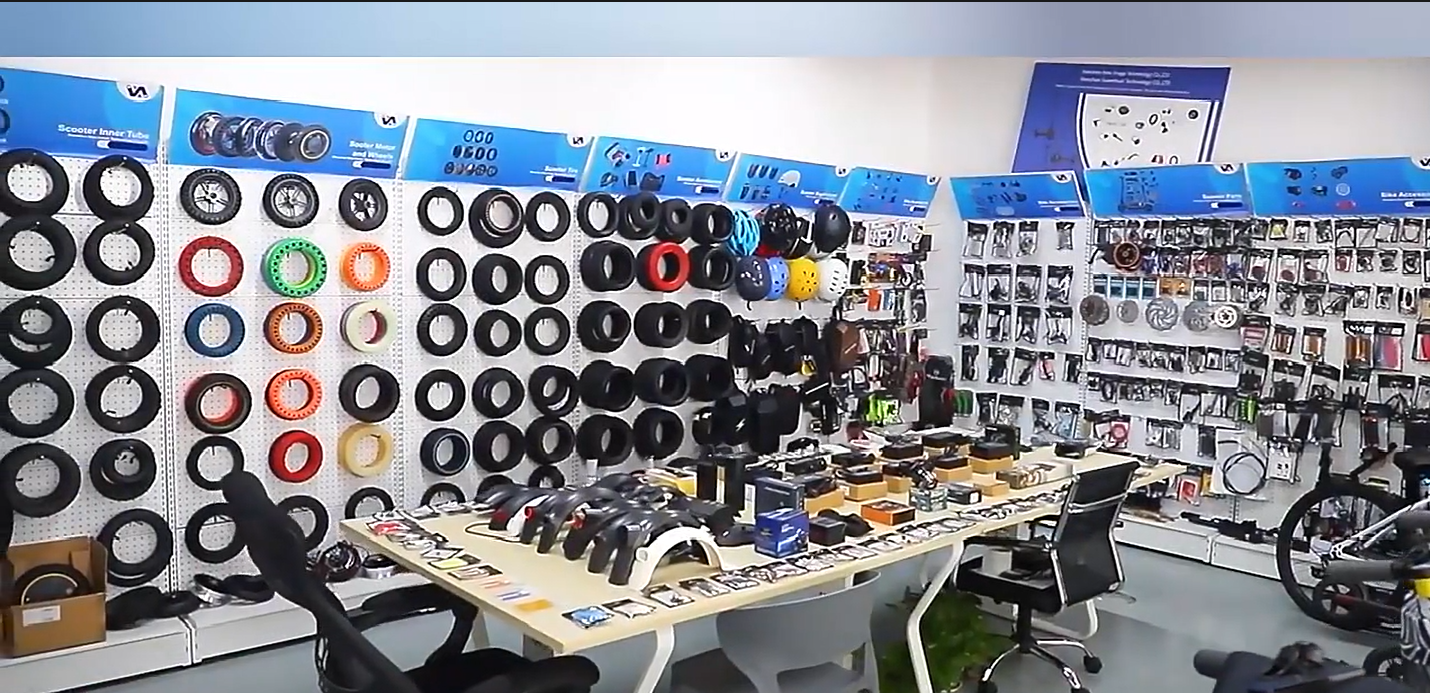
For a distributor, an electric scooter parts catalog is more than a product list. It is a compatibility tool. Buyers may know they need a tire, display, controller, brake component, or charger, but they still need a fast way to tell whether the part belongs to a specific scooter generation and whether it will work with the surrounding system. A clear catalog reduces unsuitable orders and makes replacement-part sourcing less time-consuming.
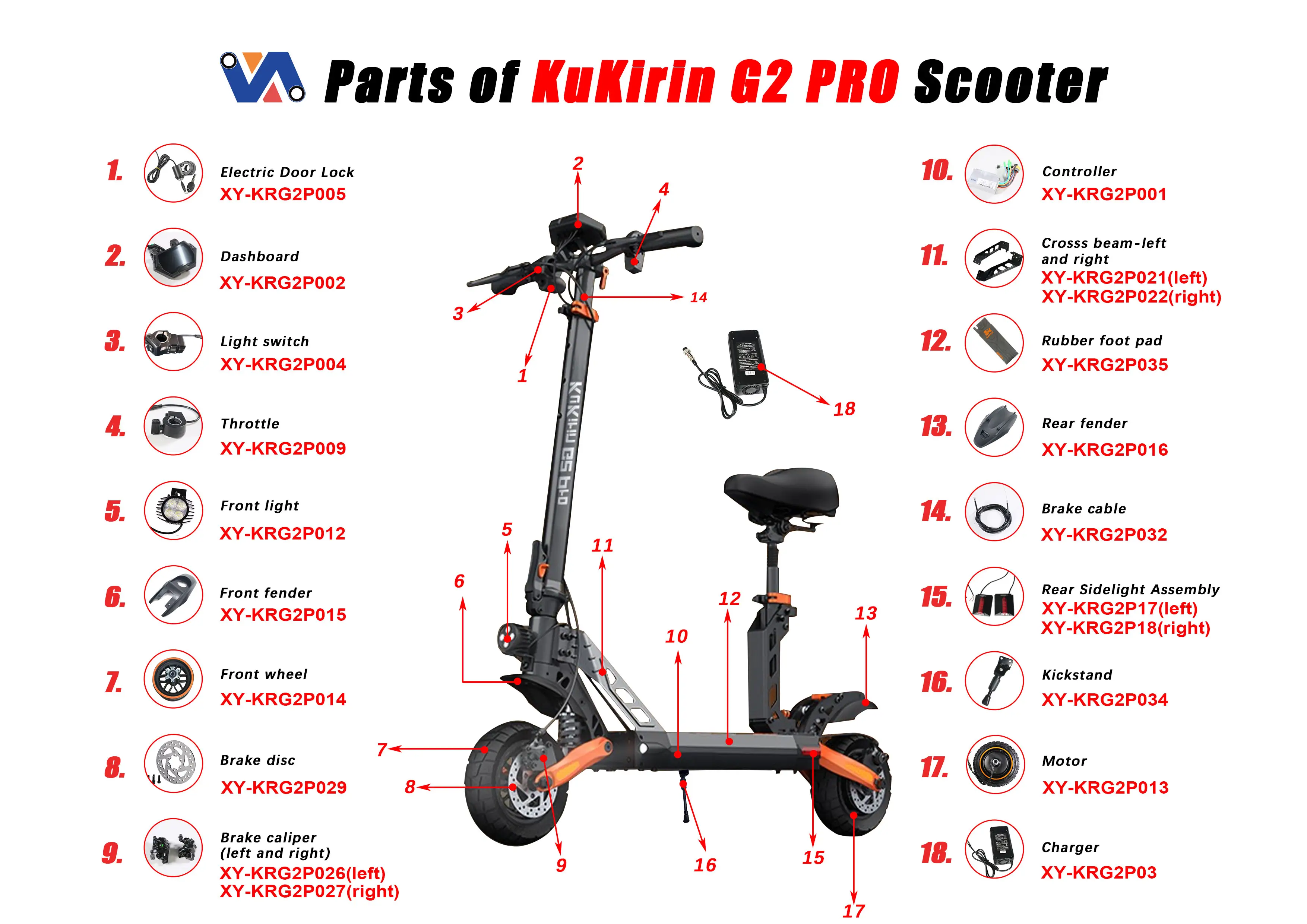
The most practical structure starts with the scooter model and then narrows to the functional system. This approach works particularly well when a catalog contains a mix of parts of electric scooter assemblies and individual service items. It also gives B2B buyers a consistent path for comparing electric scooter aftermarket parts before they place an order.
Start With a Two-Level Catalog: Model First, System Second
Do not build one long category called “scooter spare parts.” Instead, assign every SKU to two connected paths:
- Model path: brand, series, model, and version or production revision where known.
- System path: electrical, drive, braking, wheel and tire, steering, frame, lighting, or rider interface.
For example, a buyer looking for a Xiaomi Mi 4 Pro replacement board should be able to browse Xiaomi > Mi 4 Pro > Electrical System > Controller and Dashboard. Another buyer looking for a consumable item can browse Xiaomi-compatible models > Wheel and Tire System > 8.5-inch tire options. The same item can appear in a system category and in a model-specific fitment list, but the SKU record should remain one controlled record.
This model-first rule matters because electric scooter components are rarely universal. A part that looks similar can differ in mounting points, connector layout, firmware generation, electrical rating, tire construction, or rim fitment. A catalog should therefore describe compatibility as evidence, not as an assumption based on appearance.
Build System Categories That Match How Repairs Are Diagnosed
System categories should mirror the way a technician or purchaser isolates a fault. A practical electric scooter parts catalog can use the following top-level groups:
| System | Typical catalog items | Key compatibility fields |
|---|---|---|
| Power and charging | Battery-related leads, chargers, charge ports | Voltage, plug format, polarity, model family |
| Control and display | Controllers, dashboards, motherboards, throttles | Model, revision, connector count/layout, voltage class, software or display generation where verified |
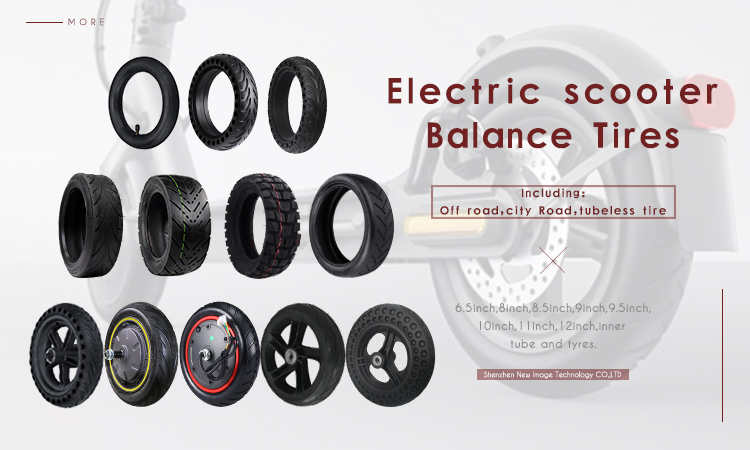
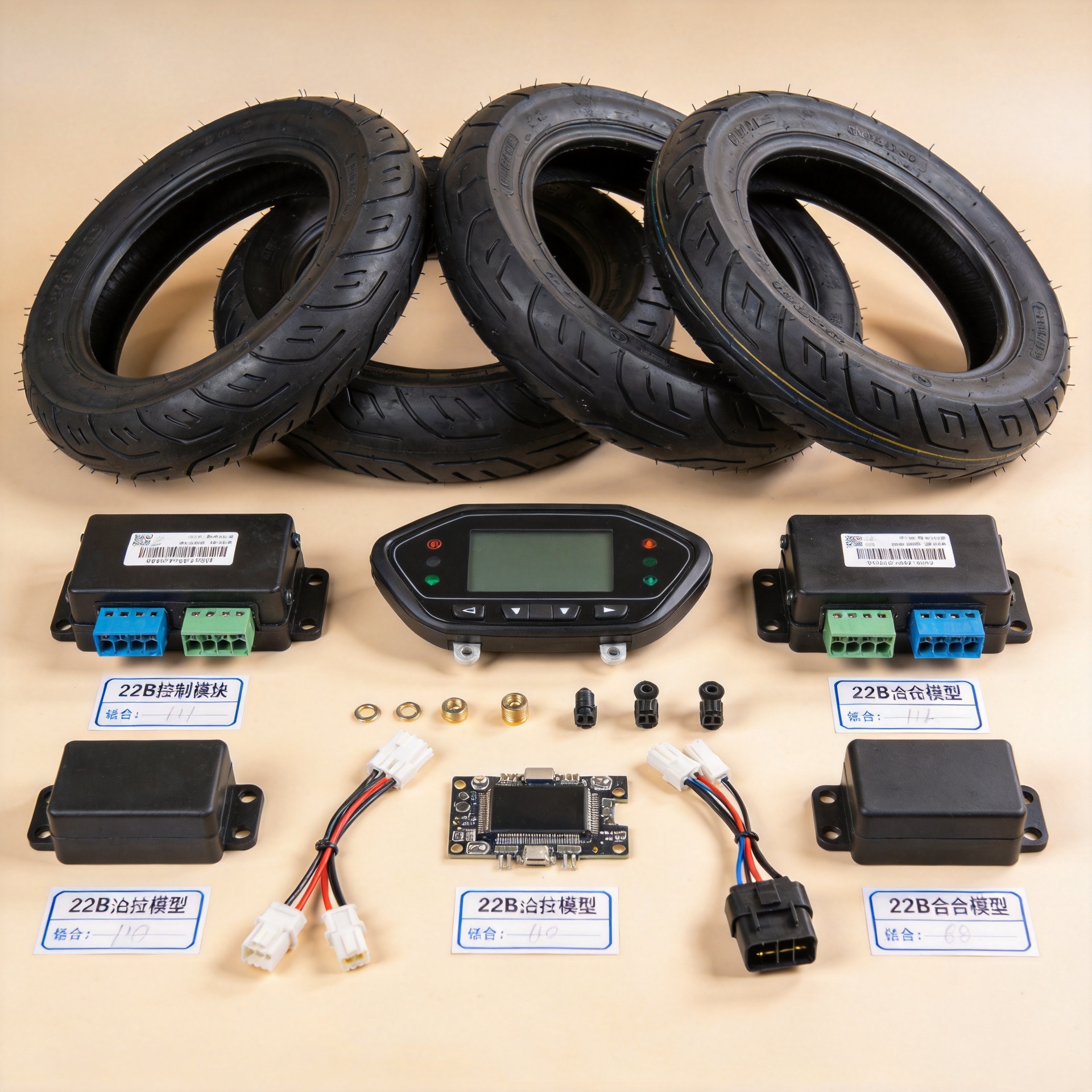
| Drive and wheel | Motor-related parts, tires, inner tubes, solid tires | Wheel or rim size, tire construction, sidewall marking, hub arrangement, model fitment |
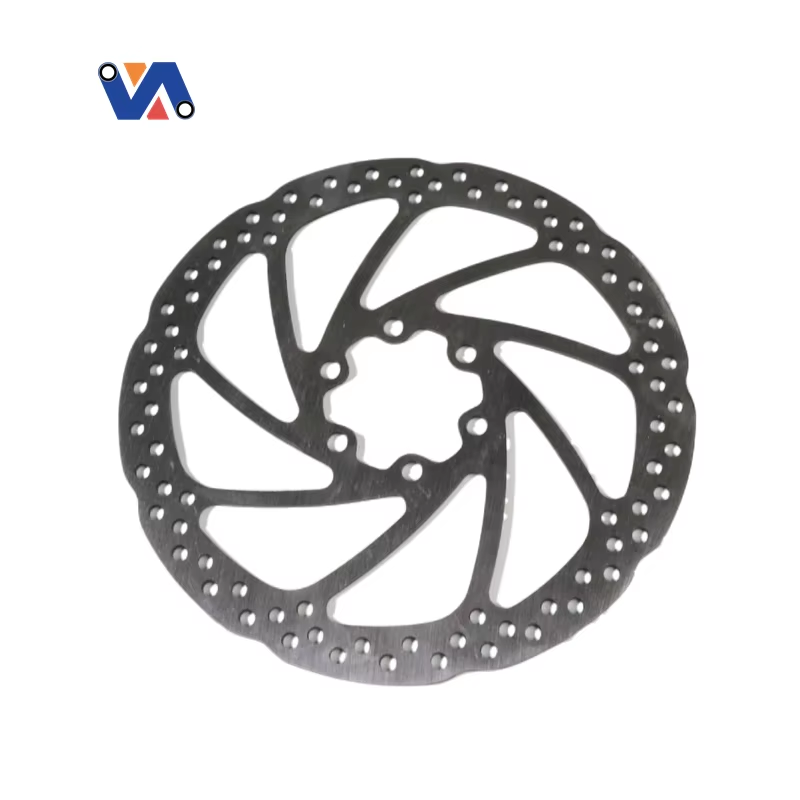
| Braking and suspension | Brake pads, calipers, discs, levers, suspension hardware | Mounting style, disc size, axle or fork compatibility, model fitment |
| Lighting and rider interface | Headlights, tail lights, switches, grips, bells | Connector type, mounting position, model series, left/right orientation when applicable |
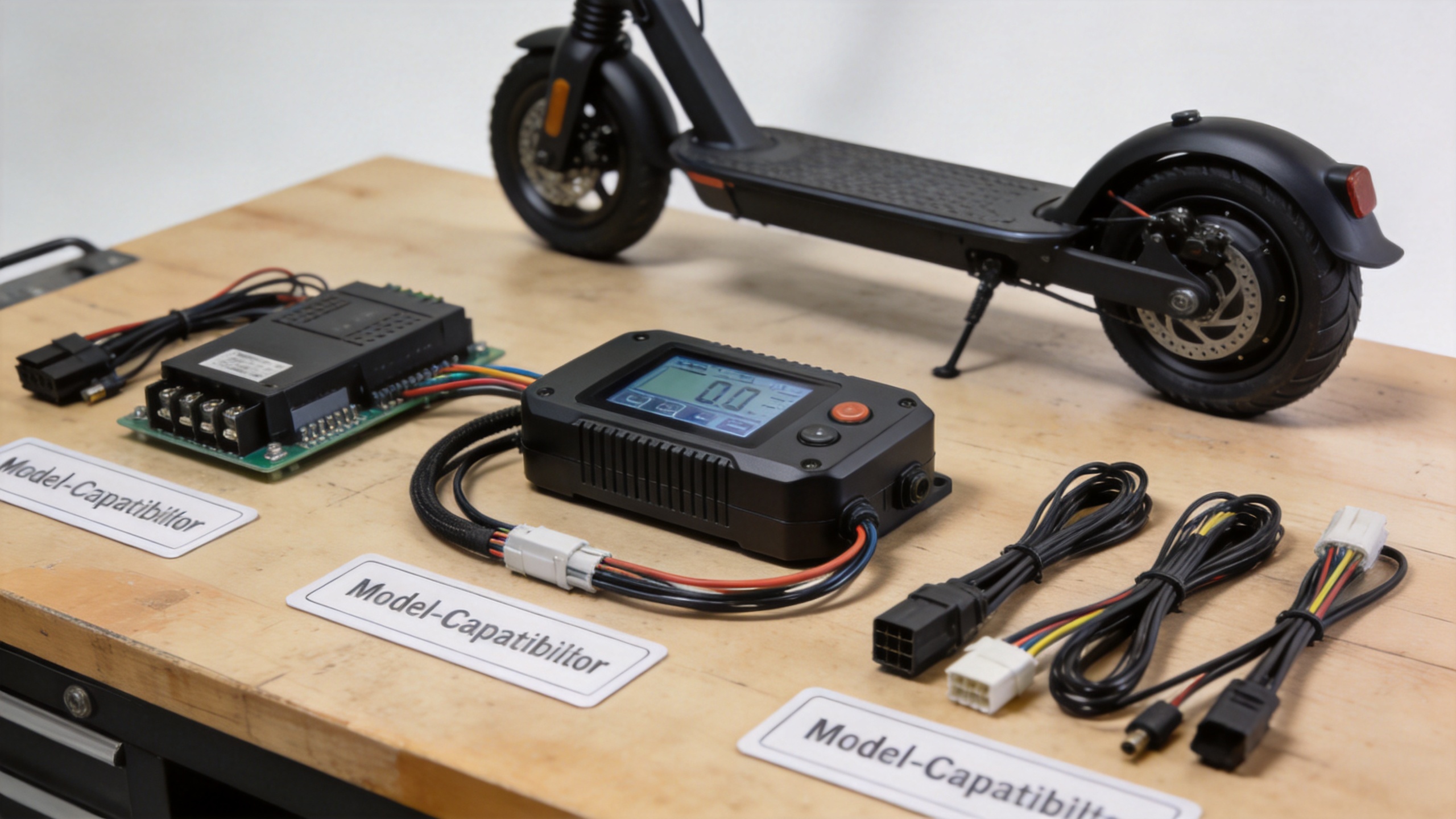
This structure is easier to maintain than a catalog organized only by generic part names. It also lets a buyer begin with the symptom—such as “display not responding” or “tire needs replacement”—before narrowing to the right scooter model.
Make the Compatibility Record the Center of Every SKU
Every listing in an electric scooter parts catalog should include a short, scannable compatibility block. At a minimum, show:
- Compatible brand and model: list confirmed model names rather than broad brand-only claims.
- System location: identify whether the part belongs to the electrical, drive, wheel, brake, or lighting system.
- Part identity: use a supplier part number, original reference where available, or an internal SKU.
- Fitment evidence: record measurable or visible checks such as connector style, mounting position, tire sidewall marking, rim size, or version note.
- Exclusions and checks: state when a buyer must compare photos, plugs, dimensions, or a scooter revision before ordering.
For tires, sidewall information and wheel construction should remain visible in the catalog record. A tire size alone does not prove fitment: the buyer should also compare the intended scooter model, rim diameter, tire construction, and the markings on the existing tire. For electrical assemblies, voltage class and connector arrangement are useful checks, but they should not be presented as a guarantee unless the exact model and revision have been confirmed.
Use Product Examples Without Turning Them Into Generic Claims
Model-specific products give buyers a concrete way to understand the catalog logic. For a Xiaomi Mi 4 Pro electrical-system entry, the catalog can point buyers to the Controller And Dashboard For Xiaomi Mi 4 Pro Scooter Accessories Display And Motherboard Xiaomi 4Pro Parts. The listing should remain under the Mi 4 Pro model path and under the controller-and-dashboard system path, with the buyer prompted to confirm connector and revision details before purchasing.
For wheel-system sourcing, a separate record can link to the 8.5 Inch Solid Tire Honeycomb Riding Off-Road Electric Scooter Tire. Its catalog entry should keep tire size, tire type, applicable model information, and fitment checks together rather than scattering them among unrelated tire pages.
Create Buyer-Friendly Filters and a Fitment Checklist
Once the core taxonomy is in place, filters make the catalog much faster to use. Helpful filters include brand, model, system, tire size, part type, connector type, voltage class, and left/right position. Avoid using a filter called “universal” unless the supplier has documented the precise range of models and the relevant physical or electrical conditions.
At the bottom of each model category, add a simple pre-order checklist:
- Confirm the full scooter model and any version marking.
- Match the existing part’s connector, mount, dimensions, or sidewall marking.
- Check whether the part is sold individually or as a controller-and-display, tire, or hardware set.
- Send product photos or the existing part number when the fitment record does not resolve the match.
This supports distributors who serve several regions and need to handle repeat orders without relying on memory or free-text messages. It also makes it easier to add new electric scooter aftermarket parts without weakening the original category structure.
Keep the Catalog Accurate as Models Change
A working catalog needs governance. Add a version field to model records, retain discontinued models as searchable reference pages, and keep a change log when a connector, dashboard, or tire specification is updated. When a new item arrives, the catalog manager should first confirm the model path and system path, then complete the compatibility record before publishing the SKU.
For a supplier focused on scooter tires, chargers, braking items, lighting, and replacement assemblies, this workflow helps technical support and sales teams use the same information. More importantly, it gives buyers a repeatable way to move from scooter identity to system, part, and verified fitment.
Conclusion: Organize for Verification, Not Just Discovery
The strongest electric scooter parts catalog is organized around the buyer’s actual decision: “Will this part fit this scooter and work within this system?” Start with the model, group products by repair system, and make the compatibility record visible on every SKU. That structure makes parts of electric scooter easier to find, helps buyers compare electric scooter aftermarket parts with fewer assumptions, and creates a scalable catalog for new models and replacement needs.