EN
EN


Engwe EP-2 Pro vs Engine Pro 2.0 vs L20: Which Folding Fat Bike to Stock in 2026?
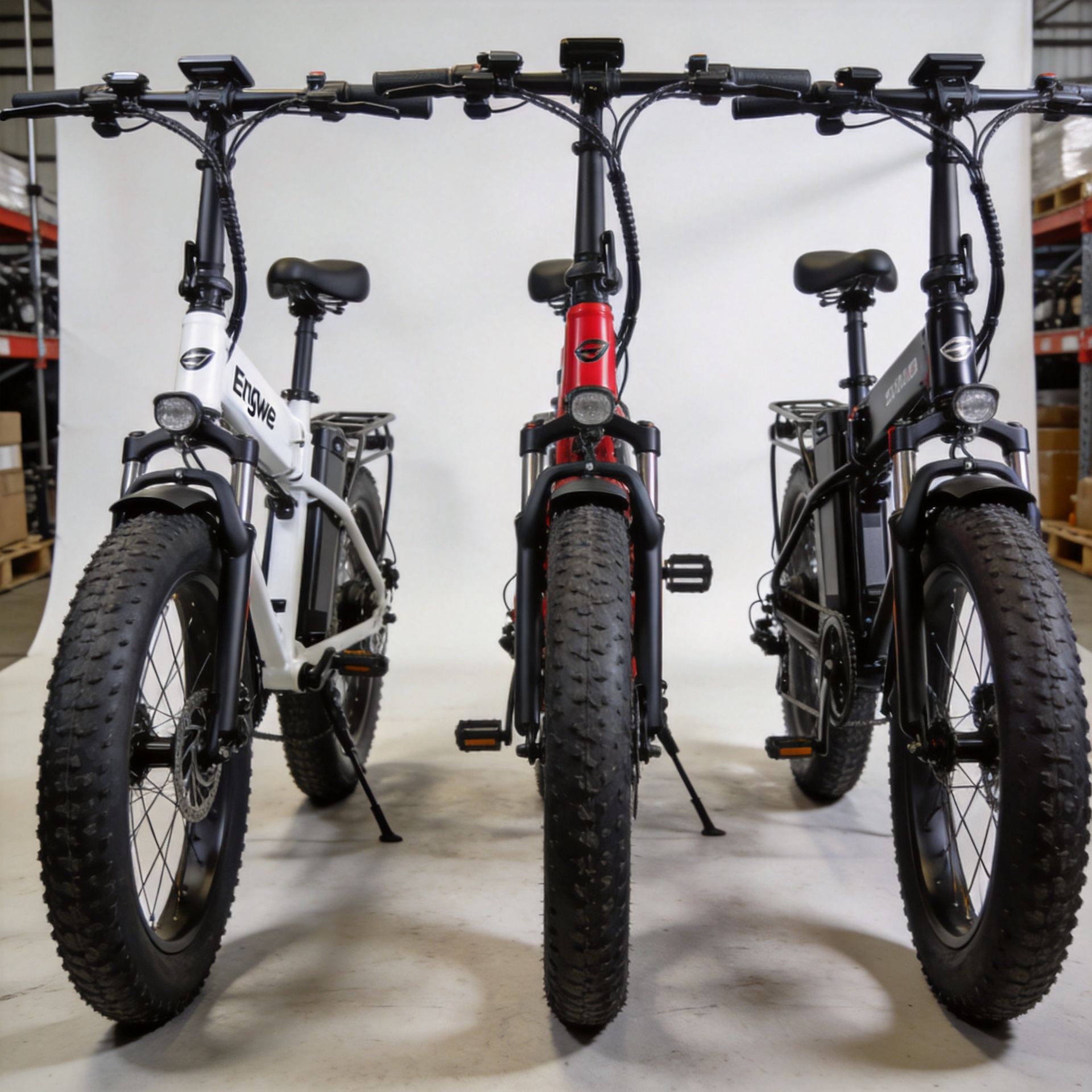
If you have been working with the Engwe lineup for a while, you already know the brand moves fast. Deciding which fatbike Engwe SKUs to carry (the Engwe EP-2 Pro, the Engine Pro 2.0, or the L20) comes down to understanding which product maps to which customer and which sales channel. This guide breaks down all three models so you can stock smarter heading into 2026. Understanding the right fat tire foldable electric bike for your market is essential for making well-targeted stocking decisions.
At a Glance: Three Models, Three Market Positions
Before diving into specs, it helps to anchor each fatbike Engwe model in its market position:
- EP-2 Pro — Entry-level fat tire foldable electric bike with front suspension. Targets value buyers and first-time e-bike riders.
- Engine Pro 2.0 — Full-suspension upgrade with a 52V battery and higher torque. Targets performance riders and all-terrain enthusiasts.
- L20 — Step-through commuter design with a rack-mounted battery. Targets urban commuters and mobility-focused buyers.
Spec Comparison Matrix
Here is how the three fatbike Engwe models stack up across the key distributor decision factors:
| Specification | Engwe EP-2 Pro | Engine Pro 2.0 | L20 |
|---|---|---|---|
| Motor (Peak) | 960W | ~1000W | 1125W |
| Battery | 48V 13Ah | 52V 13Ah | 52V 13Ah |
| Torque | ~55 N·m | ~100 N·m | 75 N·m |
| Suspension | Front only | Full (front + rear) | Front fork |
| Frame Style | Folding diamond | Folding diamond | Step-through folding |
| Tires | 20×4.0 fat | 20×4.0 fat | 20×4.0 fat |
| Brakes | Mechanical disc | Hydraulic disc | Mechanical disc |
| Pedal Assist | Cadence sensor | Torque sensor | Cadence sensor |
| EU Compliance | 250W/25 km/h variant available | Verify SKU per market | Verify SKU per market |
| Target Buyer | Value-conscious, recreational | Performance, all-terrain | Urban commuter, older rider |
Model Deep Dives
Engwe EP-2 Pro — Entry-Level Fat Tire Foldable Electric Bike for Value-Focused Channels
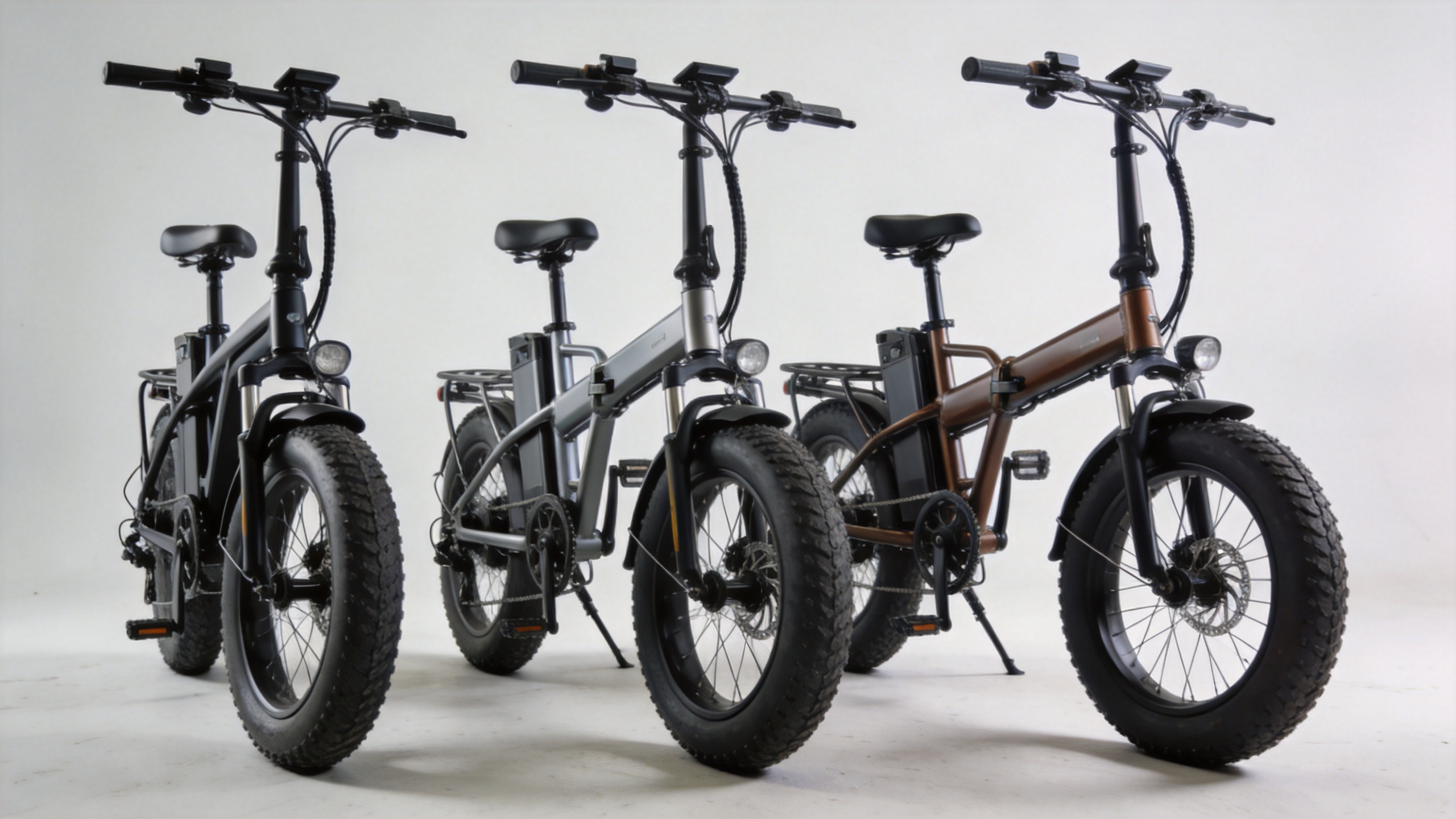
The Engwe EP-2 Pro is where most distributors start when building a folding fat bike range. With a 960W peak motor, 48V 13Ah battery, and 20×4.0 fat tires, it delivers solid capability for urban streets, gravel paths, and light trails — without the full-suspension price tag. The front fork absorbs minor road irregularities well, and the folding mechanism is compact enough for customers who want something that fits in a car boot or storage locker.
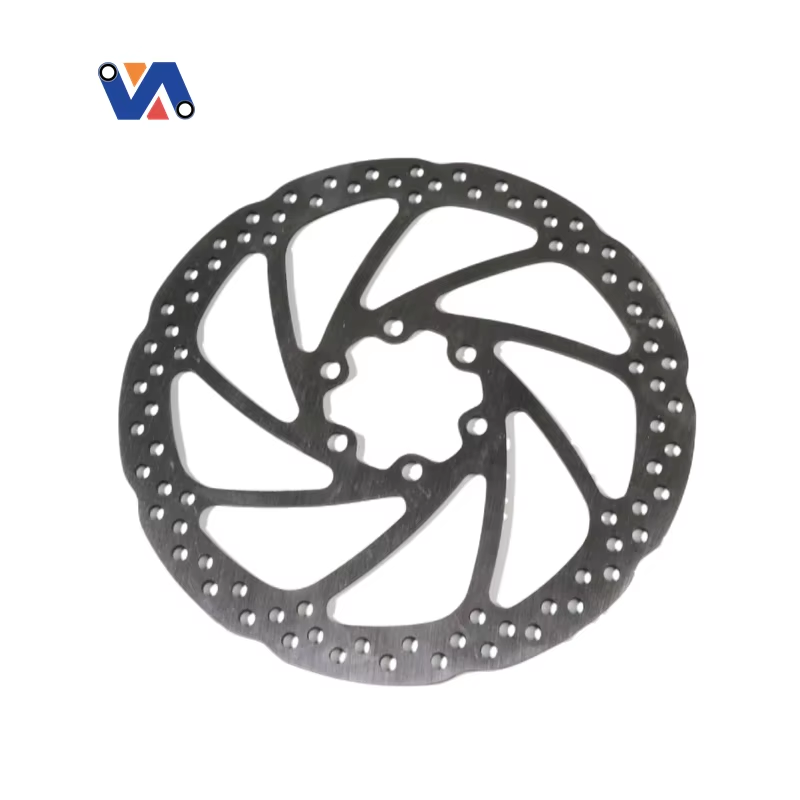
The main limitation worth communicating to retail customers: the cadence-based pedal assist feels less natural than torque sensing. For casual riders this typically is not an issue, but for buyers upgrading from regular bicycles it is worth flagging upfront. If you stock the Engwe EP-2 Pro, pairing it with compatible brake components is a natural add-on. The Engwe EP-2 PRO 160mm Brake Disc Rotor (EN-EP2P07) is a direct-fit replacement that moves reliably as an upsell and restock item alongside the bike.
Engine Pro 2.0 — Full-Suspension Upgrade for Performance Channels
The Engine Pro 2.0 addresses the two primary objections to the Engwe EP-2 Pro: single-axis suspension and cadence-only pedal assist. With a 52V battery delivering approximately 100 N·m of torque and hydraulic disc brakes, it sits noticeably above the EP-2 Pro in riding feel and all-terrain confidence. The torque sensor produces smoother power delivery — a meaningful difference for buyers who ride frequently and notice pedal feedback quality.
Full suspension makes this model well suited for distributors serving trail riders or customers in markets with rougher road infrastructure. If you carry Engine Pro 2.0 units, stocking the Engwe Engine Pro 2.0 Rear Suspension replacement (EN-EGP15) alongside the bikes is a practical choice. Rear suspension absorbers are high-wear maintenance items, and having aftermarket supply reduces your customers' downtime while increasing their repeat business with you.
L20 — The Commuter-Focused Fat Tire Foldable Electric Bike
The Engwe L20 is the most accessible fat tire foldable electric bike in the Engwe folding range. The step-through frame removes the high top-tube barrier, making it accessible to a broader rider profile — older commuters, shorter riders, and anyone who prioritizes easy mounting over a sportier frame geometry. The rack-mounted battery allows simple removal for overnight charging, which urban apartment-dwelling customers consistently find practical.
At 1125W peak and 75 N·m of torque, the L20 is not underpowered. CNET recognized it as a top affordable e-bike for 2024 — a third-party recognition you can lead with in product listings and B2B pitches. For urban retailers and city commuter channels, the L20 often outperforms the Engwe EP-2 Pro and Engine Pro 2.0 models in sales velocity precisely because the step-through format is more inclusive. It does not require the customer to be performance-oriented, which expands your addressable buyer pool significantly.
EU vs. US Certification: A Key Distributor Check
If you are selling into the European market, the fatbike Engwe models you stock must meet EN15194 requirements. Whether a fat tire foldable electric bike like the EP-2 Pro or the L20, this means capped at 250W continuous power and 25 km/h maximum assisted speed. Engwe offers EU-compliant variants of the Engwe EP-2 Pro; the Engine Pro 2.0 and L20 require explicit SKU confirmation from your supplier before placing bulk orders.
For North American distributors, Class II (throttle-assisted to 20 mph) or Class III (pedal-assist to 28 mph) classification matters depending on the target state or province. All three models can be sourced in US-spec; it is important to verify the regulatory version before committing to volume inventory to avoid customs delays or compliance rework costs.
Which Model Should You Stock in 2026?
There is no single right answer when selecting which fatbike Engwe fat tire foldable electric bike range to carry, but there is a right answer for your specific channel and customer base:
- Stock the Engwe EP-2 Pro if your buyers are price-sensitive, entering fat e-bikes for the first time, or you want a volume SKU with strong accessory attach rates on brake pads and discs.
- Stock the Engine Pro 2.0 if your channel serves outdoor sports retailers, trail communities, or buyers looking to upgrade from an EP-2 Pro. The full suspension and hydraulic brake upgrade is the differentiation story that sells this model.
- Stock the L20 if you serve urban commuter shops, older demographics, or mobility-focused retailers. The step-through frame and rack battery design make it the most broadly appealing model across apartment-dwelling urban markets.
- Multi-channel distributors with range depth benefit from carrying all three: different price tiers and frame styles with minimal overlap make them a coherent range rather than competing SKUs for the same buyer.
After-Sales Accessories: Stocking Parts Alongside Bikes
Selling fatbike Engwe units, whether an Engwe EP-2 Pro, Engine Pro 2.0, or L20, creates natural demand for compatible accessories and replacement parts. Distributors who stock the right parts alongside their bike inventory reduce customer churn and build repeat order relationships. For components compatible across the EP-2 Pro, Engine Pro 2.0, and L20 lineups, a half-twist throttle accelerator is a frequent maintenance and light upgrade item. The New Image Half Twist Throttle compatible with Engwe EP-2 Pro, EP-2 Boost, Engine X, and L20 covers the core range in a single SKU, simplifying your inventory while keeping common repair parts in stock.
Final Takeaway
The Engwe EP-2 Pro, Engine Pro 2.0, and L20 are each a distinct fat tire foldable electric bike serving a different customer segment. In 2026, most distributors will find the L20 well suited for urban volume, the Engwe EP-2 Pro for entry-level price-conscious buyers, and the Engine Pro 2.0 for performance upsell channels. The right stocking mix depends on your channel. Understanding those distinctions is what separates reactive inventory decisions from strategic range-building.