EN


Engwe L20 Battery Replacement: How to Check 48V Capacity and Model Fitment
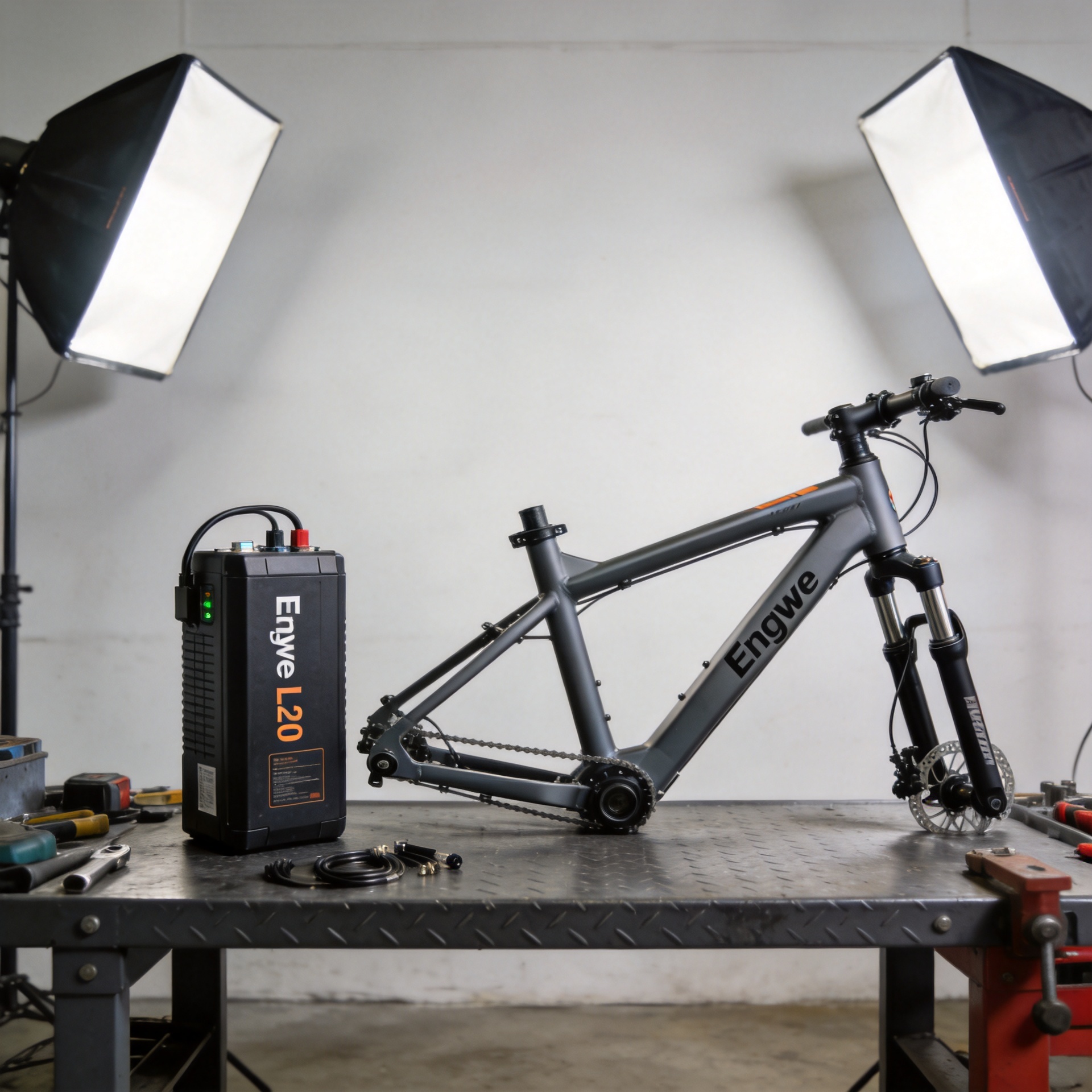
Buying an Engwe L20 battery replacement looks simple until the label on the new pack does not match the bike’s electrical system, mounting tray, or charger. For repair shops, resellers, and riders, a fixed verification order is safer than choosing by price or by a familiar-looking connector. The goal is not merely to find a battery that turns on; it is to source one that fits the L20 installation, communicates safely with the bike’s system, and delivers the capacity you expect.
This guide focuses on the checks that matter before an order: nominal voltage, 48V capacity, housing and rail fitment, connectors, charging requirements, and the information a supplier should confirm in writing.
Start With the 48V System, Not the Battery’s Shape
The first rule for an Engwe L20 battery replacement is to match the voltage class of the bicycle. A 48V lithium-ion pack is described by its nominal voltage, not by one fixed meter reading. A common 48V pack built from 13 cell groups in series can read about 54.6V immediately after a full charge, then settle lower as it is used. That is why a number near 54.6V on a fully charged 48V battery is not automatically a mismatch.
What should not be mixed is the system voltage class. A 36V or 52V pack may have a connector that appears compatible, but its voltage behavior, charger requirements, and controller expectations differ. Before ordering, read the old battery label and record the nominal voltage, rated capacity, model code, rated or maximum discharge information if shown, and charger output label. If any of those labels are missing or damaged, obtain clear photos of the battery, battery cradle, connector faces, and charger label before asking for a replacement.
What 13Ah Means for a 48V Battery
Capacity answers a different question from voltage. A 48v 13ah e bike battery has a nominal energy rating of roughly 624Wh, calculated as 48V × 13Ah. That figure is useful when comparing like-for-like packs, but it is not a promised distance figure. The real 48v 13ah battery range changes with rider and cargo weight, terrain, tire pressure, wind, assist level, temperature, motor demand, and the age of the cells.
For an Engwe L20 battery replacement, staying with 48V and 13Ah is usually the cleanest baseline when the original label specifies those values. A higher Ah figure is not automatically an upgrade. It can change pack dimensions, weight, mounting load, charge time, and the space available inside the enclosure. Confirm the physical form factor before treating capacity as the only selection criterion.
Check Model Fitment in Five Places
Battery compatibility is more than a brand name printed on a listing. Use this five-point check before buying an Engwe L20 battery replacement:
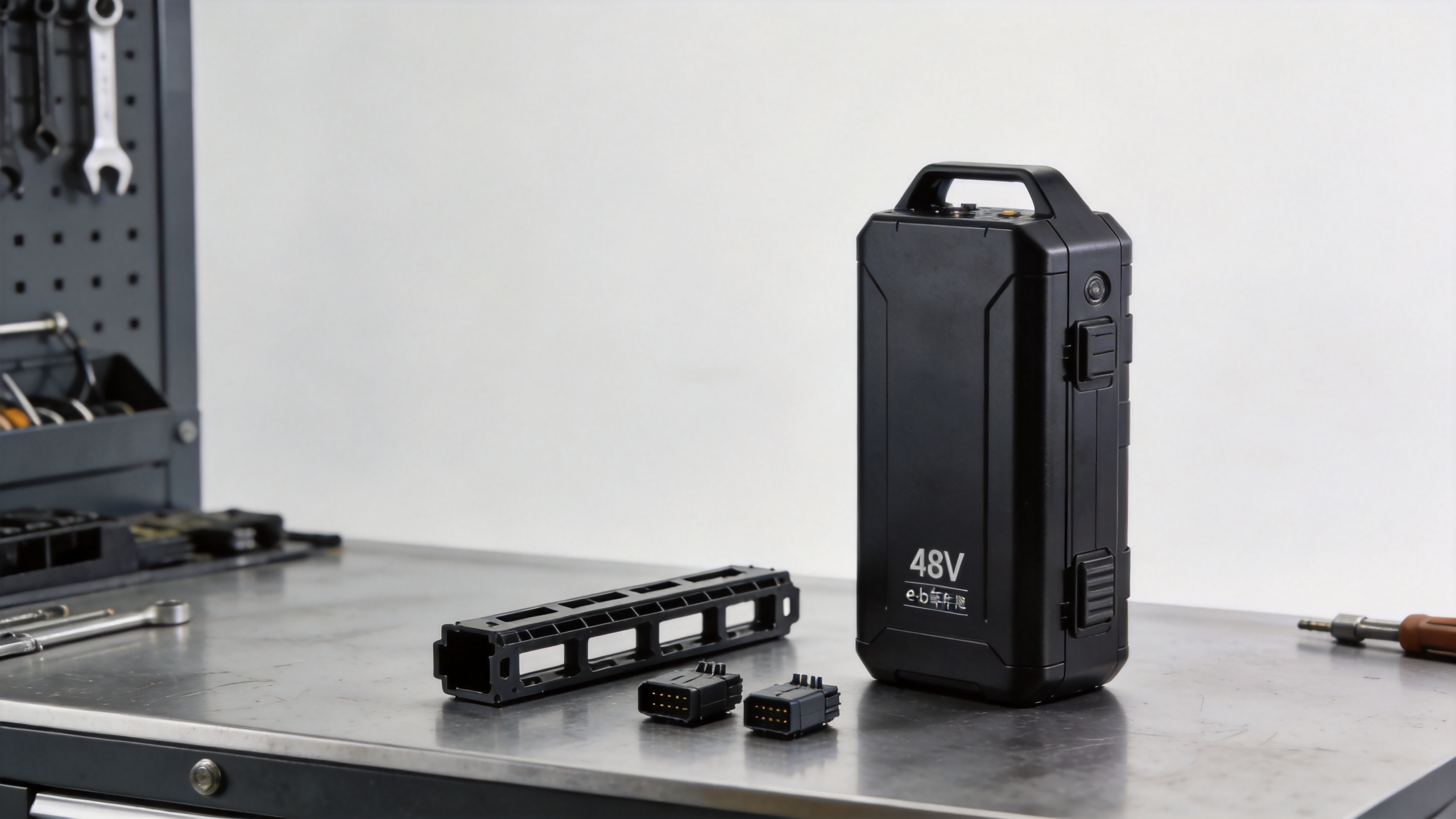
- Battery model and enclosure: Compare the original model code and the complete shell shape. Check overall length, width, height, lock position, handle position, and the contour of the slide rail.
- Mounting rail and latch: Confirm the rail profile, screw locations, locking direction, and whether the battery seats fully without force. A pack that is electrically correct but cannot lock securely is not a suitable replacement.
- Discharge connector and pin layout: Count pins, inspect keying, and compare the male/female arrangement. Do not rely on a connector’s outside shape alone; pin assignments can differ.
- Communication or signal contacts: Some battery bases use extra contacts for status, lights, or controller-related functions. Photograph every contact on the battery and cradle so the supplier can compare them.
- Charger interface: Confirm the charging port type and the charger’s output specification. A 48V-class lithium-ion battery commonly reaches about 54.6V when fully charged, so the replacement must be paired with the correct charging system rather than an arbitrary charger.
A generic battery can look correct in a product photo yet fail at the rail, pinout, or charger step. Verify those details first; they are usually more decisive than a small price difference.
Build a Supplier Confirmation Sheet Before You Order
For one-off service work or repeat inventory, send the same checklist with every inquiry. Ask the supplier to confirm the following against photos and labels, not only the bicycle name:
- Compatibility with Engwe L20 and the original battery model code
- Nominal voltage: 48V
- Rated capacity: 13Ah, or an explicitly approved alternative with its dimensions
- Battery enclosure, rail, lock, and mounting-hole match
- Discharge plug type, pin layout, and any extra signal contacts
- Charging port and compatible charger output
- Included items: battery only, keys, cradle, charger, or mounting hardware
- Clear photos of the label, connectors, rail, and installed-side view
This is especially valuable for resellers and repair shops that manage several e-bike variants. Label the removed battery and photo set with the vehicle model and batch reference; it reduces mix-ups when visually similar packs arrive together.
Choosing a Product-Specific Replacement Option
When the label and physical checks align, a product-specific listing can reduce uncertainty. The 48V Ebike Battery for Engwe L20 Electric Bike EN-L2012 is presented as a 48V, 13Ah option for the Engwe L20. Even with a model-specific option, confirm the original pack’s model code, housing, rail, connector arrangement, and charger requirements with the supplier before placing the order.
That final confirmation helps buyers avoid an unnecessary return and gives suppliers enough evidence to identify the correct version. It also prevents a common mistake—assuming that all 48V packs with the same Ah rating share the same fitment.
Safe Installation and First-Charge Checks
After the correct Engwe L20 battery replacement arrives, inspect the case, terminals, lock, and connector before installation. The pack should slide and latch without forcing the rail. With the bike powered off, check that contacts are clean and dry. Do not modify plugs, bypass the battery management system, or force an incompatible charger to fit.
For the first charge, use the confirmed compatible charger in a dry, ventilated area and follow the battery and charger instructions. Stop and investigate if the connector becomes unusually hot, the housing swells, there is a burning smell, or the battery does not seat correctly. A short, controlled function check after installation is safer than relying on the pack immediately for a long ride.
Final Buying Checklist
Before you approve an Engwe L20 battery replacement, confirm these points in order:
- Original system voltage and replacement voltage are both 48V.
- The original capacity is 13Ah, or any change is intentional and physically verified.
- Battery model code, enclosure, rail, latch, and key position match.
- Discharge pins, extra contacts, and charging port match.
- The charger output is compatible with the replacement pack.
- The supplier has reviewed clear photos of the old battery, cradle, connectors, and labels.
Capacity matters, but complete fitment matters more. By checking voltage, nominal energy, physical mounting, connector layout, and charging compatibility as one system, you can make a more confident Engwe L20 battery replacement decision and reduce the chance of an installation or ordering error.