EN


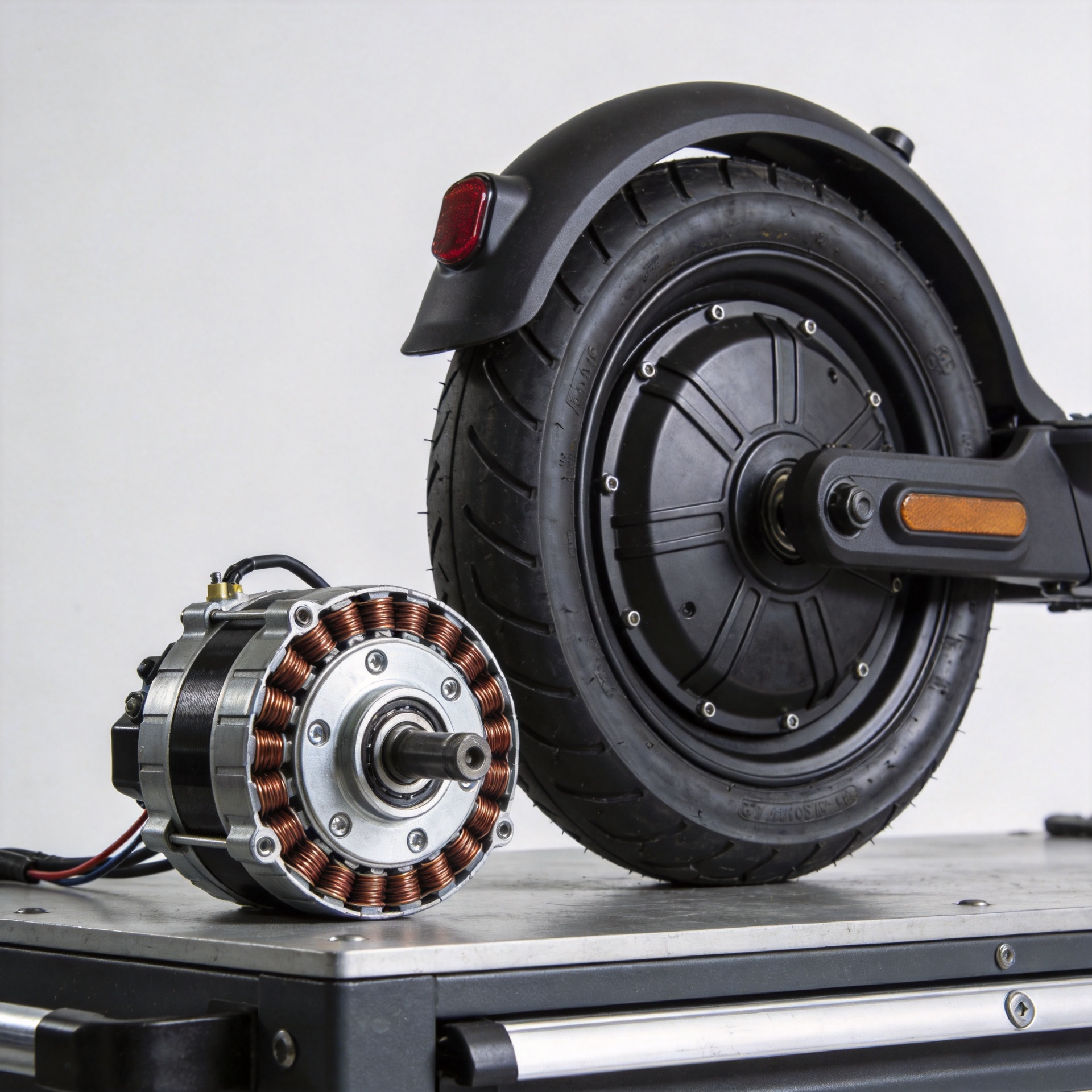
Brushless Electric Scooter Motor vs Motor Wheel: Which Replacement Option Fits Your Build?
When an electric motor scooter loses power, develops intermittent drive, or starts making mechanical noise, the replacement choice is rarely as simple as ordering “a new motor.” Buyers normally face two paths: replace the brushless motor inside the existing wheel system, or install a complete motor wheel assembly. Both can restore an electric motor scooter, but they solve different problems and demand different compatibility checks.
For distributors, repair shops, and fleet-maintenance buyers, a sound decision comes from separating an electrical fault from a wheel-system fault. This guide compares the two options around the measurements and interfaces that actually determine whether a part fits: voltage and controller signals, axle and dropout geometry, rim and tire condition, brake mounting, cable routing, and total labor.
Start With the Failure: Electrical Core or Complete Wheel System?
A bare brushless motor replacement makes sense when the wheel assembly is still sound. For example, the rim runs true, spokes or wheel hardware are in usable condition, the tire and brake interface are retained, and diagnosis points to the motor windings, Hall sensors, bearings, or internal wiring. In that situation, retaining the wheel can reduce the amount of hardware that must be changed.
A motor wheel is usually the more practical route when the wheel itself is compromised or when a workshop needs a faster, more repeatable replacement. A bent rim, damaged spoke bed, worn wheel hardware, stripped axle interfaces, or a motor shell with external damage can turn a motor-only repair into a longer rebuild. A complete e scooter motor wheel assembly consolidates the motor and rolling structure into one matched unit, although it still must match the scooter or donor build.
Before sourcing either option, record the vehicle’s battery-system voltage, controller specification, wheel diameter, tire format, axle shape, dropout width, brake type, connector style, cable exit direction, and mounting locations. A part that looks close in a photo is not a compatibility confirmation.
Brushless Motor Replacement: When the Existing Wheel Is Worth Saving
Choosing a bare electric motor scooter motor is a component-level repair. It can be attractive when the surrounding wheel parts are known good and the service team has the equipment to disassemble and rebuild the wheel correctly. This option can also preserve an established rim and tire setup where changing the full wheel would create a fit or braking mismatch.
Checks that matter before ordering
- Electrical system: match the intended voltage range and confirm that the controller, phase wires, Hall-sensor connector, and pin arrangement can work together. Connector appearance alone is not proof of compatible signal order.
- Mechanical envelope: compare motor diameter, width, axle flats or keying, axle length, and cable exit position with the original assembly.
- Wheel rebuild requirements: confirm that the hub-to-rim relationship, lacing pattern or fastening method, and any required bearings or seals can be serviced correctly.
- Labor capacity: factor in diagnosis, wheel disassembly, transfer or rebuild work, truing, and final electrical testing—not just the purchase price.
This path is often the right answer when a repair center has trained technicians and wants to avoid replacing good wheel components. It is less attractive when fault diagnosis is uncertain. If a damaged cable, controller fault, or battery issue is mistaken for a motor failure, changing the motor may not resolve the original symptom.
Motor Wheel Replacement: When Fit and Turnaround Matter Most
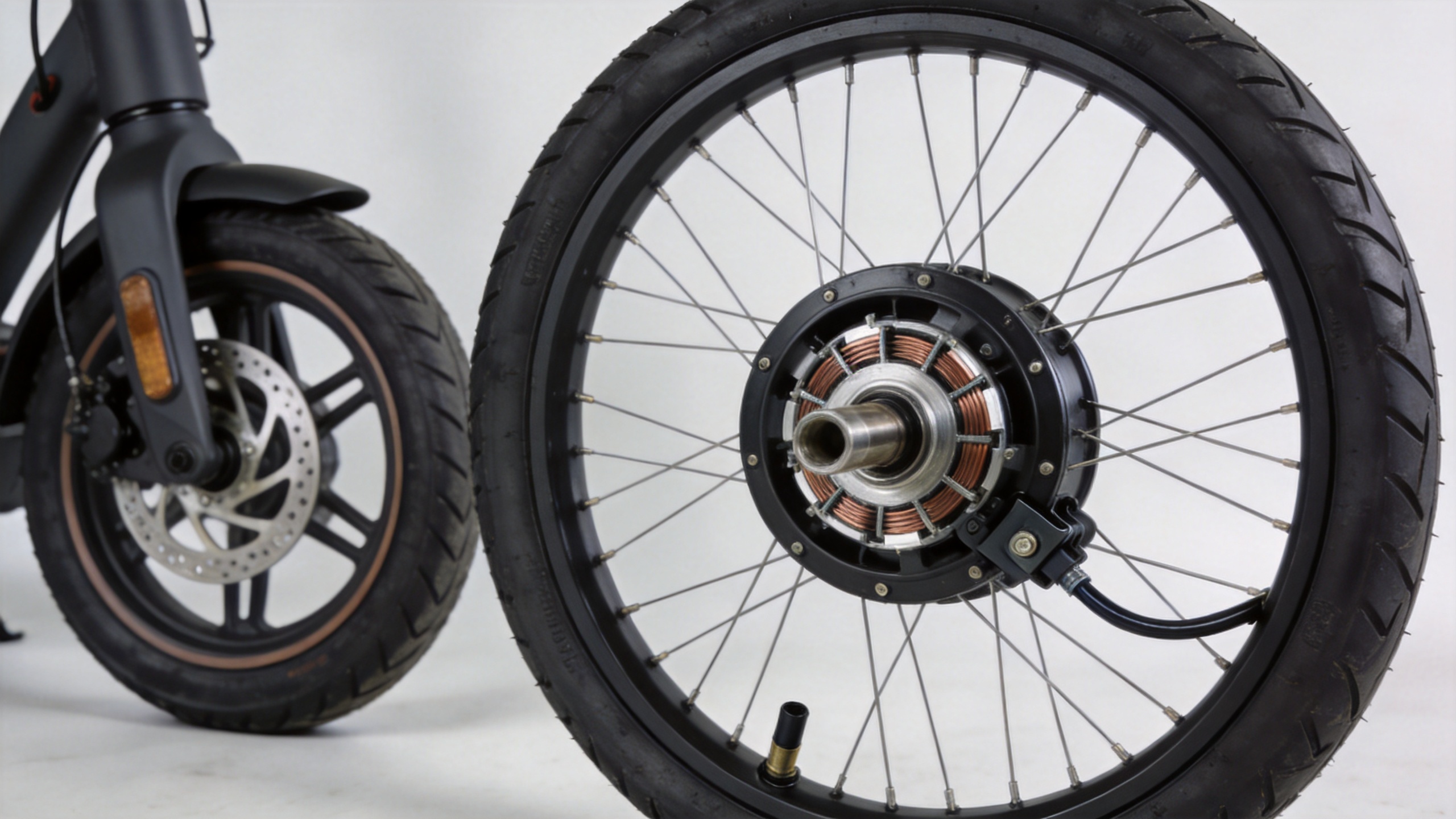
A motor wheel replacement is a system-level decision. The buyer receives a motor already combined with a wheel structure, which can reduce wheel-building work and simplify stocking for repeatable repairs. It is particularly useful when the current rim or motor housing has been damaged, or when a shop wants to swap the affected assembly and inspect the old unit separately.
The trade-off is that more mechanical interfaces must align. Check wheel and tire size, rim profile, axle dimensions, dropout spacing, brake rotor mounting position, caliper clearance, fender clearance, and the path of the motor cable. Even a suitable electric scooter motor replacement can be impractical if its axle cannot seat securely or its brake rotor does not align with the caliper.
| Decision factor | Bare brushless motor | Complete motor wheel |
|---|---|---|
| Suitable starting condition | Original wheel components are serviceable | Motor and wheel system both need replacement or inspection |
| Workshop work | Higher: diagnosis, disassembly, rebuild, and truing may be required | Lower wheel-build workload, but installation and alignment checks remain |
| Mechanical compatibility focus | Motor shell, axle, bearings, and rebuild interfaces | Wheel size, tire, axle/dropout, brake interface, and clearance |
| Electrical compatibility focus | Voltage, controller, phase/Hall wiring, connector logic | Same electrical checks, plus cable length and exit direction |
| Useful when | The repair team can preserve a proven wheel setup | Fast replacement and a matched motor-wheel assembly are priorities |
Use a Compatibility Checklist Before You Commit
For a consideration-stage purchase, use a simple pass/fail checklist rather than selecting only by wattage. Wattage labels do not confirm fit, and an e scooter motor intended for a different vehicle architecture can introduce safety and service issues.
- Identify the original wheel position: front or rear, driven or non-driven.
- Confirm battery voltage and controller compatibility, including phase and Hall-sensor connections where applicable.
- Measure axle length, flats, thread or retention format, and dropout spacing.
- Verify wheel diameter, tire type, rim width, and frame or fork clearance.
- Check the brake setup: rotor mounting interface, rotor position, caliper alignment, and cable or hose clearance.
- Confirm cable exit direction, cable length, connector type, and protection from rubbing or bending.
- Plan a no-load functional test followed by a controlled road test after installation.
For buyers evaluating a wheel-based replacement, two catalog examples can help illustrate the kind of product record that must still be verified against the destination build: 500W motor wheel with red cable and 48V 500W motor wheel with black cable. Their published product titles identify different cable and application references; they do not replace a measurement-and-wiring confirmation for your scooter.
Replacement Order Worksheet for Technical Buyers
For repeat repairs, record the original part and the requested replacement in one work order. This short worksheet helps a purchasing team compare an electric motor scooter record, an e scooter motor record, and an electric scooter motor replacement record before placing an order.
| Work-order check | Record for the existing build | Confirm for the replacement |
|---|---|---|
| Vehicle identifier | electric motor scooter model and driven-wheel position | electric scooter motor replacement application reference |
| Battery and controller | e scooter motor voltage and controller connection | electric motor scooter electrical-system match |
| Phase and sensor leads | electric scooter motor replacement connector and pin arrangement | e scooter motor cable routing |
| Axle interface | electric motor scooter axle flats, length, and retention | electric scooter motor replacement axle geometry |
| Dropout fit | e scooter motor dropout width and seating surfaces | electric motor scooter clearance check |
| Wheel and tire | electric scooter motor replacement wheel diameter and tire format | e scooter motor rim and tire compatibility |
| Brake interface | electric motor scooter rotor mount and caliper position | electric scooter motor replacement brake alignment |
| Cable exit | e scooter motor exit direction and cable length | electric motor scooter cable protection route |
| Workshop action | electric scooter motor replacement installation and test plan | e scooter motor post-installation inspection |
| Final release | electric motor scooter no-load and controlled-road-test result | electric scooter motor replacement service record |
Compare Total Repair Cost, Not Just the Part Price
The least expensive component may not be the lowest-cost repair. With a bare motor, include diagnostic time, wheel labor, consumables, potential rebuilding work, and the chance that an old rim or tire will need attention soon afterward. With a motor wheel, include the wheel assembly cost, any tire or brake transfer work, fitment adjustments, and the time needed to validate controller communication.
For an electric motor scooter fleet, consistency can matter as much as an individual repair cost. A standardized motor-wheel replacement can shorten troubleshooting and reduce variation between technicians, provided the fleet uses compatible builds. For mixed fleets or older models, a motor-only repair may be more economical when it preserves proven vehicle-specific hardware.
Which Replacement Option Should You Choose?
Choose a brushless motor replacement when the existing wheel system is structurally sound, the fault has been diagnosed at the motor level, and the workshop can perform the required rebuild and verification. Choose a motor wheel assembly when the wheel system has damage, downtime needs to be reduced, or you need a matched motor-and-wheel unit for a repeatable service process.
In either case, treat voltage, controller wiring, axle geometry, braking interfaces, and physical clearances as non-negotiable checks. For sourcing teams, providing photos of the original axle, connectors, brake side, wheel label, and measured dimensions makes it easier to confirm whether an electric scooter motor replacement is appropriate before shipment. That preparation helps protect both installation time and customer safety.