EN


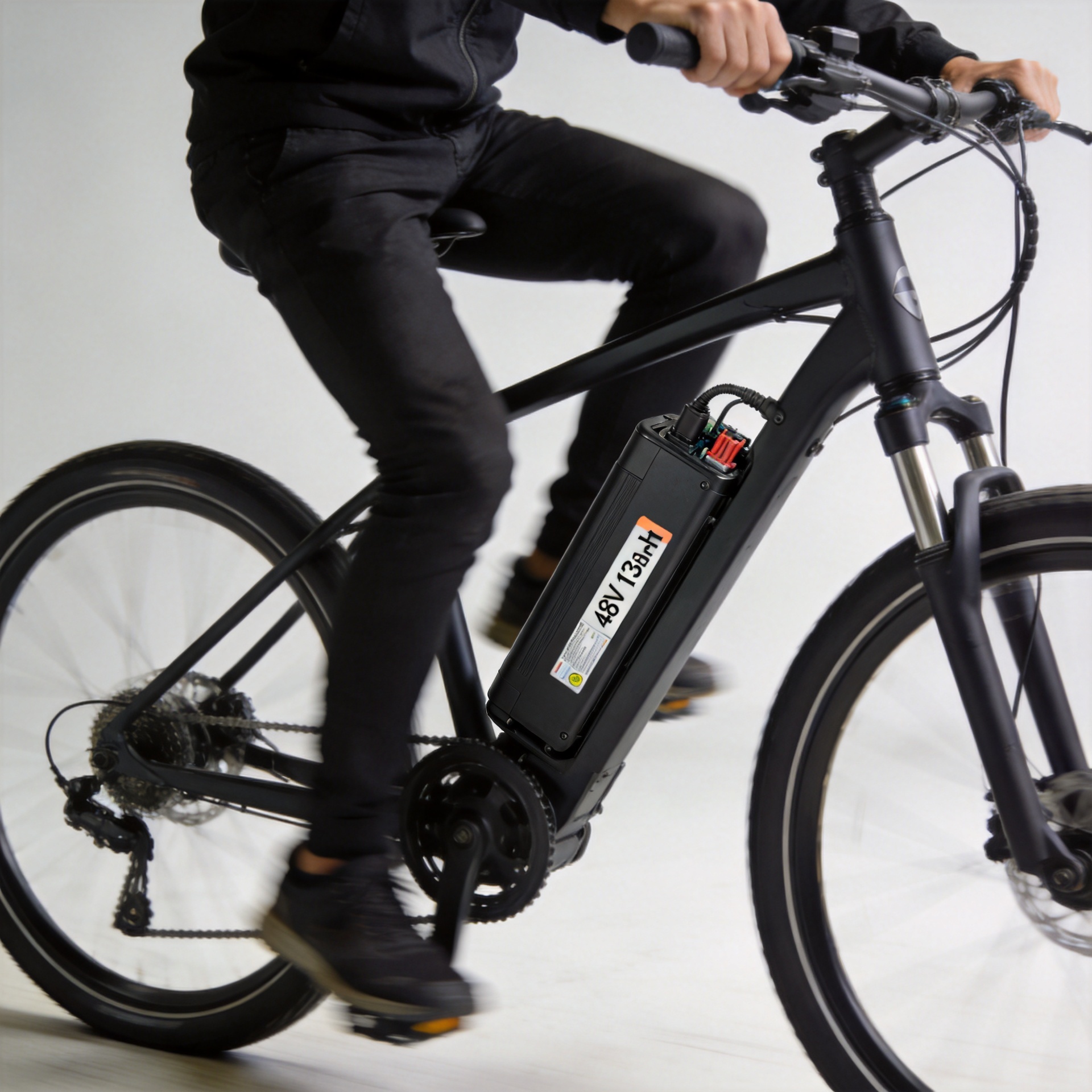
How Far Can a 48V 13Ah E-Bike Battery Go? Factors Buyers Should Compare
A 48v 13ah battery range question sounds as if it should have one clean answer. It does not. A 48V, 13Ah pack stores a useful amount of energy, but the distance it delivers depends on the bike, the rider, and the trip. For a replacement battery buyer, the better question is: “What range is realistic on this exact e-bike, and is the pack truly compatible?”
Start with the nominal energy calculation: 48V × 13Ah equals about 624Wh. That figure gives a more useful starting point when estimating 48v 13ah battery range than voltage or amp-hours alone. On a lightly assisted, flatter route, a 624Wh pack may support a substantially longer ride than it will on steep hills at high assist. Treat any mileage figure as a planning range, not a promise.
What a 48V 13Ah Battery Rating Actually Tells You
The 48v 13ah e bike battery label combines two specifications. For anyone comparing a 48v 13ah e bike battery, that distinction prevents a misleading one-number comparison. Voltage describes the electrical system the battery is designed to support. Amp-hours describe how much charge the pack can hold. Multiplying them produces watt-hours, the approximate energy budget available for riding.
That makes 624Wh the useful comparison number for a 48V, 13Ah pack when comparing 48v 13ah battery range. If a bike consumes roughly 15–25Wh per mile under real conditions, the rough planning window is around 25–40 miles (about 40–65km). A gentle commute with meaningful pedaling may use less energy; fast riding, hills, frequent stops, cold weather, or a heavier load can use more. In other words, capacity is the starting point, not the finish line.
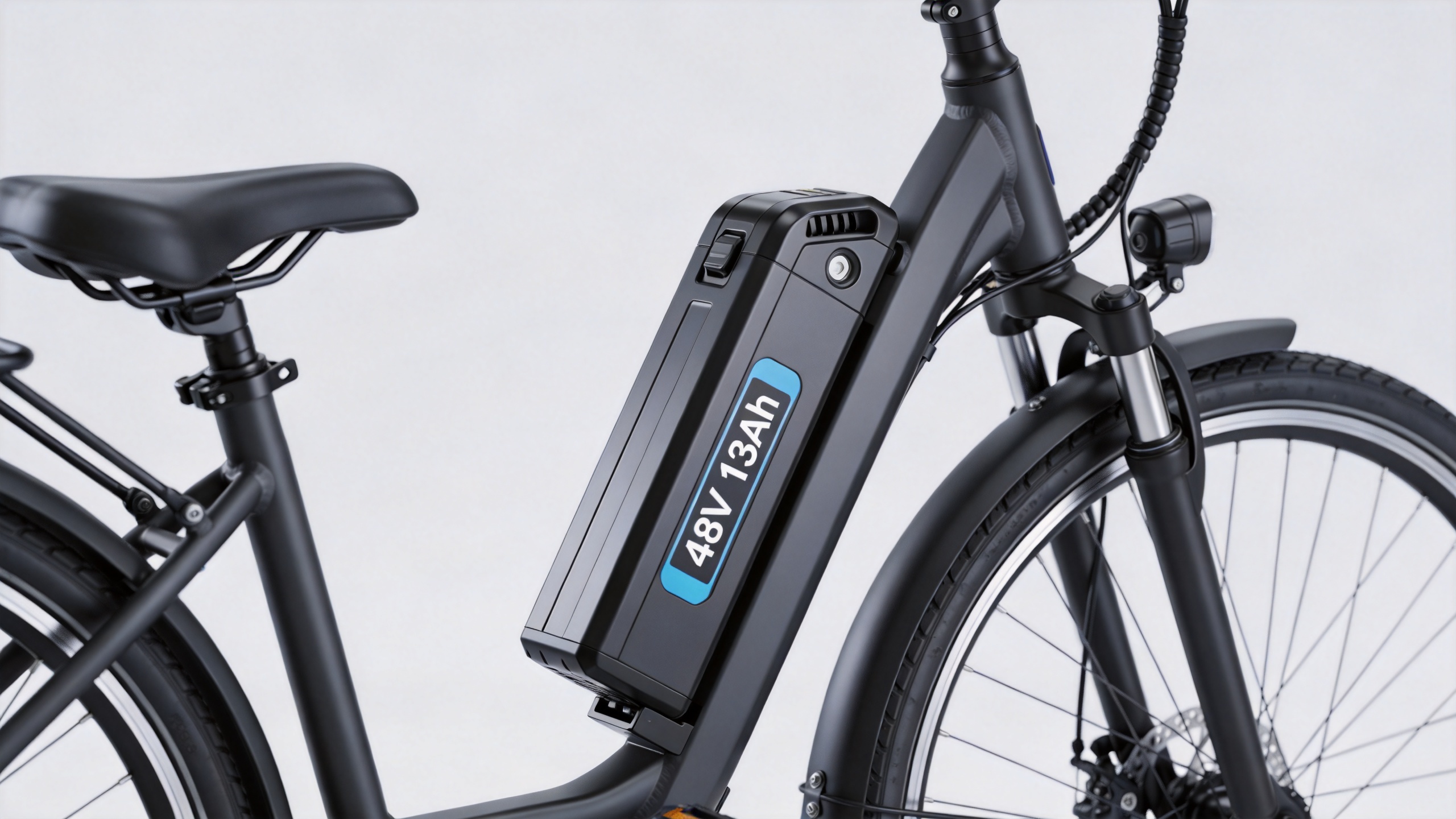
Why Actual 48v 13ah Battery Range Can Vary So Much
Two riders can begin with the same 48V 13Ah pack and finish with very different 48v 13ah battery range results. The biggest variables are usually straightforward:
- Motor demand: A higher-power motor or sustained high-output riding draws down the energy budget faster.
- Assist level and throttle use: Higher assist and throttle-heavy riding can be convenient, but they increase watt-hours used per mile.
- Terrain and wind: Long climbs, loose surfaces, headwinds, and repeated acceleration all demand more energy.
- Rider and cargo weight: More total mass generally means more energy is required to accelerate and climb.
- Speed: Air resistance rises quickly at higher speeds, so a small speed increase can have a meaningful range cost.
- Temperature and battery condition: Cold conditions and an aging pack can reduce usable energy compared with a new battery used at moderate temperatures.
This is why “battery capacity is larger” does not automatically mean “range will be better.” A well-matched pack on an efficient setup may be the more useful choice than a larger pack that is poorly matched to the bike or rider’s route.
A Practical Way to Estimate Your Own Ride Distance
Use the 624Wh figure as a budget. First, identify the way the bike is normally used: relaxed pedal assist on mostly flat roads, mixed commuting with stops, or high-assist riding with hills. Then estimate energy use per mile or kilometre from real rides on the same bike whenever possible. The most reliable range estimate comes from your own typical route, not a generic claim.
For planning, leave a reserve instead of trying to use every watt-hour. Battery displays, riding conditions, and cell behavior are not perfectly constant. If the route includes a long hill near the end, plan for that demand early rather than assuming the remaining bars will behave like the first part of the ride.
For workshops and parts buyers working with a 48v 13ah e bike battery, it is also helpful to record the rider load, average assist setting, weather, and route profile when comparing packs. That turns a vague range complaint into a repeatable assessment.
What to Compare Before Buying a Replacement Battery
Do not buy solely because the label says 48V and 13Ah. A replacement must match the whole electrical and mechanical system. Before ordering, compare the following points:
- Nominal voltage: Confirm that the bike’s controller is intended for a 48V battery system.
- Connector and polarity: The connector must fit and be wired correctly. Similar-looking plugs are not proof of compatibility.
- Battery case and mounting rail: Check the enclosure shape, lock position, mounting interface, and available frame space.
- Dimensions and cable exit: Measure the existing pack and make sure the cable route will not be strained or pinched.
- Discharge capability and BMS: The battery-management system and discharge rating need to support the controller’s current demand; capacity alone cannot confirm this.
- Charger compatibility: A typical 48V lithium-ion system uses a charger designed for that system. Do not assume an old charger is suitable without verifying its output and connector.
- Model-specific fit: When replacing an original pack, confirm the exact bike model and revision with the seller or technical support.
For example, buyers evaluating a model-specific replacement can review the fit details of the 48V Ebike Battery for Engwe L20 Electric Bike EN-L2012 alongside the existing battery’s label, mounting arrangement, and connector. The listing name alone should not replace a compatibility check.
How Buyers Should Compare 48V 13Ah Packs
When two packs both show 48V and 13Ah, compare the details behind the headline numbers. A 48v 13ah e bike battery should be judged by fit and electrical matching as well as listed capacity. Ask for clear information on the intended bike model, physical dimensions, connector, charger requirement, and any current or BMS limits relevant to the controller. A lower purchase price can become expensive if a battery does not fit, cannot sustain the bike’s demand, or creates unnecessary returns work.
For repeat purchasing, a simple receiving checklist helps: inspect the label, compare the connector and case against the approved sample, confirm the charger requirement, and test the fit before the battery enters stock. This is especially valuable for repair shops and distributors handling several e-bike variants.
Bottom Line: Plan Range, Then Verify Compatibility
A 48V, 13Ah battery represents roughly 624Wh of nominal energy, so the likely 48v 13ah battery range should be assessed as an energy budget rather than a fixed distance. Depending on assist level, terrain, speed, load, weather, motor demand, and battery condition, a reasonable planning range may be around 25–40 miles rather than one fixed distance. The strongest buying decision combines that energy estimate with a model-specific compatibility review.
Use the 48v 13ah battery range as a route-planning guide, but use voltage, connector, case fit, discharge capability, and charger match as the purchasing checklist. That balance helps buyers select a replacement that is practical for the trip and appropriate for the bike.