EN


How to Source Electric Scooter Hub Motors for Replacement Orders
Ordering an electric scooter hub motor for a replacement job looks simple until the shipment arrives and the wheel, connector, or mounting side does not match the scooter. For distributors, repair-part buyers, and service networks, the important question is not whether a motor is described as “similar.” It is whether the supplied assembly can be verified against the target model before the order is released.
This guide turns that verification into a practical purchasing process. It is written for replacement orders, especially when the buyer needs a rear-wheel assembly and must reduce the cost of returns, workshop delays, and split shipments.
Start with the exact scooter model and wheel position
An electric scooter hub motor is built into the wheel hub, so compatibility depends on more than nominal voltage or wheel diameter. Start an RFQ with the scooter brand, model, model year or revision when known, and the required position: front or rear. A rear electric scooter hub motor should not be assumed to replace a front unit simply because the tire size looks similar.
Ask the repair team for photos of the original wheel on both sides, the motor label, cable exit point, brake mounting pattern, and the fork or swingarm mounting area. These images give a supplier something concrete to compare. They are more useful than a short request for “a scooter motor parts replacement.”
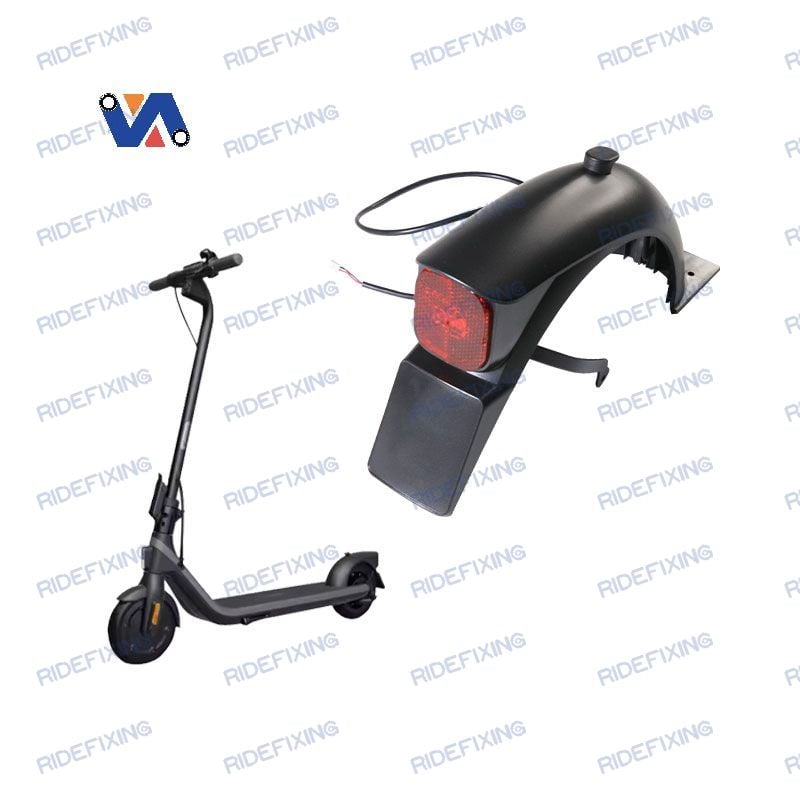
For a model-specific reference, buyers sourcing a rear replacement for the Max G2 can review the confirmed product record for New Image Original Ninebot KickScooter Max G2 Electric Scooter Rear Wheel Hub Motor Parts. The product name identifies it as a rear-wheel hub-motor part; final fitment should still be checked against the removed unit and the buyer’s scooter revision.
Define what is included: motor-only, wheel assembly, or service bundle
Replacement listings often use similar language for very different deliveries. One offer may cover an electric scooter hub motor only, while another includes the rim, tire, tube, brake disc, wiring lead, or controller connection. That difference changes both the quotation and the receiving inspection.
| Order scope | What to confirm before purchase | When it is practical |
|---|---|---|
| Motor-only | Stator size, axle dimensions, connector, cable length, and transfer work | When the existing rim and wheel parts are serviceable |
| Hub motor with rim | Rim diameter, spoke pattern, tire compatibility, brake mounting, and axle fit | When workshop time matters and the existing wheel is damaged |
| Complete rear-wheel service set | Every included component, packaging separation, and replacement procedure | When a repair network needs a more consistent replacement process |
Do not let the phrase scooter motor parts determine the order scope. Put the required inclusions in the purchase order and request itemized photos or a packing list before balance payment. This prevents a motor-only part from being received where a ready-to-install wheel was expected.
Compare the electrical connection before comparing price
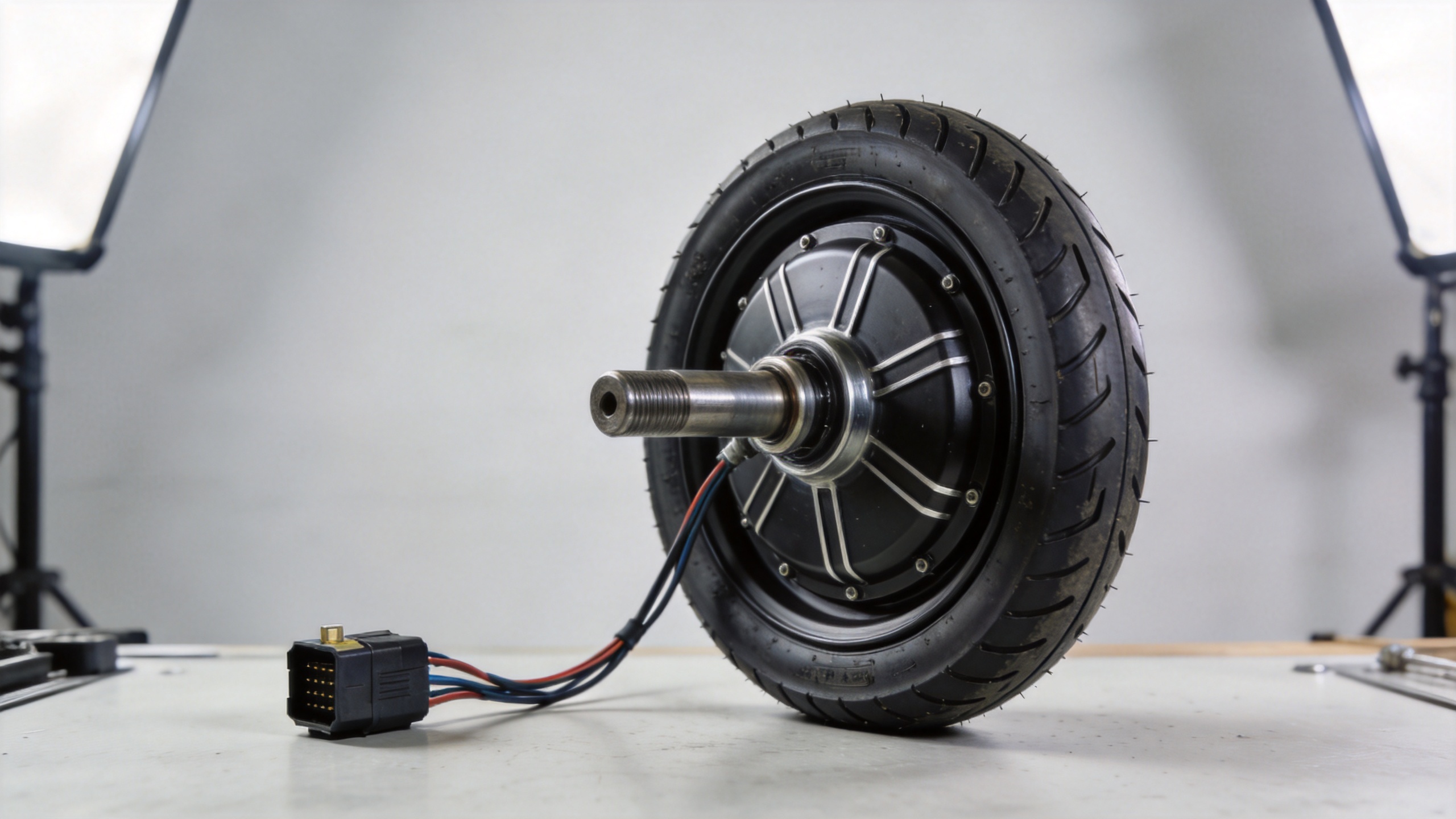
Two motors can share a broadly similar appearance yet be incompatible with the scooter’s controller. Compare the connector housing, pin count, wire colors, cable exit direction, harness length, and any separate sensor or lighting leads. A connector that physically plugs in is not, by itself, proof that the electrical signals or wiring layout match.
For an electric scooter hub motor replacement order, send the supplier clear connector photographs beside a ruler and capture both the motor-side and vehicle-side harness. State whether the request is for a plug-and-play replacement or whether the workshop can perform controlled harness work. If a controller is included in the quotation, treat it as a separate compatibility item rather than assuming it resolves a motor mismatch.
This is also where total ownership cost matters. The lowest unit price can be less attractive if the part requires extra labor, connector changes, or another outbound shipment after fitment fails. A concise technical checklist ahead of ordering is usually cheaper than diagnosing a mismatch after delivery.
Check the mechanical fit points on the removed wheel
Mechanical checks are equally important for a rear electric scooter hub motor. Confirm wheel diameter, tire format, axle flat width and orientation, axle length, brake-disc or drum brake fit, fender clearance, and cable routing. Photograph the dropout area and brake side separately so the supplier can distinguish left/right orientation and the intended cable path.
- Measure the existing tire and rim marking rather than estimating from a product photo.
- Record the axle profile and the space available between the rear mounts.
- Check the brake mounting pattern and whether the original hardware must be retained.
- Confirm where the motor cable exits the axle and whether that direction clears the frame.
- Ask for outer packaging photos if wheel assemblies will be shipped in volume.
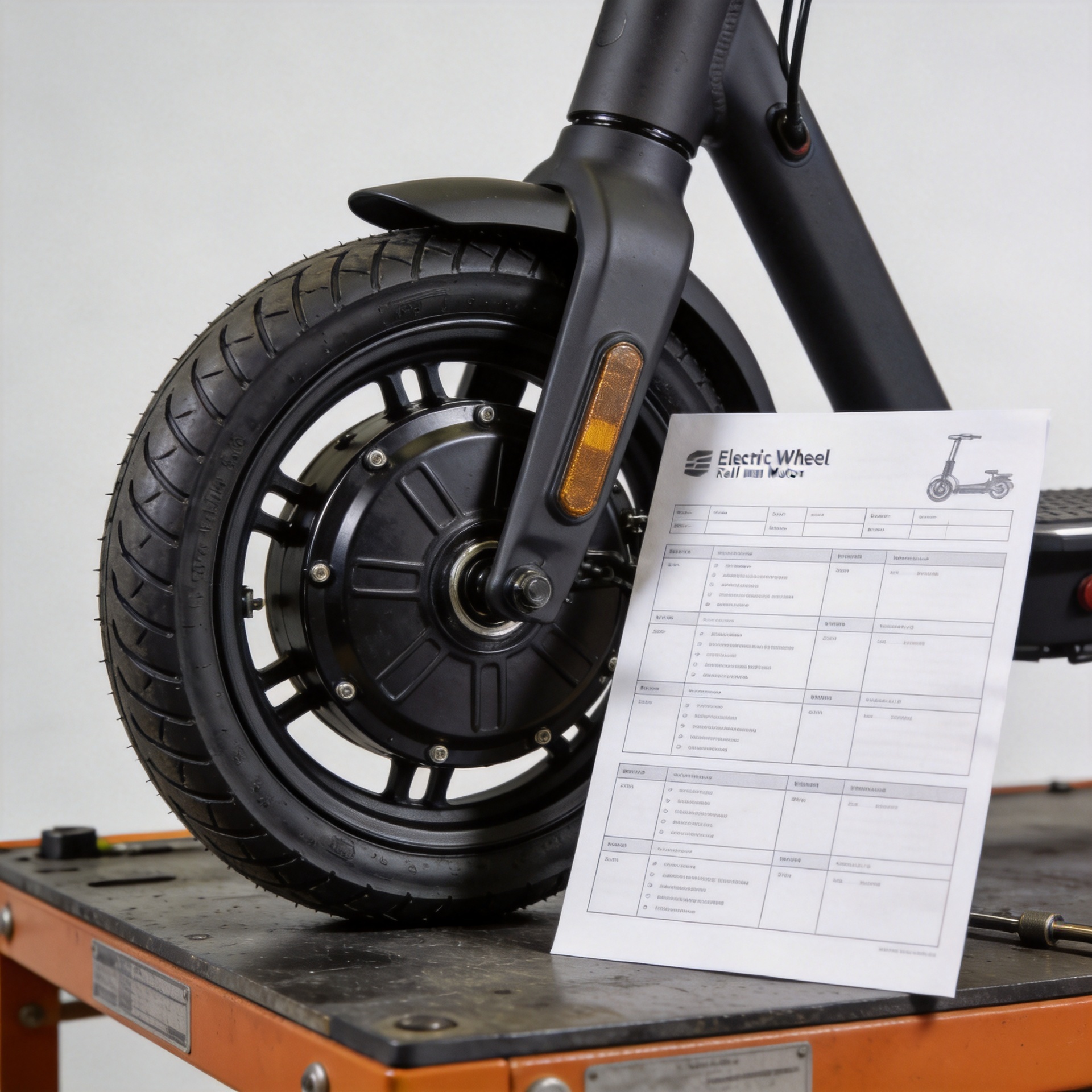
These checks are particularly useful for repeat replacement orders. Once the buyer has an approved sample, retain the photo set and specification sheet as a reference for future scooter motor parts purchases.
Use a purchase-order checklist that the supplier can answer
A usable RFQ should give both sides a shared approval record. The following checklist is short enough for a buyer to use repeatedly while still capturing the details that cause most replacement-order errors:
- Target scooter make, model, and known revision.
- Required location: rear wheel or front wheel.
- Requested delivery scope: motor-only, motor with rim, or a complete wheel assembly.
- Photos of the original motor label, wheel sides, axle, brake mounting pattern, and connectors.
- Wheel and tire marking, plus the required brake arrangement.
- Detailed photos of the cable plug, conductor count, cable length, and cable exit direction.
- Quantity, sample approval requirement, labeling, and packaging expectations.
- Written supplier confirmation of the comparison points—not only a generic compatibility statement.
Suppliers that provide compatibility assistance can help organize this confirmation process, but the buyer should keep the final approved specification with the purchase order. New Image’s site catalog can be used to identify relevant spare-part records and begin a technical discussion; it should not replace verification of the actual removed component.
Plan a sample and receiving inspection for repeat orders
For an initial or high-value order, approve one sample before releasing the full replacement quantity. On receipt, compare the sample with the documented photos and check the wheel position, axle mounting, connector, cable path, and brake relationship before installation. Record the outcome with images so that the approved version becomes the reference for replenishment.
For recurring orders, use a simple receiving checklist: confirm the carton label, count the declared components, inspect cable protection, compare connectors against the approved sample, and segregate any variation before it reaches technicians. This approach gives repair networks a controlled way to source an electric scooter hub motor without relying on memory or a listing photo.
Make the replacement order easier to approve
The right electric scooter hub motor is the one that matches the scooter model, rear-wheel position, mechanical fit points, and wiring connection defined in the order. Treat power claims and generic wheel size as secondary screening points, not as proof of fitment. When buyers provide original-part photos and require a written comparison, they make supplier communication faster and reduce the chance of a costly mismatch.
Before placing your next order, prepare the verification checklist, identify the requested assembly scope, and request confirmation against the removed part. That process supports clearer quotations, safer receiving checks, and more reliable replacement planning for scooter service customers.