EN


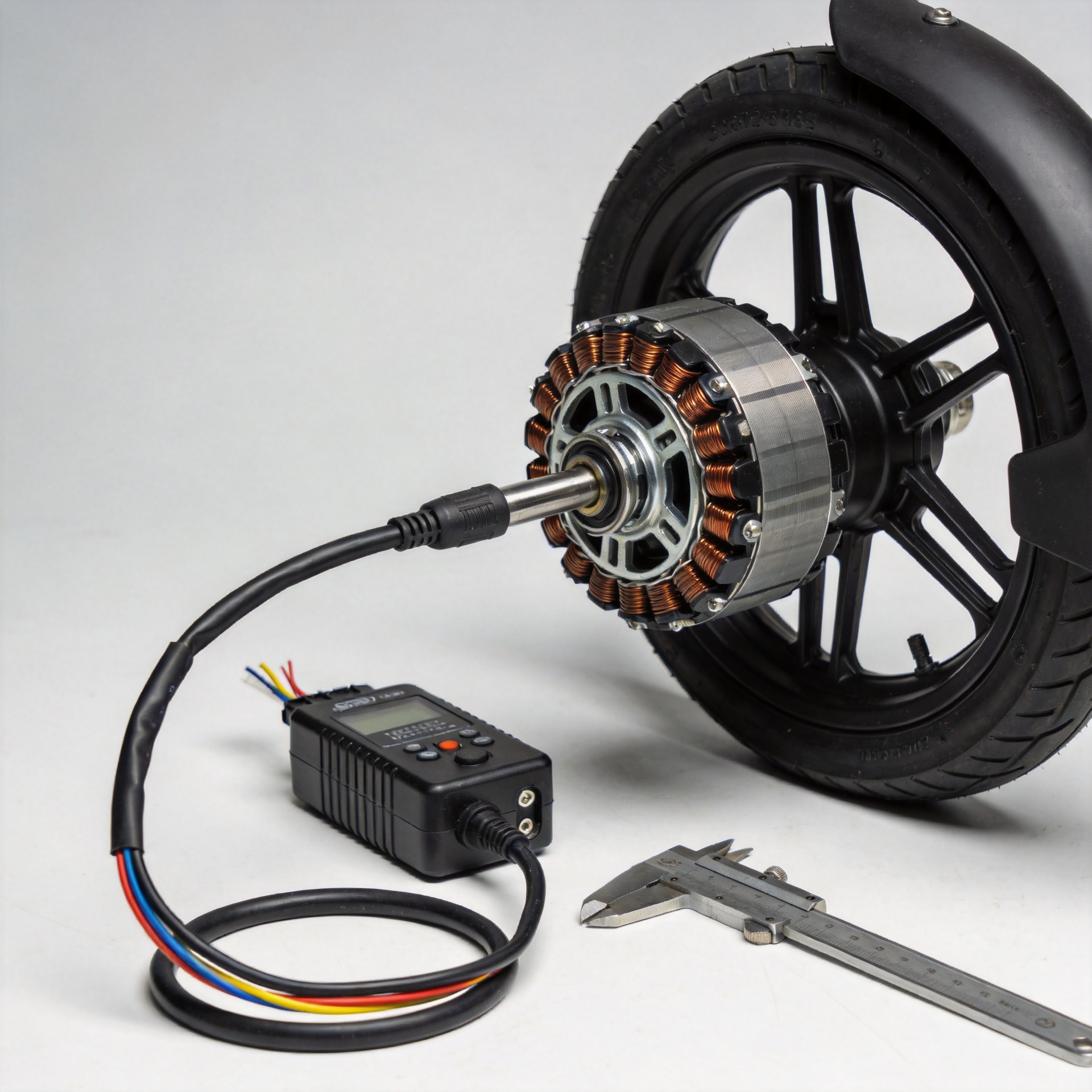
Electric Scooter Motor Selection Guide: Compare Voltage, Wattage and Hub Size
Choosing an e scooter motor for a replacement or a production order is not a matter of matching one number on a listing. A motor can fit inside the wheel and still be the wrong choice for the battery, controller, brake arrangement, or frame. For distributors, repair shops, and buyers sourcing spare parts, the dependable approach is to compare the complete drive system before placing an order.
As a technical advisor working with electric-scooter parts selection, I start with actual fitment rather than headline wattage. The goal is simple: make the replacement e scooter motor work safely with the scooter that is already on the road.
Start with the scooter’s original electrical system
Voltage is the first filter for any e scooter motor. Confirm the nominal battery voltage from the scooter label, battery pack, controller label, or original motor marking. A 48V system should normally be evaluated with a 48V-rated motor and a controller intended for that system. Do not treat a matching connector as proof of compatibility: connector pinout, hall-sensor wiring, phase-wire order, and controller settings can all differ.
Market listings often group 24V, 36V, and 48V systems with increasing wattage ranges, but those ranges are context rather than a universal rule. The controller determines how much current reaches the motor, while the battery and wiring must safely support that demand. Before buying a 48V 500W electric scooter motor, verify the controller’s nominal voltage, current limit, plug type, hall connector, and the condition of the battery pack.
Compare wattage as a workload requirement, not a speed promise
Rated wattage helps frame the intended workload of an e scooter motor, but it does not guarantee a specific top speed. Rider mass, gradients, tire diameter, controller current, battery voltage under load, and local settings all change real-world results. A higher-wattage motor can be useful for frequent climbing or heavier loads, yet it can also expose limits in the controller, battery, connectors, and thermal management.
| Selection question | Why it matters | What to verify |
|---|---|---|
| What voltage is the existing system? | Sets the electrical compatibility baseline. | Battery and controller labels. |
| What is the controller current limit? | Influences delivered torque and heat. | Rated and peak controller current. |
| How is the scooter used? | Helps match continuous load to motor rating. | Terrain, rider/load range, duty cycle. |
| Is this a direct replacement? | Prevents unplanned changes to brakes or wiring. | Original motor label and photographs. |
For many replacement jobs, a 500W electric scooter motor selection process should begin by preserving the original voltage and nominal power class. Upgrading power without engineering the supporting system is usually less predictable than selecting a correctly matched replacement.
Use hub and wheel dimensions as hard fitment checks
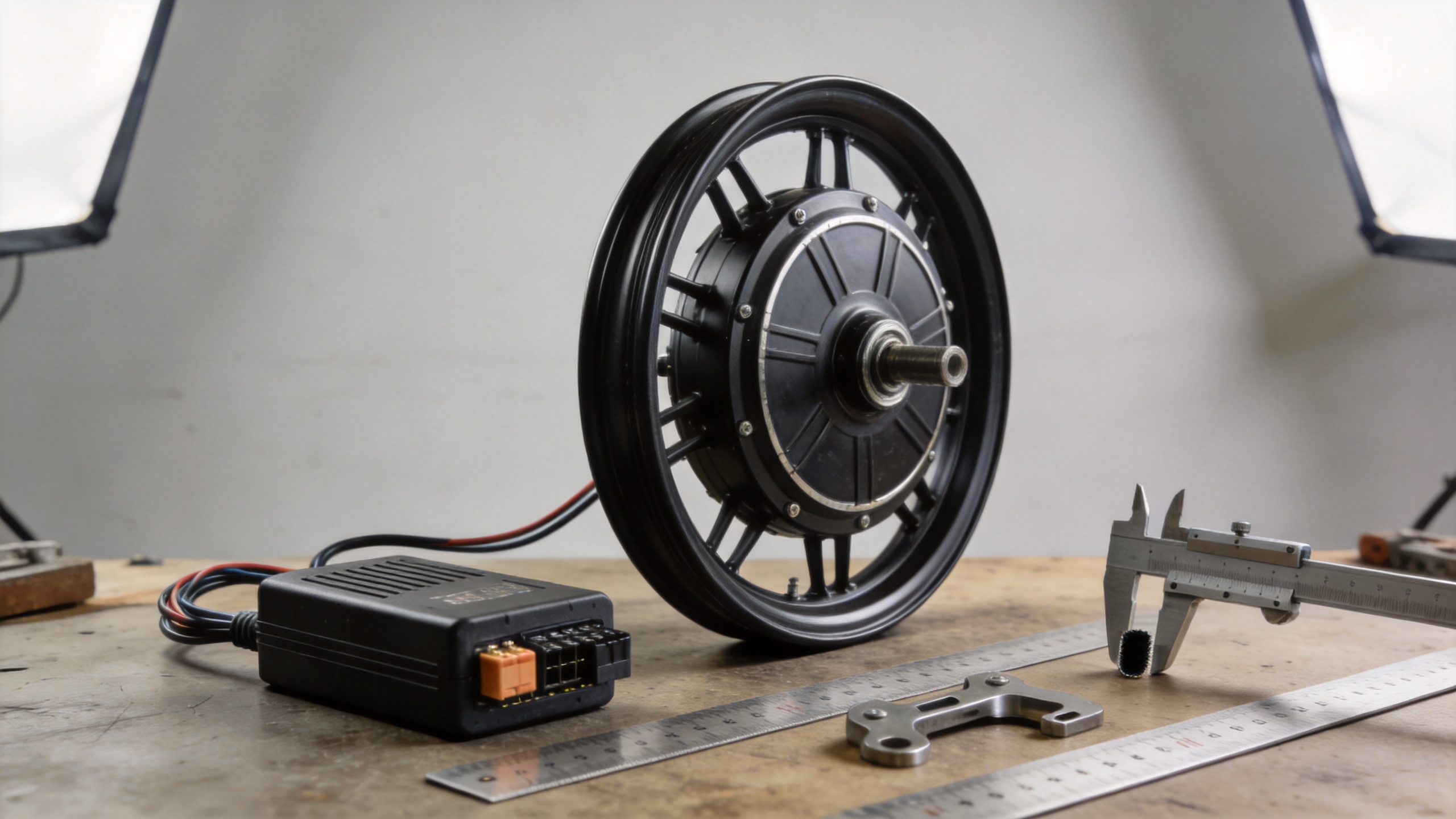
Hub size is more than wheel diameter. When comparing an e scooter motor, collect the tire size, rim profile, dropout width, axle flat dimensions, axle length, brake-disc mounting pattern, and cable-exit orientation. A 10-inch wheel label alone does not confirm that a hub motor will clear the fork, line up with the caliper, or seat correctly in the tire.
This is where replacement orders often go wrong. Two hub motors can share a nominal 10-inch description while using different axle shoulders, cable exits, or brake interfaces. The most practical request to send a supplier is a set of clear photos of both sides of the original wheel plus measured dimensions. If the original e scooter motor is still available, photograph its label and connectors before it is removed.
Match the controller, connectors, and cable exit
An e scooter motor is part of a system. A physically correct motor may need a different controller if its hall-sensor sequence, phase wiring, or communication protocol is not compatible. Do not force connectors together merely because their housings look similar. Compare wire counts, connector shapes, pin arrangements, colors only as a secondary clue, and documented wiring diagrams where available.
Pay attention to cable exit position too. A cable that points toward the wrong side of the fork can bend sharply, rub the tire, or require an unsafe routing path. The matched product record for a 48V 500W motor wheel replacement kit is a useful example of why buyers should verify voltage, nominal wattage, cable configuration, and model fitment together rather than treating any 48V hub wheel as universal.
A practical comparison sequence for buyers
- Record the original e scooter motor label, wheel size, and motor location.
- Confirm nominal battery voltage and controller voltage/current specifications.
- Measure axle, dropout, brake, rim, and tire-related dimensions.
- Compare phase wires, hall connector, cable exit, and connector pinout.
- Choose a motor with an appropriate rated-power class for the existing system and duty cycle.
- Ask for dimensional drawings or confirmation against the scooter model before bulk ordering.
- Inspect a sample for wheel runout, cable routing, connector fit, and brake alignment before scaling up.
There is a useful mindset shift here: the most suitable e scooter motor is not automatically the one with the largest wattage label. For a repair network or wholesale program, a motor that fits repeatably and works with the existing controller can reduce returns, installation time, and troubleshooting.
Build a receiving checklist for replacement orders
For B2B purchasing, turn the selection work into a repeatable inspection sheet. List scooter model or platform, battery voltage, motor wattage class, wheel size, axle dimensions, brake interface, cable length, cable exit direction, phase connector, hall connector, and controller reference. Check the first units against the approved sample before releasing them to service teams or customers.
New Image focuses on electric-scooter and e-bike parts and can support buyers who need to confirm spare-part compatibility before purchasing. Where the motor is paired with a controller, review the available 48V 500W brushless controller kit details against the original scooter specifications; do not assume the product title alone establishes system fitment.
Final decision: select the complete system, not an isolated motor
A good e scooter motor decision joins electrical matching, mechanical fitment, and intended workload. Use voltage as the first gate, wattage as a workload comparison, and hub dimensions as non-negotiable fitment evidence. Then confirm controller current, connectors, cable exit, brakes, and the battery’s ability to support the system. This method makes 500W electric scooter motor selection clearer and gives buyers a more reliable basis for replacement or repeat orders.