EN


E-Bike Controller Wholesale Checklist: Specs, Connectors, and Packaging
For distributors, repair networks, and private-label buyers sourcing electric cycle spares, a controller order is not a simple “48V unit” purchase. The controller has to communicate with the battery, motor, display, throttle, brake cut-off, and sensor set already fitted to the bike. In a replacement-parts catalogue, this is why electric cycle spares need a model-by-model specification record rather than a generic compatibility claim. A photo, a similar-looking plug, or a matching nominal voltage is not enough to confirm compatibility. This checklist turns a controller enquiry into a quote package a supplier can verify before a bulk order is released.
New Image works with e-bike and e-scooter replacement parts for overseas buyers. For this category, the practical objective is to reduce preventable returns: document the electrical limits, record every connector function, and make the carton label useful to the receiving team. If a requirement is uncertain, it should be marked for sample validation instead of being assumed from an existing controller.
1. Start with the controller’s electrical identity
First, ask the buyer to provide photos of the original controller label, battery label, motor label, and all connectors. Record the battery’s nominal voltage and the controller’s permitted input-voltage range separately. Selection guides commonly discuss 36V, 48V, and 72V e-bike systems, but that does not make those values interchangeable. The battery configuration, BMS behavior, display protocol, and low-voltage cut-off must still be appropriate for the controller being quoted.
| Quote field | What to confirm | Why it matters |
|---|---|---|
| Battery voltage | Nominal voltage and fully charged voltage range | Prevents an incompatible controller from being connected to the pack. |
| Current rating | Rated and peak/battery current if stated | Current limit affects acceleration demand, heat, battery capability, and motor loading. |
| Motor type | Brushless/hub/mid-drive context, Hall-sensor requirement, phase-wire arrangement | Motor wiring and control logic cannot be inferred from the controller case. |
| Control method | Square-wave or sine-wave, where specified by the original system | Replacing one control method with another can change operating behavior and compatibility. |
| Display communication | Connector, pinout, and protocol confirmation | A physically matching plug does not prove the display will communicate. |
For bulk electric cycle spares, request these fields in a spreadsheet rather than leaving them in chat messages. It becomes the reference for samples, production, carton marking, and any later after-sales review of electric cycle spares.
2. Treat connectors as a pinout task, not a visual task
Connector verification is where many replacement-controller orders for electric cycle spares fail. E-bike signal connectors may use multi-pin housings such as JST-style plugs, while battery leads may use dedicated two-conductor high-current connectors. A connector family can have several pin counts, and the same color sequence is not a reliable universal standard. Document the housing shape, pin count, wire color, wire position, mating side, and the function assigned to each wire.
Connector checklist for the enquiry
- Battery input: connector type, polarity, wire gauge, and any anti-spark/pre-charge feature.
- Motor phase leads: number of leads, connector or bullet style, and color order.
- Hall sensor lead: pin count, latch orientation, and wire-function map.
- Throttle, PAS, and brake cut-off: plug family, pins, voltage supply, and the supplied accessory set.
- Display and ignition/key line: connector photo plus a clear statement of the expected display model or protocol.
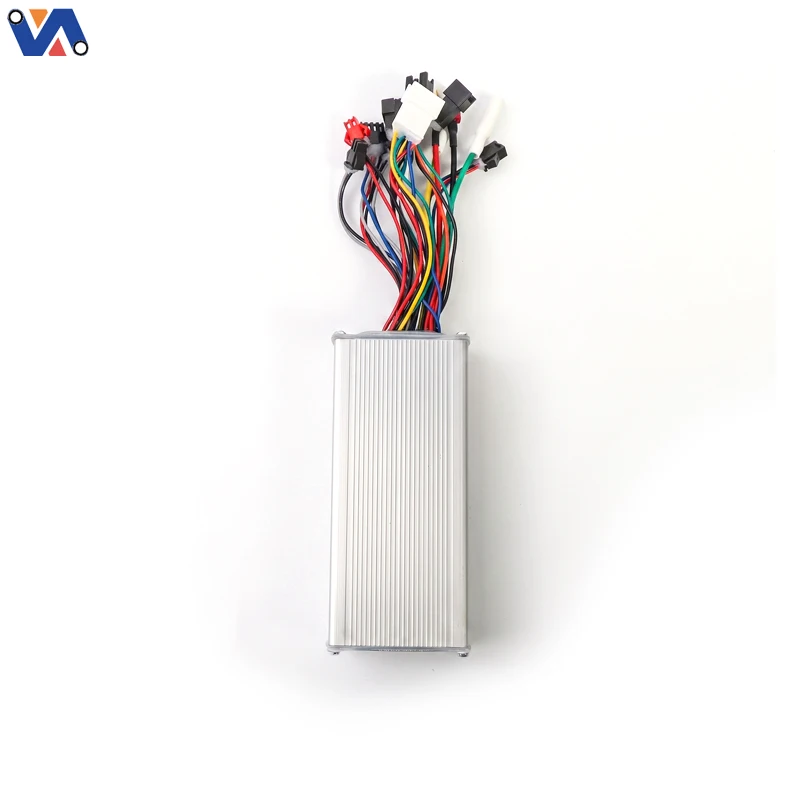
A useful receiving rule is simple: do not approve a connector only because it fits into a mating plug. Confirm the function at each pin against the original harness or a validated wiring diagram. For a replacement option such as the Engwe EP-2 Pro 48V 18A Controller replacement listing, buyers should still compare the order specification with the target bike’s actual controller label and harness before committing to a production quantity.
3. Build a sample gate before confirming the production quantity
Decision-stage procurement benefits from a small approval gate. The goal is not to promise universal compatibility; it is to prove the ordered configuration against the intended bike variant. Ask the supplier to identify the sample label, revision, wire set, and accessories in the same way they will be identified in the production order.
- Approve the specification sheet and connector map.
- Receive a sample with photos of the label, plugs, housing, and included accessories.
- Check installation on the target bike or test harness: power-up, display, throttle/PAS response, brake cut-off, and fault indications.
- Record any required harness, display, or parameter changes before issuing the bulk PO.
- Keep the approved sample ID in the purchase order and inspection plan.
This process is especially valuable when a buyer manages several controller revisions under one model family. Many electric cycle spares look alike across revisions, but a small change in display communication or connector assignment can turn a correct-looking part into a service problem.
4. Specify packing as carefully as the electronics
Controllers are compact, but their wire harnesses and connectors need protection. A wholesale packing request for electric cycle spares should state whether each unit is packed individually, how wires are restrained, what separates sharp connector ends from the controller case, and how the outer carton is labeled. It is better to define a practical packing method than to assume standard retail packaging will suit warehouse receiving or resale.
- Individual bag or protective wrap to limit cosmetic scuffing and loose-wire tangles.
- Harness restraint that avoids sharply bending wires at the controller exit point.
- Inner-box or divider requirements if controllers are shipped with displays, throttles, or other accessories.
- Carton quantity, gross/net weight, carton dimensions, and a consistent item code.
- Outer labels that show model, voltage/current designation, connector revision, batch or date code, and PO reference where available.
For import receiving teams, a carton label that distinguishes connector revisions is more useful than a generic “e-bike controller” label. It helps warehouse staff separate stock before a service technician opens every package.
5. Use this quote-ready wholesale checklist
Before asking for a final quote on electric cycle spares, send the following completed electric cycle spares fields:
- Target bike brand/model/year or internal platform code
- Original controller label photos and dimensions
- Battery nominal voltage and required current limits
- Motor type plus phase and Hall-sensor connector details
- Display, throttle, PAS, brake, and ignition connector map
- Required controller behavior or parameter expectations
- Sample quantity, test criteria, and approval contact
- Unit packing method, inner quantity, master-carton quantity, and label content
- Requested production revision control and inspection evidence
The lowest unit price can be misleading if it omits connector verification, sample identification, or packaging control. A complete request gives both sides a shared definition of the item and makes the final quote easier to compare. When the model-specific facts are available, New Image can help buyers review a replacement-parts enquiry with the required label and harness details before the order moves forward.
6. Keep an electric cycle spares record for each controller revision
For electric cycle spares buyers, a revision record keeps later reorders tied to the approved sample. An electric cycle spares record should repeat the controller code, voltage range, current designation, harness photo set, connector map, display pairing, and packing instruction. When electric cycle spares are received, compare the carton label to that record before stock is mixed. When electric cycle spares are picked for service, use the record to confirm the connector revision. When electric cycle spares are quoted again, send the same record with any new technical photo.
This discipline is useful for electric cycle spares distributors because one bike family can use several electrical revisions. It also gives an electric cycle spares supplier a clear basis for sample confirmation. If the buyer changes the display, battery, or harness, open a new electric cycle spares revision instead of reusing the previous approval. A clear electric cycle spares file makes it easier to separate a verified replacement from a visually similar item.
For every electric cycle spares purchase order, retain the approved sample ID, inspection result, and packing photos. That electric cycle spares trail supports receiving checks and after-sales diagnosis. It does not replace electrical testing, but it helps an electric cycle spares team identify which configuration was actually ordered. In practice, the most useful electric cycle spares checklist is the one that follows the controller from enquiry through warehouse receipt.