EN
EN


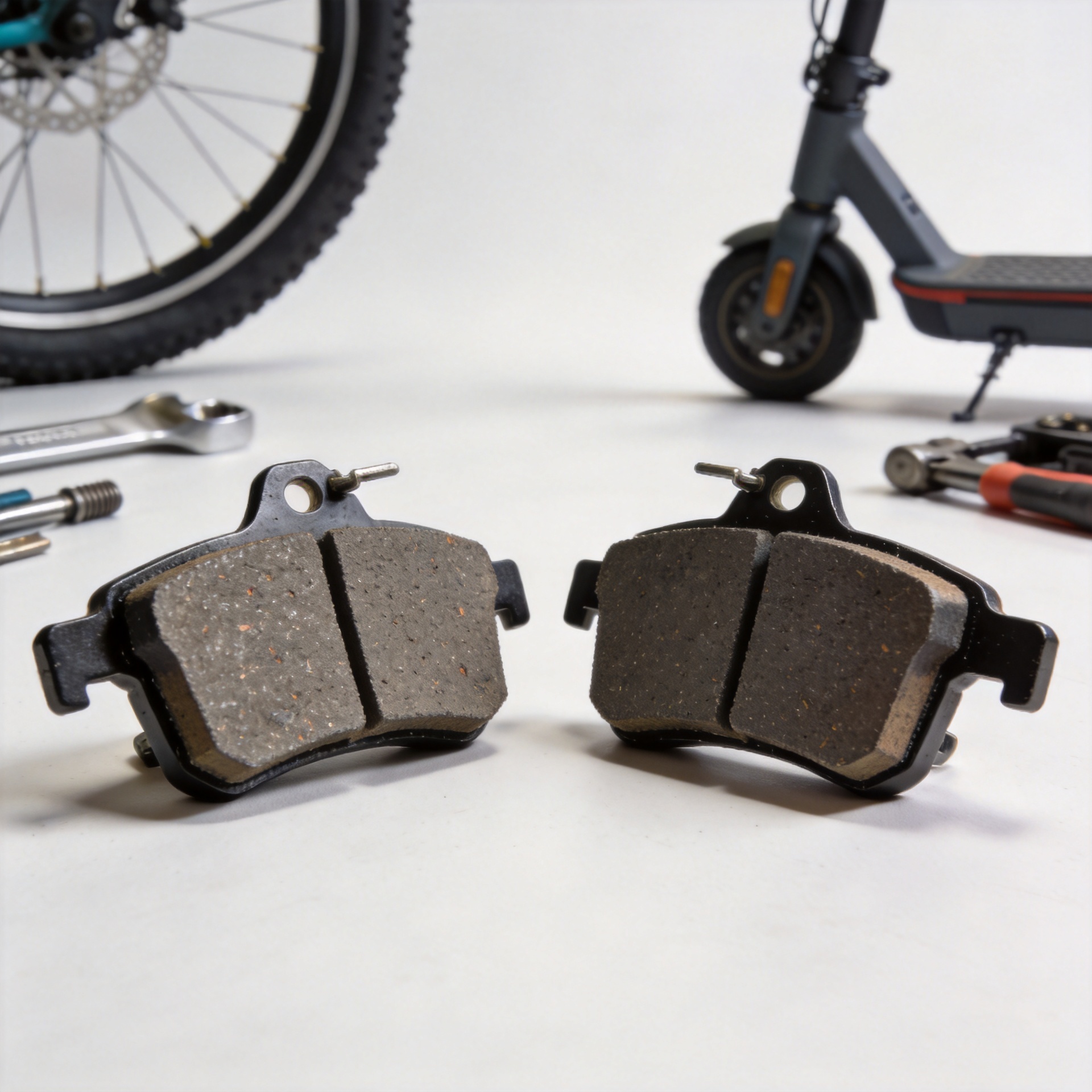
Organic vs Sintered Brake Pads: How to Choose for E-Bikes and Scooters
Choosing bicycle brake pads is not just a maintenance decision for an e-bike or electric scooter. Battery weight, stop-and-go traffic, wet roads, and repeated downhill braking can all change what a pad needs to handle. The useful question is not “Which compound fits every rider?” but “Which compound matches this vehicle, rotor, route, and rider?”
For most disc-brake systems, the two familiar options are organic (also called resin) and sintered (metallic) pads. Both can be suitable bicycle disc brake pads when the pad shape and rotor requirements match the caliper. Their trade-offs become clearer when you compare quietness, bite, heat tolerance, wear, and weather performance.
Organic and sintered bicycle brake pads at a glance
| Factor | Organic / resin pads | Sintered / metallic pads |
|---|---|---|
| Initial feel | Usually offers a smooth, immediate bite | May need a little warm-up before feeling strongest |
| Noise | Often quieter in clean, dry conditions | More likely to make noise, especially when wet |
| Wet or dirty use | Can wear and lose consistency sooner | Generally better suited to wet, dirty conditions |
| Repeated high-heat braking | Can fade sooner on long descents | Usually maintains performance better under sustained load |
| Wear behavior | Often wears faster in demanding conditions | Typically offers longer pad life, with rotor wear worth monitoring |
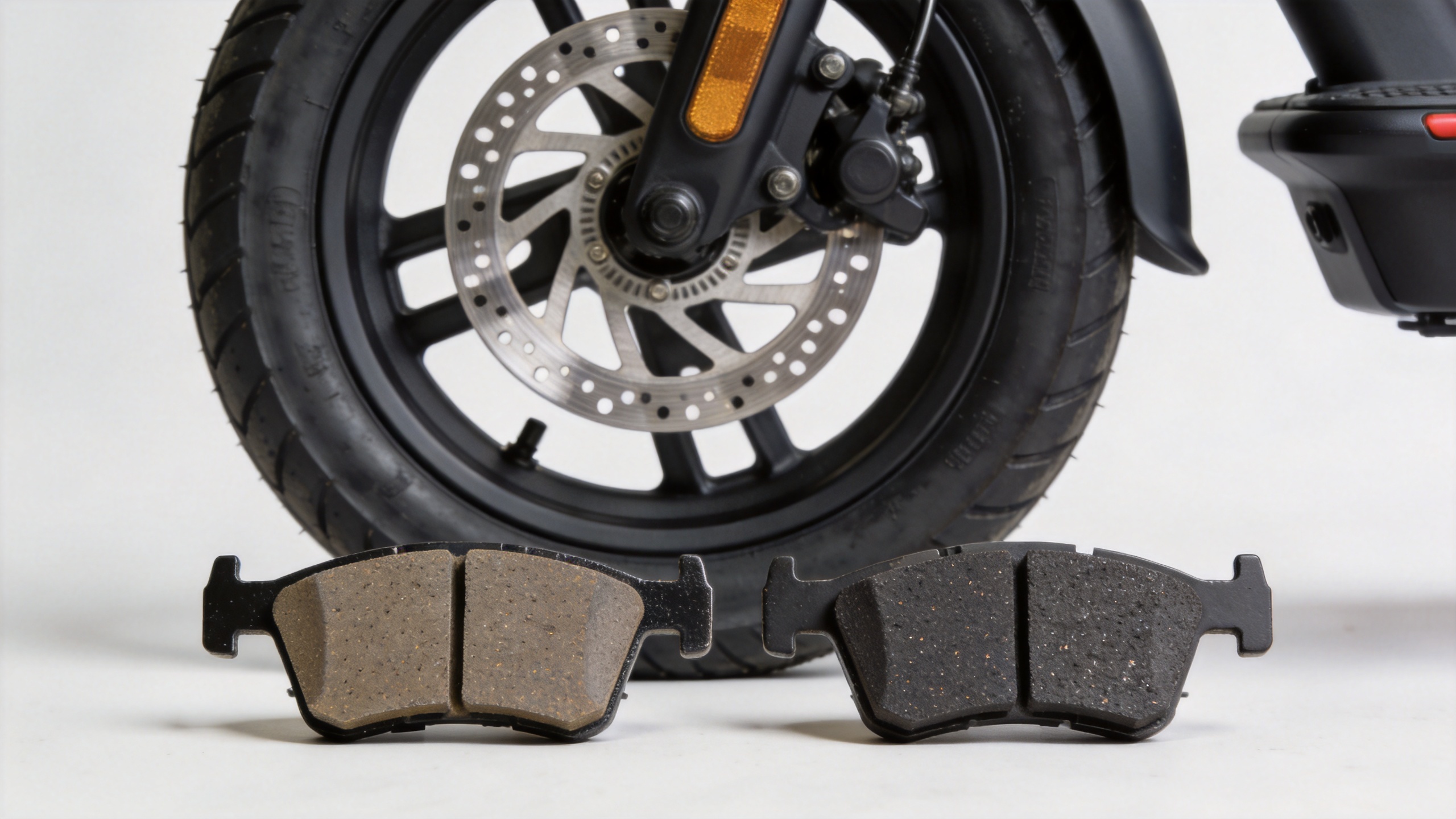
These are tendencies rather than guarantees. Pad formulation varies by supplier, and a rotor or caliper maker may specify compatible compounds. Treat the vehicle manufacturer’s fitment information as the final check.
When organic pads make sense
Organic bicycle brake pads are a practical choice for lighter e-bikes, commuter scooters, and riders whose routes are mainly dry, relatively flat, and predictable. Their quieter operation and more immediate low-speed feel can be appealing in urban environments where smooth modulation matters as much as outright stopping power.
They also suit riders who prefer a more controlled lever feel in everyday traffic. On a short commute with frequent but moderate stops, the softer compound can be easy to manage. The limitation appears when the same vehicle faces long descents, heavy cargo, rain, grit, or repeated hard stops. Under those conditions, organic pads can wear more quickly or show fade as heat builds.
Organic pads are therefore not “weak”; they are more accurately viewed as a comfort- and feel-oriented option for the right duty cycle. A rider who occasionally sees rain may still choose them, but should inspect pad thickness and braking consistency more often.
When sintered pads are the stronger choice
Sintered bicycle brake pads contain metallic particles fused under heat and pressure. That construction is commonly chosen when an e-bike or scooter sees heavier loads, wet streets, unpaved paths, steep terrain, or longer braking events. For delivery use, hilly commuting, or a scooter that carries a larger rider, the extra resistance to heat and wear can be valuable.
In wet and contaminated conditions, sintered compounds generally keep working more consistently than organic pads. They are also a sensible starting point when brake service intervals need to be more durable. The trade-off is that they may be noisier, can feel different before they warm up, and require attention to rotor compatibility. A pad that lasts a long time is not a good value if it is not approved for the rotor or if it accelerates rotor wear beyond what the system is designed for.
Start with compatibility before choosing material
Material selection comes after fitment. Disc pads are not universal: the backing-plate shape, retaining-pin position, thickness, and caliper interface must match. Before ordering bicycle disc brake pads, confirm the caliper model, compare the existing pad shape, and check whether the rotor maker has a compound restriction.
For scooter repair projects, it is especially important not to assume that a pad fitting one model fits another version of the same brand. If you are sourcing a replacement for compatible Xiaoniu KQ3, KQ3 Pro, or KQ2 kick-scooter applications, review the listing details for the New Image wear-resisting brake disc pads for Xiaoniu KQ3/KQ3 Pro/KQ2 kick scooters and verify the vehicle’s exact brake configuration before purchase.
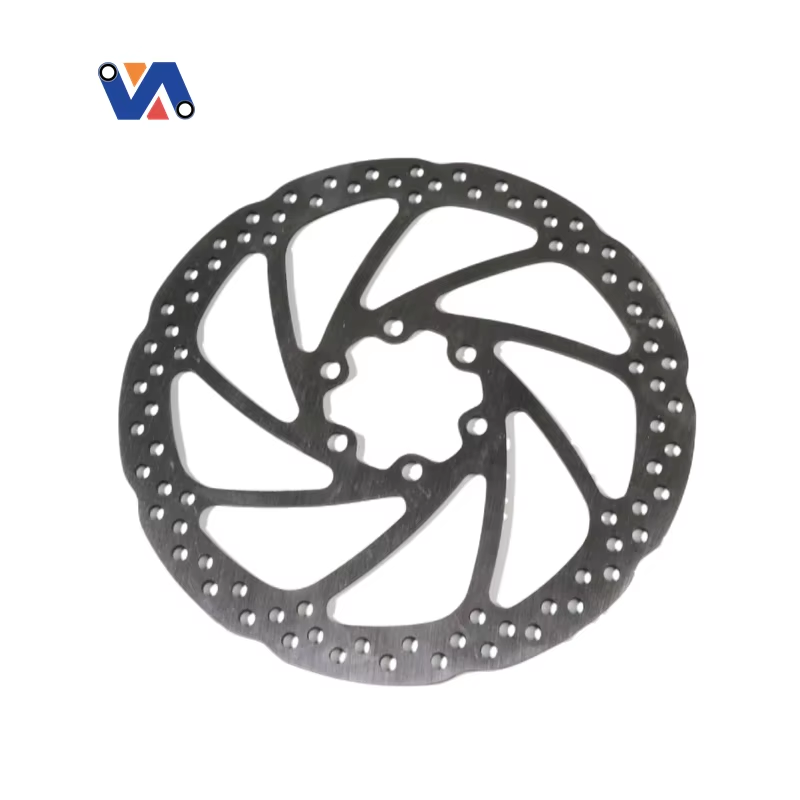
Also inspect the rotor. A worn, warped, oily, or heavily glazed rotor can make new bicycle brake pads seem ineffective. Replacing pads without addressing contamination or severe rotor wear may leave the original braking problem unresolved.
Use the route and vehicle load as your decision filter
A simple selection framework is to rate four conditions: vehicle weight, rider/cargo weight, terrain, and weather. The more often the answer is “heavy,” “steep,” “wet,” or “repeated braking,” the stronger the case for sintered pads becomes. A light scooter used on dry, flat streets may favor organic pads for noise and feel. A high-powered e-bike used on long descents may benefit from sintered pads’ heat tolerance.
- Dry city commuting: Organic pads are often a comfortable option if the system is compatible.
- Rainy or gritty routes: Sintered pads are commonly the more resilient direction.
- Long descents or heavy e-bikes: Prioritize heat management, rotor specification, and sintered-pad compatibility.
- Fleet maintenance: Choose a verified fitment and set inspection intervals around real usage rather than a fixed calendar.
Do not skip bed-in and post-installation checks
New bicycle brake pads need a proper bed-in process. Controlled stops transfer a thin, even layer of pad material to the rotor and help establish consistent friction. Avoid judging a new pad from the first lever pull, and avoid prolonged dragging that can overheat a fresh setup.
After installation, check that the wheel spins freely, the caliper is aligned, the retaining hardware is secure, and the lever feel is repeatable. If braking remains noisy or weak, inspect for oil contamination, a polished rotor surface, poor alignment, or incorrect pad fitment before changing compounds again.
Final choice: match the compound to the job
For e-bikes and scooters, organic versus sintered is a trade-off between quiet, responsive everyday feel and durable performance under heat, moisture, and heavier use. Organic bicycle brake pads can be excellent for dry, lighter-duty commuting. Sintered bicycle brake pads are often the more conservative choice for wet weather, demanding terrain, heavier vehicles, and frequent braking.
Whichever route you choose, fitment and rotor compatibility come first. A correctly matched pad, a clean rotor, and a careful bed-in routine will do more for predictable braking than choosing a compound by name alone.