EN
EN


OUXI GT2000 Battery Compatibility Checklist: Voltage, Capacity, Charger and Connector
Ordering an electric bicycle battery replacement for an OUXI GT2000 should begin with verification, not a photo match. A pack can look similar, share a 48V label, or even use a plug that slides in—and still be the wrong choice. For distributors, repair shops, and fleet buyers, a missed detail can turn a routine electric bicycle battery replacement order into returns, delays, or a safety issue.
This checklist focuses on the four checks that matter before an order is placed: battery voltage, usable capacity and physical fit, charger specification, and the complete connector/pin arrangement. It is designed for consideration-stage buying: compare the replacement against the original label and connector photos, then ask the supplier to confirm any point that remains uncertain.
Start with the battery label, not the product photo
For an electric bicycle battery replacement, record the original battery’s model, nominal voltage, rated capacity, chemistry if stated, and any charge-voltage marking. Photograph the label, discharge connector, charge port, mounting rail, and the original charger label. Those five photos make a compatibility conversation much more reliable than a model name alone.
The matched product for this model is listed as OUXI GT2000 48V 26Ah Battery — Electric Bike Battery Replacement Wholesale OXGT-24. Its listing title identifies a 48V, 26Ah configuration, but a listing title is still only one part of an electric bicycle battery replacement check. Confirm the label on the battery being replaced and the supplier’s current specification before payment.
1. Verify nominal voltage and charge voltage separately
Voltage is the first pass/fail item. Nominal voltage describes the battery family; the charger’s output voltage describes the full-charge target. In common lithium-ion arrangements, a 36V nominal pack often uses a 42.0V charger, a 48V pack often uses a 54.6V charger, and a 52V pack often uses a 58.8V charger. These are common reference points, not permission to substitute chargers across models.
| Check | What to compare | Order decision |
|---|---|---|
| Battery nominal voltage | Original label vs. replacement label | Must match exactly unless the vehicle maker approves a system conversion. |
| Charger output voltage | Original charger output vs. battery’s required charge voltage | Must match the approved charge voltage and chemistry. |
| Controller system voltage | Bike/controller documentation and original pack | Do not assume a physically similar pack is electrically suitable. |
A 48V label does not make every 48V pack interchangeable. The battery-management system (BMS), controller limits, battery chemistry, and charge profile may differ. If the original label is damaged or unavailable, pause the electric bicycle battery replacement order until the bike’s documented system voltage and original charger output can be confirmed.
2. Compare capacity, dimensions, mounting and discharge capability
Capacity in amp-hours affects expected stored energy, but it does not prove a mechanical or electrical match. A 26Ah replacement may provide a useful capacity option only if its case dimensions, rail shape, lock position, mounting-hole pattern, charge-port position, and cable exit all suit the GT2000 installation. Measure the case length, width, height, and the rail or cradle dimensions rather than estimating from an image.
Many buyers focus on Ah first and overlook the discharge side. Ask whether the replacement’s BMS and discharge connector are intended for the original controller’s current demand. A larger-capacity pack is not automatically a better electric bicycle battery replacement if the case will not lock securely or the electrical interface is different. For a batch purchase, approve one fitted sample before scaling the order.
3. Treat the charger as a separate compatibility check
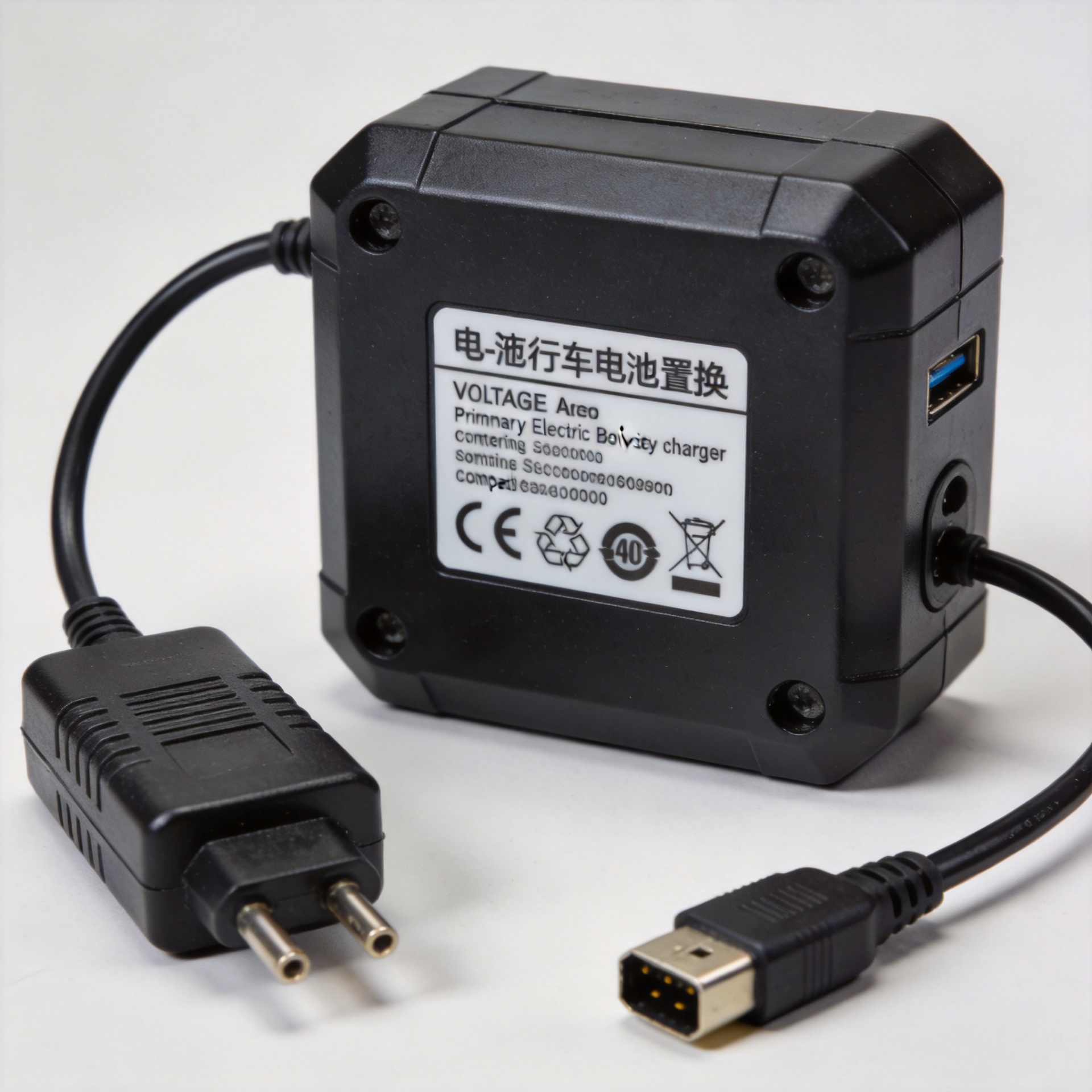
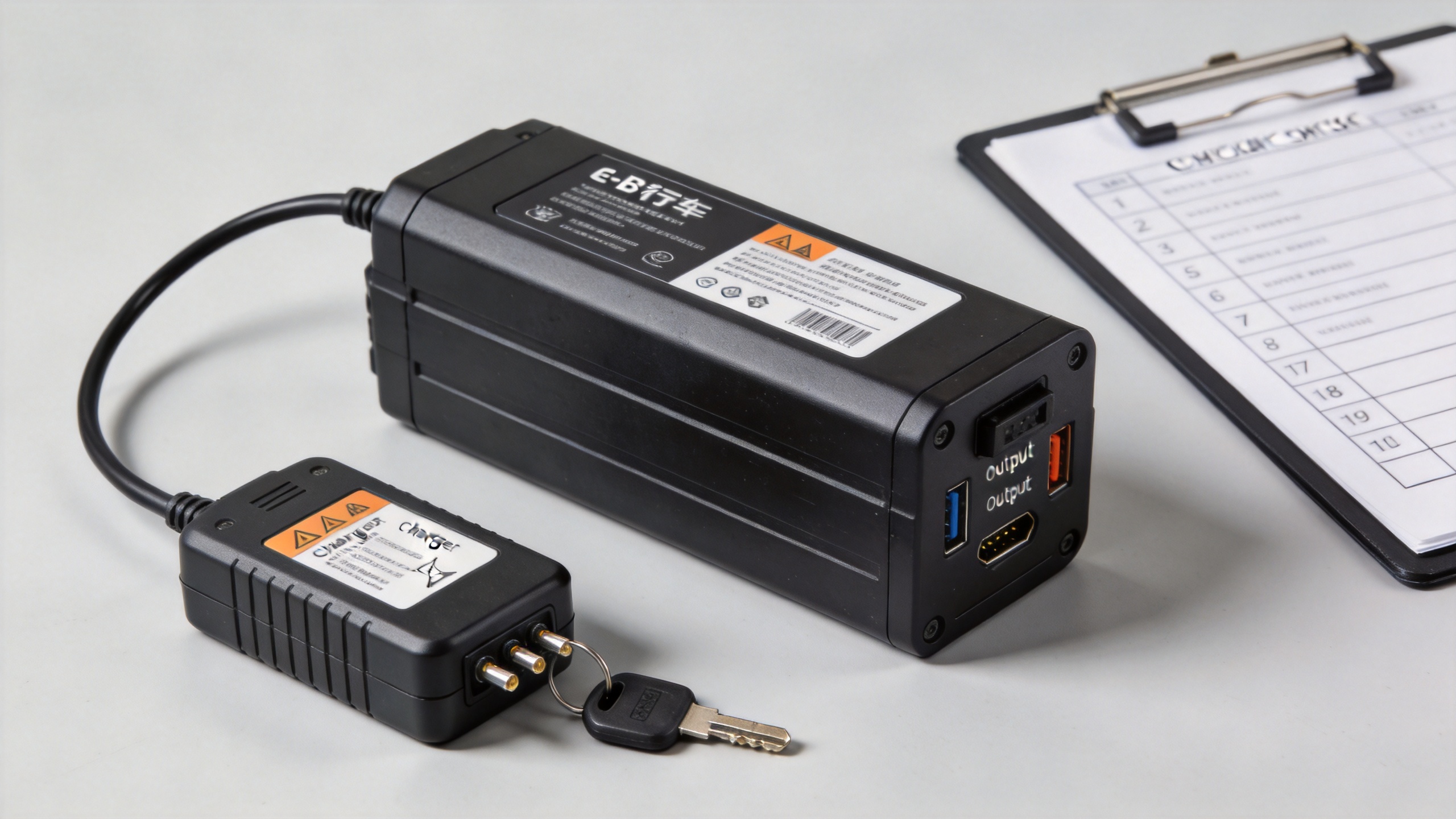
A matching battery voltage is necessary, but the charger must also be approved for the pack. Read the charger’s output line, not only its marketing name. Confirm output voltage, maximum charging current, connector type, polarity, and whether the battery requires a proprietary enable or communication signal. A charger with a higher current rating should not be used simply because its plug fits; the battery, BMS, charge port, wiring, and supplier documentation must support it.
Also check the charger’s AC input rating for the destination market. A travel plug adapter changes plug shape; it does not convert supply voltage. For replacement batteries for electric bikes sold into multiple markets, confirm the charger input range and plug configuration separately from the DC battery connection.
4. Inspect connector shape, pinout and polarity
Connector compatibility is more than connector shape. Compare the charge and discharge connectors independently. Confirm the pin count, keying or notch orientation, male/female arrangement, wire location, positive/negative polarity, and any extra data or enable pins. Some packs use a connector that appears standard while assigning pins differently; others need BMS communication before charging or discharge is enabled.
- Take a straight-on photo of each connector and a side photo showing keying.
- Compare pin count and layout; do not force a plug that feels loose or resistant.
- Use the original documentation or a qualified technician to confirm polarity and pinout.
- Do not rely on an adapter merely because it makes two connectors mate.
- Ask the supplier to confirm whether the charger and battery use any communication, wake-up, or enable function.
In practical sourcing, the expensive mistake is often not choosing the wrong voltage family—it is treating a familiar connector as proof of compatibility. The safer approach is to make connector photos and label photos part of every electric bicycle battery replacement purchase record.
5. Use a pre-order approval sheet for OUXI GT2000 replacement orders
- Original battery model and nominal voltage: recorded and matched.
- Required charge voltage and original charger output: recorded and confirmed.
- Capacity target: selected without changing the approved voltage family.
- Case dimensions, rail, lock and mounting details: measured and compared.
- Charge and discharge connectors: photos reviewed for pin count, keying and polarity.
- BMS/communication requirement: confirmed where the original interface is proprietary or multi-pin.
- Charger current and AC input: approved for the battery and destination market.
- Sample fit and first charge: checked before a larger order is released.
For procurement teams, this process is also useful when sourcing replacement batteries for electric bikes across several models. Keeping photos, measurements, and supplier confirmations with the purchase order reduces repeated compatibility questions and makes later replenishment easier.
Final decision: match the whole system
The right electric bicycle battery replacement for an OUXI GT2000 is one that matches the approved voltage family, charge requirement, physical mounting, connector pinout, polarity, and BMS expectations—not just the advertised capacity or case appearance. If any one of these points is unclear, request a technical confirmation and compare a sample against the original system before placing a volume order. That extra step is usually far less costly than correcting a shipment after delivery.