EN
EN


OUXI GT2000 Electric Mountain Bike: 48V 40A Controller and DRL Headlight Design Explained
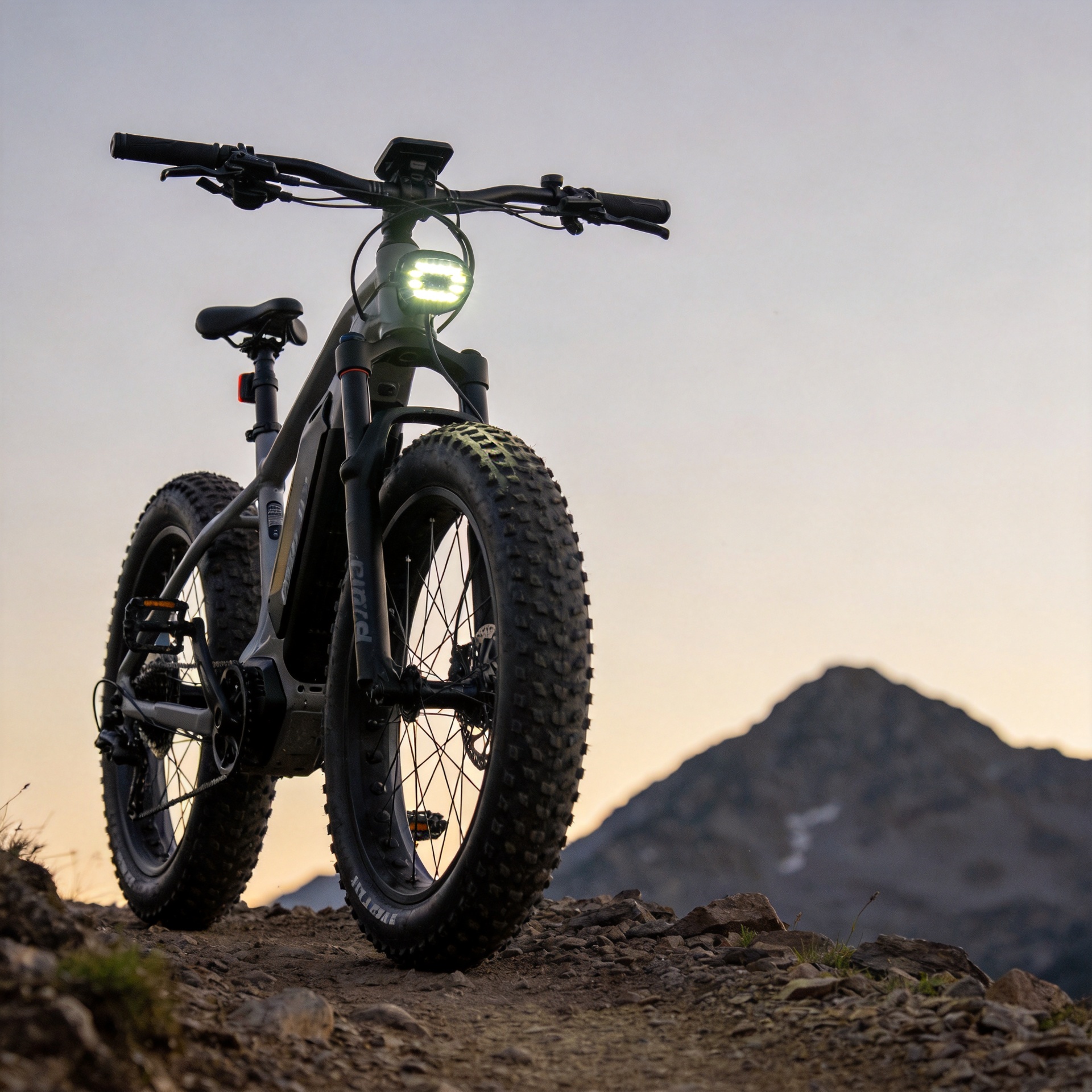
When you are sourcing an e mountain bike platform for distributors targeting trail riders, the spec sheet quickly separates genuine off-road hardware from commuter bikes that just happen to have fat tires. The OUXI GT2000 is a platform I have looked at closely from a wholesale procurement standpoint, and two components define its positioning more than anything else: the 48V 40A motor controller and the halo DRL headlight system. What these actually mean in practice, not just on the spec sheet, is the difference between stocking a trail-capable product and stocking a city bike with aggressive branding.
The 48V 40A Controller: What Doubling the Amps Actually Delivers
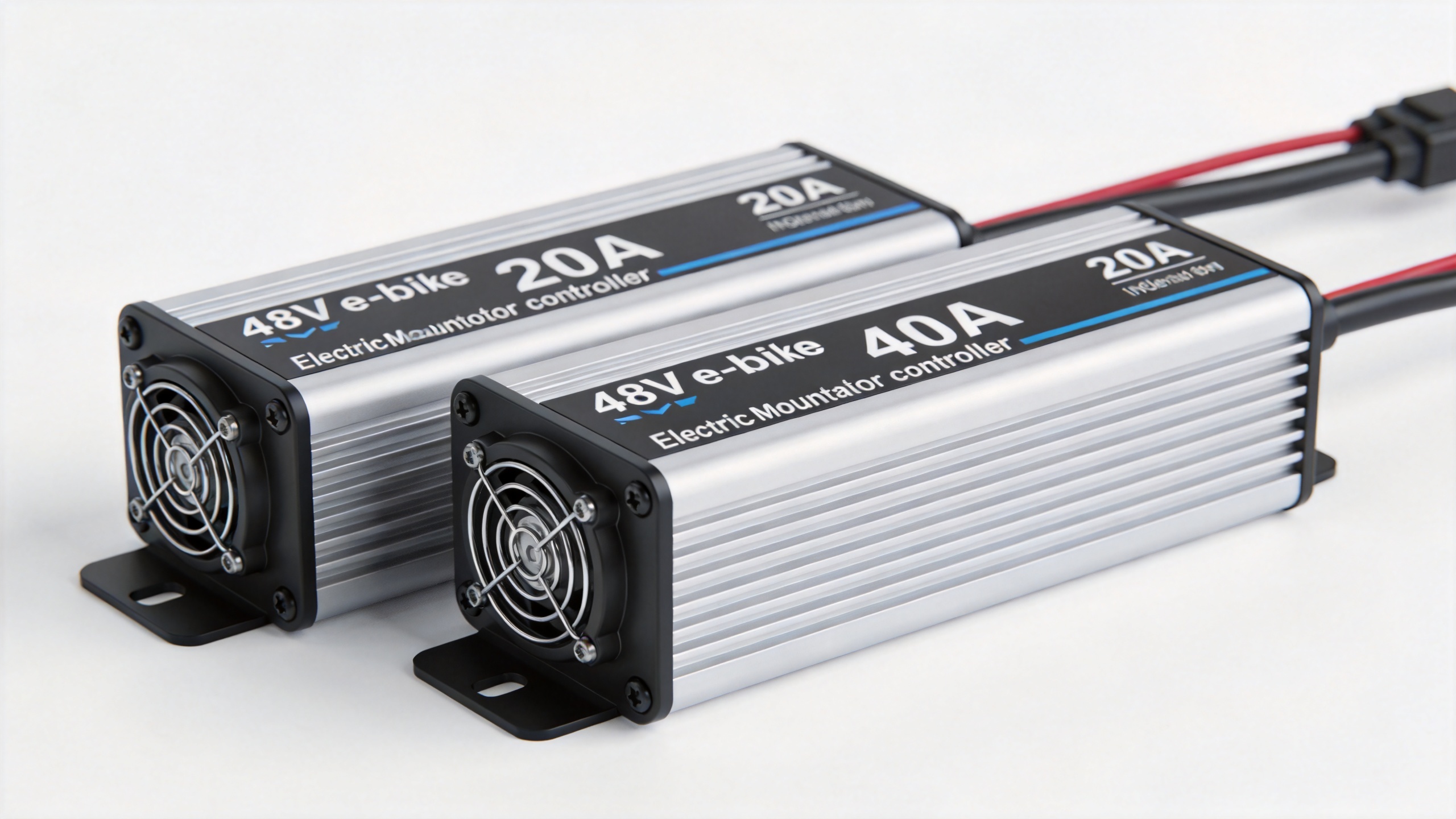
Most standard fat tire electric mtb platforms ship with 15A to 20A controllers. That produces a peak power ceiling of roughly 720W to 960W at 48V. The GT2000 runs a 40A controller, which raises that ceiling to approximately 1,920W — effectively doubling the available torque on demand. For anyone yet to put that difference to work on a trail, the gap is easy to underestimate until you ride a controller-limited bike on a steep, rooted climb.
A simpler way to frame it, without the math: voltage in an e-bike system controls top speed; amperage controls how hard the motor can push. A 48V 20A controller gives you roughly the same speed ceiling as the GT2000, but half the force for acceleration, hill climbing, and holding speed through terrain resistance. Standard commuter fat bikes optimize for that 20A range because city riding rarely demands more. Off-road trail use does — consistently.
The NEW IMAGE OUXI GT2000 48V 40A motor controller is also available as a standalone wholesale part. That matters for distributor stocking strategy: trail riders push controller systems harder than commuters, which shortens replacement cycles. Having the replacement unit in stock cuts service turnaround and adds an aftersales revenue line with minimal inventory complexity.
DRL Headlights: More Than a Marketing Feature on an EMTB
DRL — Daytime Running Light — is a lighting standard familiar from automotive design, but it is still relatively rare on emtb bikes in the wholesale channel. On most standard e-bikes, the headlight is a manually switched LED: you turn it on when it is dark. DRL design changes that logic: the light operates continuously at a lower, diffused output throughout the ride, regardless of ambient conditions.
The reason this matters on an e mountain bike rather than a city commuter comes down to where these bikes are used. Multi-use trails — increasingly common in European and North American riding markets — involve shared space with hikers, horse riders, and other cyclists. Tree cover, canyon walls, and low-angle morning and evening light create conditions where a bike can be nearly invisible to oncoming users until the last moment. A DRL does not primarily illuminate the path ahead on an electric mtb; it makes the bike continuously visible to everything around it, in conditions where a standard headlight would be switched off.
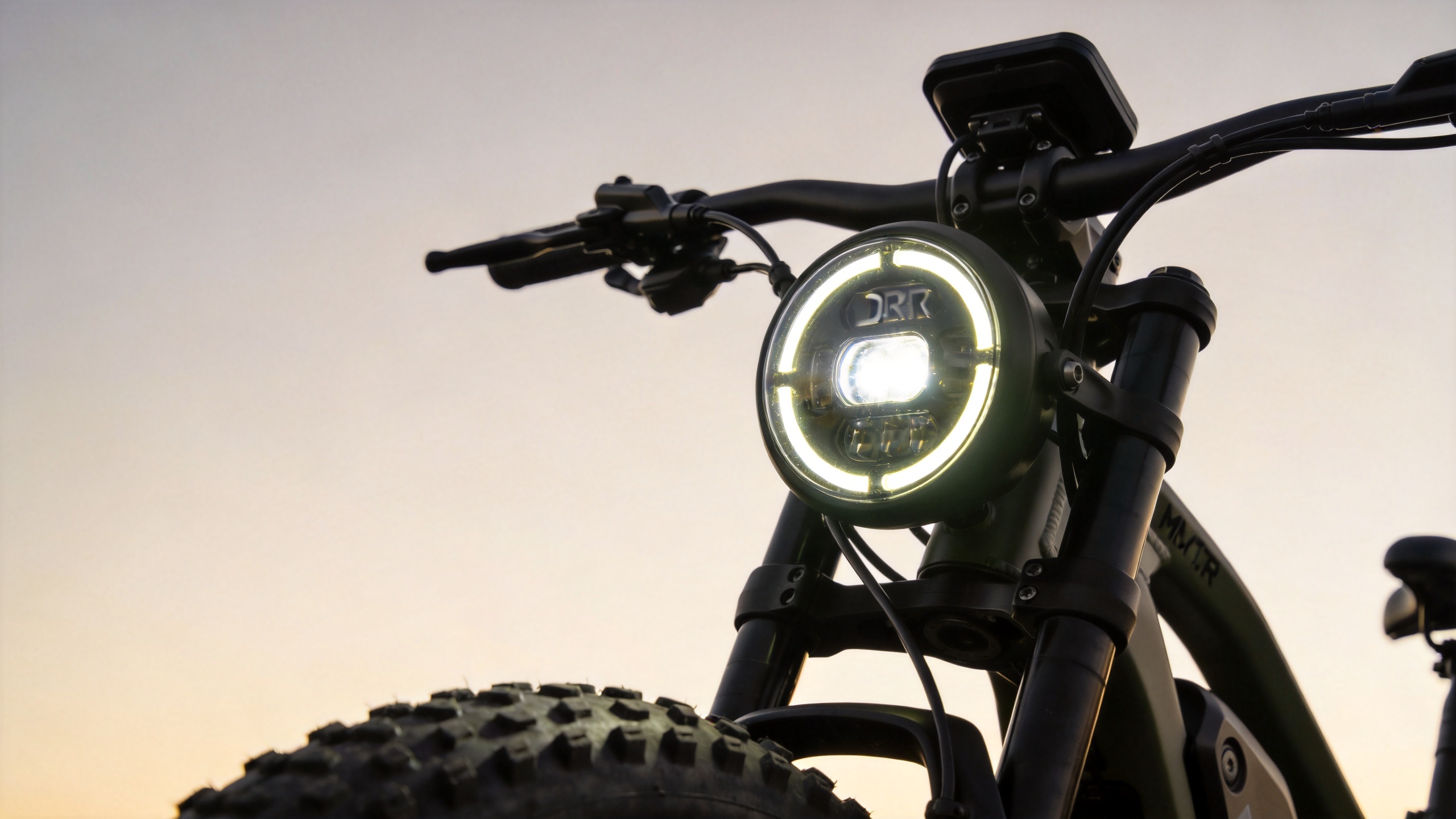
The GT2000 uses a halo DRL design — a circular ambient ring around the main beam — which provides omnidirectional peripheral visibility beyond what a focused beam delivers. For distributors positioning stock toward trail-use markets with active access management, this spec has tangible product differentiation value that standard headlight setups cannot match.
The headlight assembly is available as a wholesale part: Front LED Headlight with Halo DRL for OUXI GT2000. Trail riding generates more vibration and exposure than urban use, so replacement demand on this component runs higher than with typical commuter headlights.
Suspension and Platform Architecture
The controller and lighting specs operate in the context of a dual-suspension fat bike platform. Front and rear suspension on the GT2000 e mountain bike provides terrain compliance that front-only or rigid fat bikes cannot replicate on technical trail surfaces: root fields, rock gardens, loose gravel switchbacks. The fat tire footprint — typically 4-inch-width tires at this class — handles traction on loose surfaces that narrower trail tires struggle with under power.
The combination is what makes the GT2000 a genuine e mountain bike platform rather than a fat tire commuter: dual suspension for compliance, fat tires for traction, and a 40A controller that can actually drive through both without running into power limits at the wrong moment. Remove any one of those three elements and the platform shifts category.
GT2000 Electric MTB vs Standard Fat Tire E-Bikes: Distributor Comparison
| Spec | Standard Fat Tire E-Bike | OUXI GT2000 E Mountain Bike |
|---|---|---|
| Battery voltage | 36V–48V | 48V |
| Controller current | 15A–20A (typical) | 40A |
| Peak power ceiling | 540W–960W | ~1,920W |
| Suspension | Front fork only or rigid | Front + rear dual suspension |
| Headlight type | Standard LED (manual switch) | Halo DRL (continuous + main beam) |
| Primary use case | Urban commuting, light trail | Technical trail, off-road, mixed terrain |
| Target buyer segment | Commuters, casual riders | Trail riders, mountain recreation buyers |
Stocking Recommendation for Distributors Targeting Off-Road Markets
The 2026 market signal for distributors is consistent: wholesale buyers sourcing for outdoor and recreation channels are actively looking for emtb bikes and fat tire platforms that deliver trail performance rather than trail aesthetics. The GT2000 positions into that demand clearly — but only if it is stocked as a trail-segment product rather than substituted into a commuter catalog.
A practical approach for distributors in North American, European, and Australian off-road markets:
- Primary bike SKU: Position the GT2000 as a distinct trail-segment entry, separate from any standard fat tire commuter stock. Buyers evaluating an e mountain bike for trail use are not cross-shopping city platforms — they are looking for verified trail specs. The 40A controller and DRL headlight address those verification points directly.
- Controller replacement stock: Trail riding pushes the controller harder than city use does. The 48V 40A unit tends to turn over faster on this platform, so keeping a few in stock cuts down on service wait times.
- DRL headlight unit: Vibration and trail exposure accelerate replacement cycles on lighting components. Including the DRL headlight as a spare line item requires minimal additional SKU management.
- Kickstand: The heavy-duty GT2000 kickstand is platform-specific — worth including in initial purchase orders to avoid fitment queries from end buyers who find standard kickstands incompatible with the wider fat tire clearance.
Compatibility Note Before Ordering
One point worth confirming before placing a controller order: the 48V 40A unit is spec'd for the GT2000's motor system. If your inventory spans multiple OUXI platforms, verify motor winding and phase wire compatibility before assuming cross-model fitment. The 40A controller is not automatically interchangeable with lower-current variants in the GT2000 line — a detail that is easy to overlook in catalog sourcing but avoids costly return processing in the field.
From a procurement standpoint, sourcing an e mountain bike like the GT2000 represents a cleaner decision than trying to bridge commuter and trail markets with a single SKU. The specs are specific, the parts replacement patterns are predictable, and the end buyer segment is clear enough that positioning it correctly is more about communication than component selection.