EN


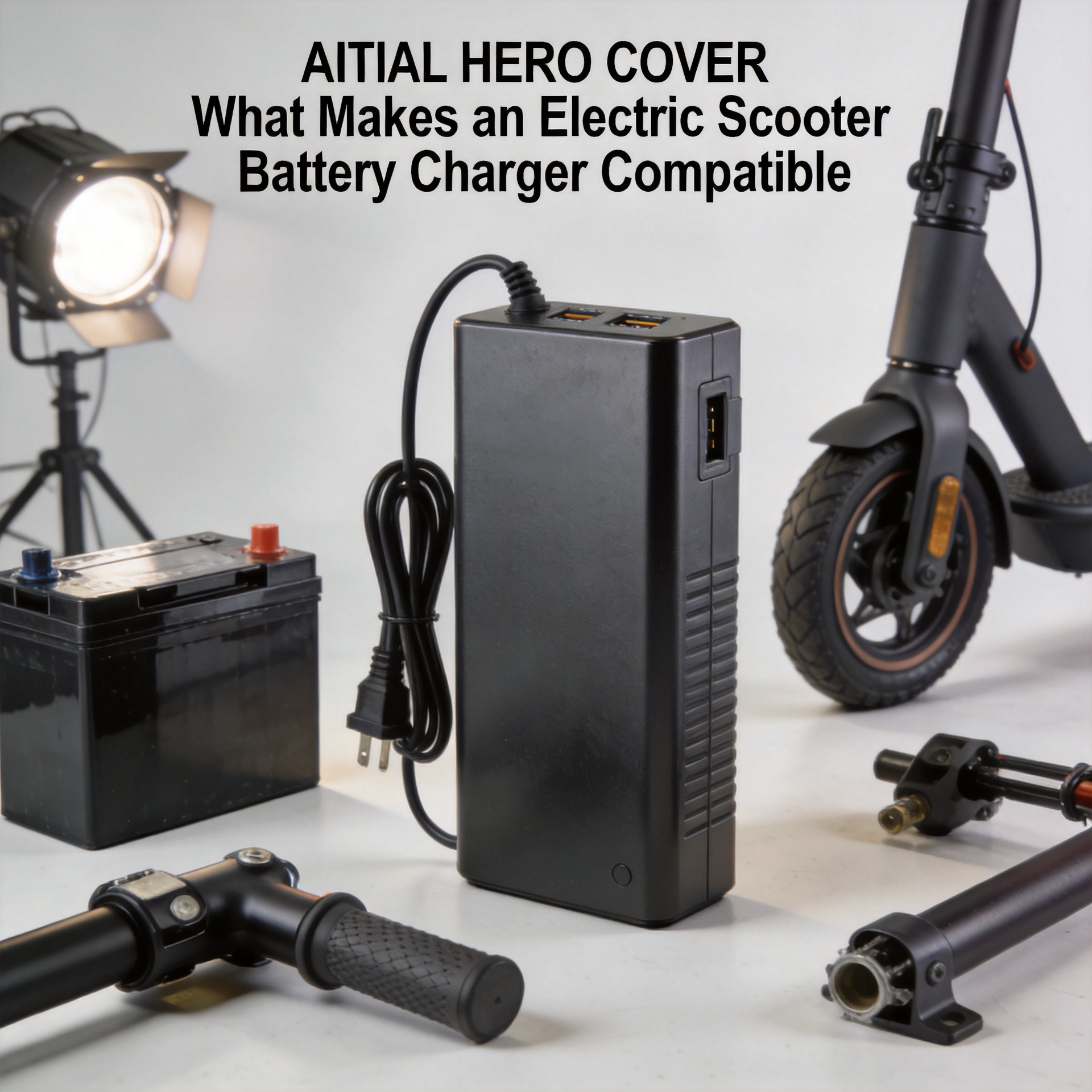
What Makes an Electric Scooter Battery Charger Compatible
Buying an electric scooter battery charger looks simple until you compare the labels. Two chargers may have a similar case, plug shape, or advertised scooter model list, yet only one may be suitable for the battery system in front of you. For a first replacement, compatibility is not one specification. It is a match between charging voltage, battery chemistry, current capability, connector wiring, and the scooter’s own protection system.
A practical way to approach the question is to treat the charger as part of the battery system, not as a generic power adapter. An e scooter charger must deliver the right charging profile and connect correctly before its indicator light or physical fit matters. If the old charger is available, its output label and the scooter manual are useful starting points. If they are not, confirm the battery-pack label and the manufacturer’s approved replacement specification before ordering.
Start with voltage: nominal battery voltage is not the charger output
Voltage is the first compatibility check because it defines the charging target. A battery may be described by a nominal voltage, while the charger label states the voltage it reaches at the end of the charging cycle. For example, a 36 V lithium-ion battery is commonly paired with a charger whose output is marked around 42 V. That does not mean every 42 V charger is automatically suitable; it simply shows why a buyer must compare the correct labels rather than match the nominal number alone.
Read the charger’s DC output line, not only the AC input range. Then compare it with the exact value specified for the scooter battery. A charger with output voltage that is too low may fail to fully charge the pack. A charger with output voltage that is too high can be unsafe for the battery management system and cells. Chemistry matters here as well: lithium-ion, lead-acid, and other pack designs do not necessarily share the same charging profile even if a nominal voltage looks similar.
A quick voltage check
- Find the battery’s nominal voltage and chemistry on the battery label, manual, or official replacement specification.
- Find the required charger output voltage—not just the wall-input voltage—on the original charger or approved documentation.
- Match the full-charge output value and chemistry; do not assume a charger is universal because its plug fits.
- If either label is missing, ask the scooter maker or a qualified service provider before connecting a replacement.
Charging current affects speed, heat, and system limits
The next number is current, normally shown in amps (A). Current helps determine how quickly an electric scooter battery charger can charge, but higher current is not automatically a better choice. The battery pack, its battery management system (BMS), wiring, and charge port need to be designed to accept that current. A charger advertised as fast may reduce charging time only when the scooter system permits it.
Use the approved current rating as the default. Moving from a standard 2 A charger to a higher-current option without confirmation can create unwanted heat or cause the BMS to interrupt charging. Conversely, a lower-current compatible charger may charge more slowly but should still be evaluated against the manufacturer’s requirements. The safest purchase description includes both output voltage and output current, rather than phrases such as “fast,” “universal,” or “fits most scooters.”
| Label item | What to compare | Why it matters |
|---|---|---|
| DC output voltage | Exact required full-charge voltage | Sets the battery charging target. |
| Output current | Approved amp rating or range | Controls charge rate and must stay within system limits. |
| Battery chemistry | Lithium-ion, lead-acid, or the specified pack type | Different batteries can require different charging behavior. |
| Input rating | Your local mains voltage and plug standard | Confirms that the charger can be used safely at the wall outlet. |
A matching connector is necessary—but it is not enough
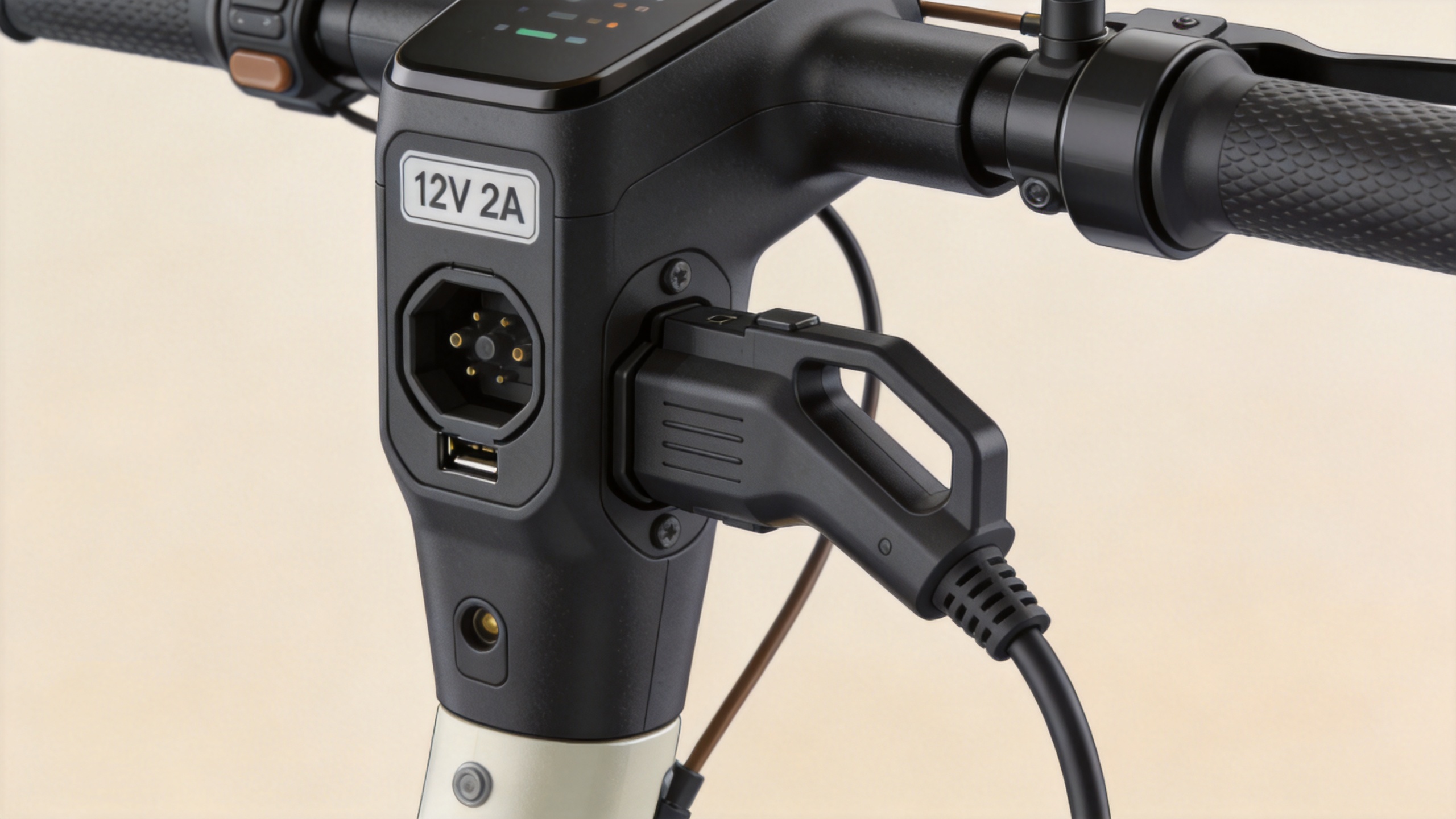
Connector shape is the check buyers notice first, and it is still essential. Barrel connectors, aviation-style connectors, proprietary plugs, and multi-pin plugs can look alike at a glance. Measure or identify the plug type, pin count, keying, and polarity. The plug must seat securely without force, wobble, or exposed contacts.
However, physical fit alone does not prove an e scooter charger is electrically compatible. Two similar connectors can be wired with different polarity or be used with different battery systems. Some scooters also rely on a BMS, temperature sensing, or model-specific communication behavior. That is why the model number, charger part number, and output label should all be checked together. Do not alter a connector, use an improvised adapter, or rely on color-coded wires alone to make a replacement fit.
Check the complete battery system, not only the charger
Modern electric scooters usually include a battery pack with protection electronics. The BMS can monitor voltage, current, and temperature conditions and may stop charging when it detects a problem. Compatibility therefore includes the charge port, cable condition, BMS design, and any manufacturer-specific requirements. A charger that turns on but repeatedly switches off, flashes an unusual indicator pattern, or makes the battery warm abnormally should be disconnected and investigated rather than left connected.
For buyers replacing a charger after damage or loss, gather these details before contacting a parts supplier: scooter brand and exact model, battery voltage and chemistry, original charger DC output, connector photos from several angles, country plug requirement, and any part number. A supplier can then help narrow the choice without guessing from a product photo. New Image provides scooter-parts technical support for compatibility confirmation; where the specification matches the scooter, you can review this 42V 2A scooter charger with Xiaomi connector as an example of a product that states voltage, current, connector family, and plug-market options. The product title itself is not proof of fit for every version, so verify the complete specification before purchase.
Use a pre-purchase compatibility checklist
- Confirm the scooter model: Record the complete model and production version where possible.
- Read the battery information: Confirm nominal voltage, chemistry, and any stated charging requirement.
- Match DC output: Compare the required charging output voltage and approved current rating with the proposed charger label.
- Verify the connector and polarity: Check plug type, pin arrangement, keying, and wiring specification—not appearance only.
- Confirm regional input compatibility: Ensure the AC input range and mains plug suit the country where the charger will be used.
- Review condition and instructions: Do not use a charger with damaged cables, loose connectors, unusual odor, heat, or moisture exposure.
Safe charging habits still matter after you find a match
A compatible electric scooter battery charger should be used according to the scooter maker’s instructions. Place the charger and scooter on a stable, non-flammable surface with ventilation. Avoid covering the charger, charging near combustible materials, or using damaged extension leads. General micromobility safety guidance also recommends stopping use if the battery or charger overheats, changes shape or color, leaks, smells unusual, or makes abnormal noises.
In short, charger compatibility depends on the whole system: correct full-charge voltage, suitable current, battery chemistry, connector and polarity, BMS behavior, and local input requirements. A clear photo of the original label and charge port is often more useful than a broad “universal charger” claim. Check every item before ordering, and ask for technical confirmation when the information is incomplete.
Frequently asked compatibility questions
Can any electric scooter battery charger work if the plug fits?
No. An electric scooter battery charger must match the battery system as well as the port. Before using an electric scooter battery charger, compare its output label, battery chemistry, current rating, and polarity with the scooter documentation. A physically fitting e scooter charger can still be the wrong e scooter charger if its electrical specification differs.
Why does the label on an electric scooter battery charger matter?
The label identifies the DC output that the electric scooter battery charger is designed to deliver. Record that value before replacing an electric scooter battery charger. The same habit helps when comparing an e scooter charger with an original e scooter charger, especially when listings use broad model families.
Is a higher-amp electric scooter battery charger automatically better?
No. A higher-amp electric scooter battery charger may not be appropriate unless the battery and BMS allow it. Select an electric scooter battery charger with the approved current. Do not choose an e scooter charger only for faster charging, and do not substitute an e scooter charger without checking the scooter maker’s instructions.
What should I photograph before ordering an electric scooter battery charger?
Photograph the old electric scooter battery charger label, the battery label, the charge port, and the connector. These details help a supplier evaluate an electric scooter battery charger more accurately. They also make it easier to distinguish one e scooter charger from another e scooter charger that has a similar plug.