EN
EN


Where to Source Replacement E-Bike Tires in Bulk: A Repair Shop Sourcing Guide
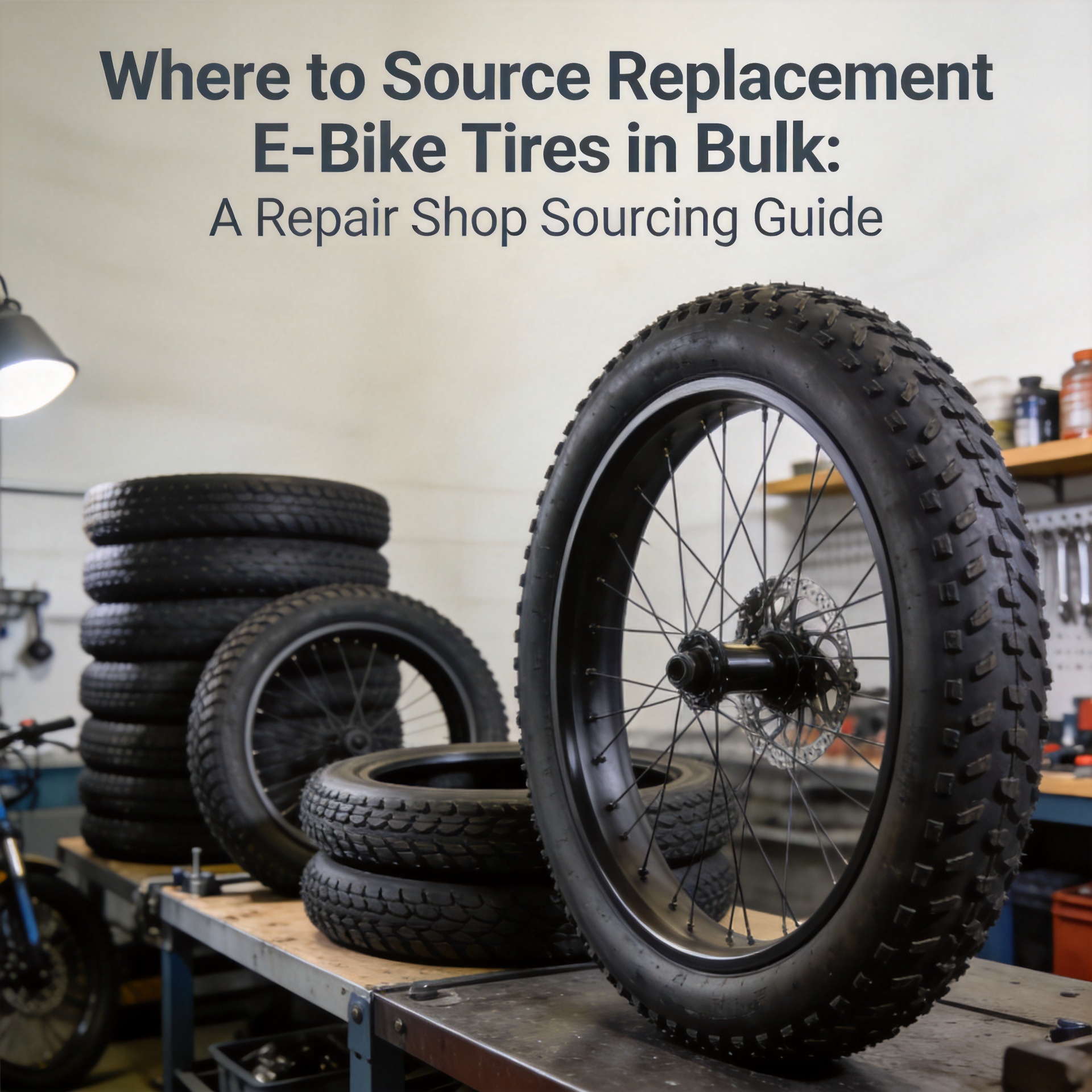
If you run a repair shop or source parts for a small wholesale operation, keeping the right ebike tires in stock is one of the more practical decisions you make each season. Get it wrong — wrong size, wrong tire type, wrong supplier — and you are looking at an inventory problem that takes months to sort out. This guide covers which ebike tires to prioritize, how to compare tire types before committing to a batch, and what to look for in a Chinese factory supplier before placing your order.
Why E-Bike Tires Wear Differently
Ebike tires take on considerably more stress than conventional bicycle tires. Motor torque, sustained higher speeds, and the added weight of battery and motor all accelerate wear — rear tires especially. For a repair shop, that translates into higher replacement frequency. If you stock the right ebike tires, demand tends to be steady and predictable.
Sizing adds another layer of complexity. On a busy workbench, you might see ISO designations, ETRTO specs, and informal sizing like "20x4.0" or "26x4.0" all in the same week. Knowing which sizes dominate your local fleet — and which types suit each application — is what separates a well-managed parts inventory from one that just sits on the shelf.
Tire Type Comparison: Pneumatic, Solid Tyres, and Honeycomb
Before placing a bulk order, it helps to think through the tire type question from a stocking perspective rather than a rider preference one. The table below breaks down the main options.
| Tire Type | Ideal For | Trade-offs for Shops | Typical Customers |
|---|---|---|---|
| Pneumatic ebike tires | Road comfort, varied terrain, performance models | Higher repair frequency (punctures, valves); more repeat revenue | Commuter e-bike owners, recreational riders |
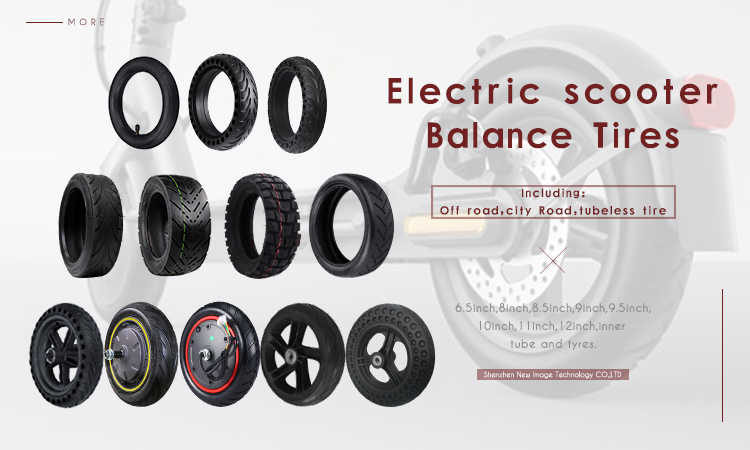
| Solid tyres / airless bike tires | Urban delivery, rental fleets, low-maintenance use | Zero puncture risk; heavier, stiffer ride feel | Delivery fleets, rental operators, budget buyers |
| Honeycomb solid tyres | Puncture resistance with better ride compliance | Absorbs more vibration than standard solid tyres; slightly higher unit cost | E-scooter fleets, urban commuters preferring airless bike tires |

A lot of shops start with pneumatic options simply because that is what most consumer bikes come with. What is shifting is fleet demand — delivery services, rental operations — where operators specifically request solid tyres or airless bike tires to keep maintenance overhead manageable. These fleet accounts tend to place consistent repeat orders, which makes stocking the right solid tyres genuinely worthwhile.
Honeycomb solid tyres occupy an interesting middle position. They share the puncture-proof property of standard airless bike tires but use a lattice structure internally to absorb road vibration, which helps for operators where a fully rigid ride is a problem. The 10 Inch Honeycomb Solid Tyre for Max G30/G30D is a good example of this design in practice.
Common Sizes to Keep in Stock
Which ebike tires you prioritize depends on your local market, but the following sizes cover most of the e-bikes circulating in European and North American repair shops today:
- 20x4.0 — Fat tire ebike tires, very popular in North America; handles varied terrain well
- 26x4.0 — Fat tire mountain and cargo formats; widely used in both EU and North America
- 20x2.125 — Folding e-bikes and urban commuter ebike tires; typically the highest-volume size
- 24x2.125 / 24x1.95 — Mid-size urban ebike tires for older folding models
- 26x1.95 / 26x2.125 — Classic hybrid sizes with consistent ongoing demand
- 10 inch (60/70-6.5 or 10x2.50) — Solid tyres for electric scooters; demand is growing steadily
- 16x2.50 — Compact folding ebike tires, particularly common in European cities
The 10-inch solid tyres have seen the most significant uptake in e-scooter repair work. The 10 Inch Solid Hollow Tire 60/70-6.5 for Ninebot MAX G30 is a representative example of the damping rubber category that comes up regularly in shops doing e-scooter work.
Sourcing Ebike Tires in Bulk from China
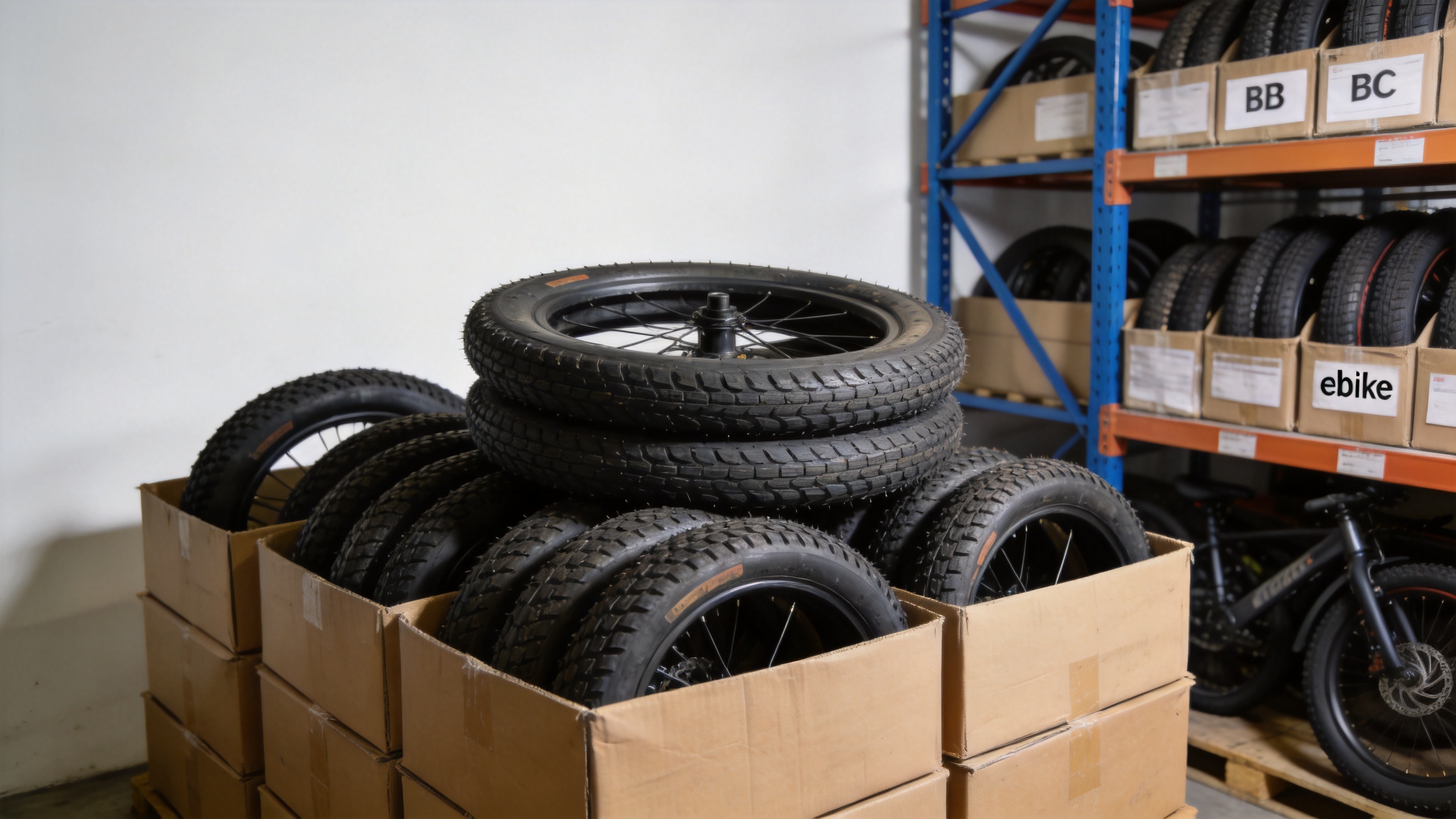
Chinese manufacturers that supply repair shops in Europe and North America typically operate on MOQ tiers that work for small wholesalers. Standard ebike tires in 20x4.0 or 26x4.0 usually start around 100 pieces per size, with pricing that improves noticeably at 200–500 piece volumes. Honeycomb solid tyres tend to carry slightly higher MOQs given the tooling involved.
Shipping choices for a bulk order generally come down to three options:
- Express courier (DHL, FedEx, UPS) — Suitable for urgent top-ups or sample orders; transit to Europe or North America is typically 5–10 days
- Air freight (LCL or full cargo) — Better unit economics for 200–500 kg loads of ebike tires; usually 7–14 days to EU or US hubs
- Sea freight (LCL or FCL) — The most economical option for larger volumes; plan for 25–40 days to European ports, 20–35 days to US West Coast
If you source from suppliers in Shenzhen, it is worth asking directly whether they have EU warehouse stock. Some suppliers maintain inventory in European fulfillment locations, which cuts lead time from the 5–6 weeks of a sea shipment down to 3–7 working days. For fast-moving solid tyres or airless bike tires, restocking within a week rather than waiting for a sea shipment makes a real difference during busy repair season.
Verifying Quality Before a Bulk Order
Skipping sample validation is the most common mistake shops make when sourcing ebike tires from China. Batch quality issues — fitment tolerance, wear rate, bead seating — tend to show up only after the tires are already in your workshop and on customer bikes.
- Request physical samples per SKU — at least 2–3 pieces. Fit them on the actual bike and scooter models you work on most.
- Check rubber compound consistency by flexing the sidewall. Uneven texture or visible voids in any type of solid tyres or pneumatic ebike tires point to QC problems.
- Verify bead diameter for pneumatic formats — the bead should seat cleanly on your rims without needing excessive force.
- Ask about pre-shipment inspection — most reputable suppliers run production line sampling before shipping. Ask what their defect rate target is and whether they can share inspection reports.
- Confirm CE certification availability — this matters for ebike tires and solid tyres going into EU markets, especially for fleet clients who run into compliance questions.
Supplier Evaluation Checklist
When sizing up a new source for solid tyres and ebike tires, these are the criteria repair shops and small wholesalers typically come back to:
- Product range coverage — Do they carry all the sizes you need, including airless bike tires and pneumatic formats, or will you need to supplement with another supplier?
- MOQ flexibility — Can you place a trial order of 50–100 pieces to validate quality before committing to full volume?
- EU or overseas warehouse availability — Makes a material difference to lead time on repeat orders.
- Pre-shipment inspection policy — Can they share inspection reports, and do they actually run them?
- Trade terms (FOB, CIF, EXW) — Flexibility here lets you route shipping through your own forwarder if you prefer.
- Communication in English — An obvious requirement that still trips up repeat orders with suppliers who handle it poorly.
- Batch traceability — If a defective shipment arrives, can the supplier identify the production run and work toward a credit or replacement?
- OEM or custom packaging — Worth asking about if you serve fleet clients with branded requirements.
Ready to Start Your Bulk Inquiry?
The practical first step for any repair shop looking to consolidate sourcing is putting together a size-and-quantity list — rough estimates are fine — and using it to request quotes from two or three suppliers of ebike tires. That comparison gives you enough data to assess pricing tiers, MOQ minimums, and shipping options for both pneumatic and solid tyres before making a commitment.
New Image supplies solid tyres and airless bike tires for e-scooters and e-bikes from Shenzhen, and supports small-batch initial orders for shops testing a new category. Get in touch with your size requirements to check current stock and bulk pricing for ebike tires.