EN
EN



Electric Scooter Throttle Types Explained: Trigger, Thumb, and Twist Grip
Have you ever had a repair shop customer walk in holding an e scooter throttle they ordered online — connector looks right, but the scooter still cuts out or the display goes dead? It happens more often than it should. As someone who has worked through a lot of replacement sourcing decisions for repair shops, I can tell you that the difference between trigger, thumb, and twist grip designs goes well beyond aesthetics. It directly affects signal compatibility, connector pin count, and how long the replacement will perform before your customer is back at the counter.
The three main electric scooter throttle types repair shops encounter most each have different ergonomics, signal methods, connector configurations, and failure patterns — knowing which is which saves diagnostic time and reduces unnecessary returns.
How an E Scooter Throttle Sends Its Signal
Before choosing a replacement electric scooter throttle, it helps to understand what the throttle actually does at the circuit level. The throttle is a variable signal generator — when the rider presses, pushes, or rotates it, it produces a proportional voltage that tells the motor controller how much power to deliver.
There are two signal output methods in use across e scooter throttle designs today:
- Hall effect sensor: A contactless magnetic sensor that generates a smooth output voltage — typically between 0.8V at rest and 4.2V at full throttle. Because there is no physical resistance element, hall sensor throttles resist wear significantly better than potentiometer designs. The standard 3-wire layout is: Red (+5VDC), Black (Ground), Green (hall output signal).
- Voltage divider (potentiometer): Uses a variable resistor track that degrades over time as the wiper makes physical contact with each movement. Still present in older and budget e-scooter builds, but increasingly rare in new production.
Identifying which signal type a scooter uses is the essential first step before any electric scooter throttle replacement — the wrong signal method will produce erratic controller behavior even when the connector fits perfectly.
Trigger Throttle — Single-Finger Precision Pull
A trigger throttle works like a brake lever in reverse: you pull inward with one or two fingers to accelerate. The mechanical travel is short and consistent, which gives experienced riders excellent speed precision. For this reason, trigger designs are common on high-performance builds and scooters used by riders who want granular control over their acceleration input.
From a repair shop procurement standpoint, trigger throttles are typically hall sensor based. The connector runs 3-pin for basic operation, but 5-pin variants carry two additional signal lines — usually battery level indicator data and display fault signals — to the instrument panel. A common sourcing mistake: ordering a 3-pin trigger replacement for a 5-pin socket. The scooter will run, but the display functions will go dark, and the customer will assume the replacement is faulty.
Typical failure modes for trigger throttles include:
- Return spring fatigue — the lever develops a slight lag returning to idle, which causes intermittent low-speed creep
- Hall magnet displacement after handlebar impact, producing unstable output voltage readings
- Terminal pin corrosion at the 3-pin connector in scooters regularly used in rain or high-humidity conditions
Thumb Throttle — Compact Push for Commuter Builds
The thumb throttle requires only a forward push of the thumb to accelerate — no full grip rotation, no finger lever pull. This low-movement design has become the default on many city commuter e scooter models because it reduces hand and wrist fatigue on longer rides. Riders with smaller hands often find thumb throttles significantly more comfortable than twist grips, particularly during stop-and-go urban traffic where the throttle is used continuously in short pulses.
I have seen repair customers specifically request a thumb throttle swap from a twist grip after experiencing wrist strain on daily commutes. For distributors advising repair shops, this ergonomic context is worth communicating — matching the throttle type to the customer's actual riding pattern reduces return rates.
Signal-output wise, most thumb throttles use a hall sensor with a 3-pin connector. Their failure patterns differ slightly from trigger designs:
- Housing cracking under heavy thumb pressure — more common on budget plastic-bodied units where wall thickness is reduced
- Hall sensor offset drift after lateral handlebar impact, producing a raised idle voltage that causes the scooter to self-accelerate slightly at rest
- Cable jacket fraying at the exit point near the handlebar clamp, particularly where the cable is routed with a sharp bend
Twist Grip Throttle — Motorcycle-Style Control for High-Power Scooters
Twist grip throttles function identically to motorcycle throttles: the rider rotates the entire handlebar grip section forward to accelerate. This design is most common on higher-wattage e scooters with longer ranges, where the full-hand rotation allows proportional control across a wider power band. The physical grip rotation also tends to feel intuitive for riders who have motorcycle backgrounds.
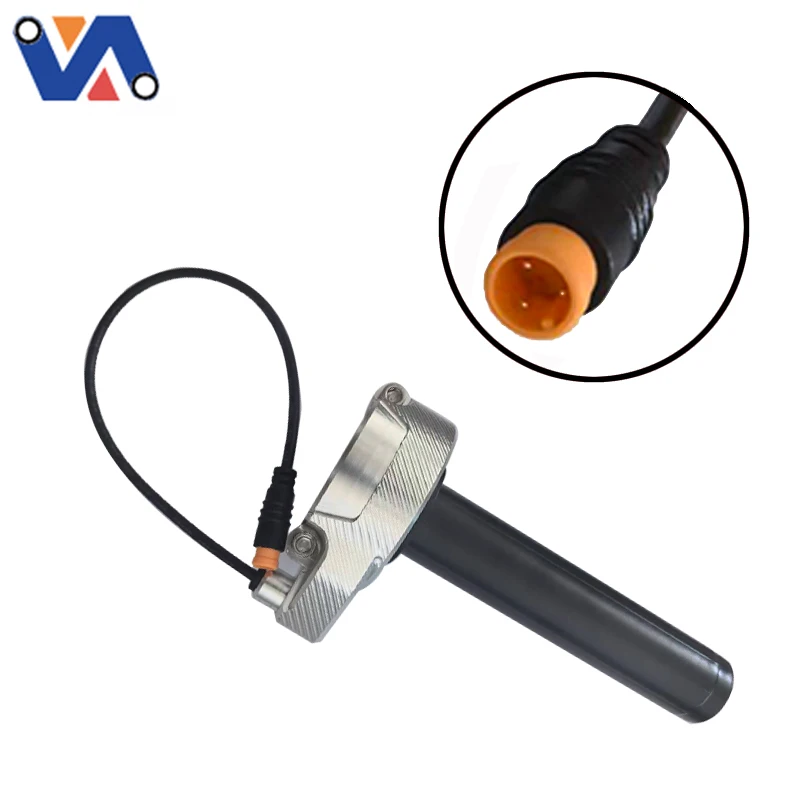
The trade-off is wrist fatigue during prolonged rides, which makes twist grips less common on urban commuter models. In terms of signal output, twist throttles can use either hall sensor or voltage divider designs depending on the manufacturer. CNC-machined twist throttle bodies with hall sensors and 3-pin M8 connectors represent the more durable format for replacement sourcing — the metal body resists housing cracking and the hall sensor extends service life compared to potentiometer versions.
A practical note on cross-brand compatibility: installing a twist grip from one brand onto a controller from another can produce unexpected acceleration curves even when connectors appear physically compatible. The root cause is usually a difference in idle voltage offset between brands. Testing one unit on the actual scooter before placing a bulk replacement order avoids this issue.
For repair shops sourcing wholesale twist throttle stock, the 3-Pin Twist Throttle CNC Electric Bike Accelerator with M8 Male Connector offers a widely compatible format used across CNC-bodied e-bike and electric scooter builds, with the hall sensor signal output that modern controllers expect.
Connector Pin Counts: The Compatibility Check That Prevents Most Returns
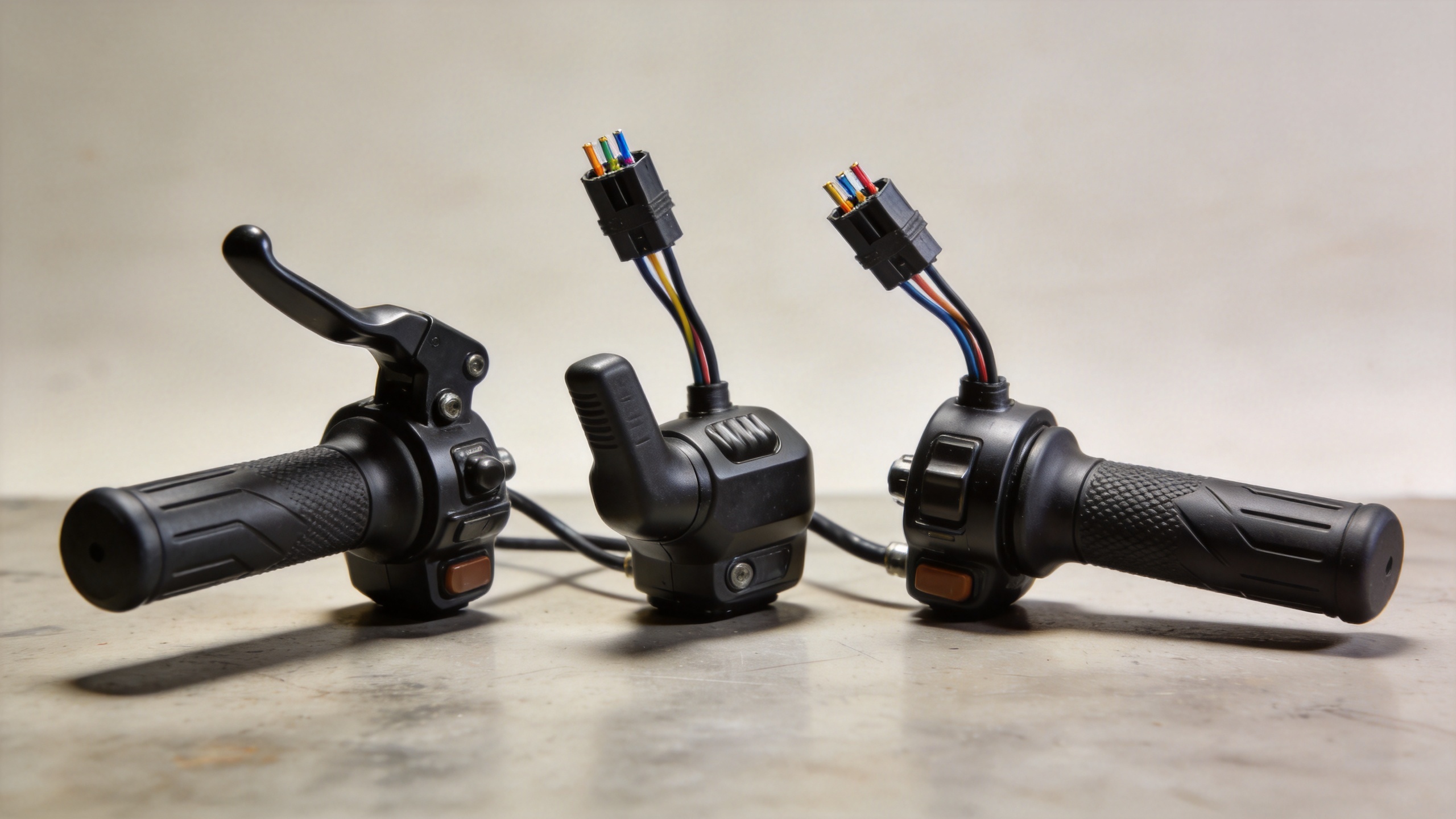
Most repair shops stock e scooter throttle replacements by looking at the physical connector shape. This is where the majority of compatibility errors occur — 5-pin connectors can sometimes be forced into 3-pin housings and vice versa, but the signal mapping will be wrong and the scooter will behave erratically or refuse to start.
The verification checklist before any electric scooter throttle replacement order:
- Pin count — 3-pin (basic hall sensor: power, ground, signal) or 5-pin (hall sensor plus two supplementary display/fault lines)
- Connector housing size — M8 is the most common on mid-range scooters; M6 and proprietary housings appear on brand-specific models
- Signal type — hall sensor vs voltage divider, particularly important if the controller documentation specifies a minimum input voltage range
- Throttle type compatibility — whether the original unit is trigger, thumb, or twist; while all three use the same underlying signal protocol, the physical mounting bracket, cable routing, and handlebar clamp angle differ
Helping Your Repair Shop Customers Choose the Right E Scooter Throttle
When a repair shop customer asks which e scooter throttle to order, the decision comes down to three factors: the original signal method, the connector pin count, and the rider's use case. Trigger types suit precision-focused riders on high-spec builds. Thumb throttles are a natural fit for daily city commuters where wrist comfort over longer distances matters. Twist grips belong on higher-power builds — the full-grip rotation suits the wider power band those scooters deliver.
Confirming pin count and signal type before finalizing any electric scooter throttle order is the single most effective way to reduce compatibility returns and build consistent trust with your repair shop customers. For distributors looking to stock twist throttle replacements suitable for CNC e-bike and scooter builds, small batch trial orders are available at NEW IMAGE to verify fit before committing to larger volumes.