EN
EN



Electric Scooter Tires: Solid, Pneumatic, Tubeless, and Honeycomb — Complete Comparison
After handling bulk orders of electric scooter tires for European and North American markets, one question comes up from distributors more than almost any other: which type should I actually stock? The answer depends less on brand preference and more on who your customers are and how they ride. This guide breaks down the four main categories across six practical attributes so you can give your buyers a straight answer — without guesswork.
The Four Types of Electric Scooter Tires
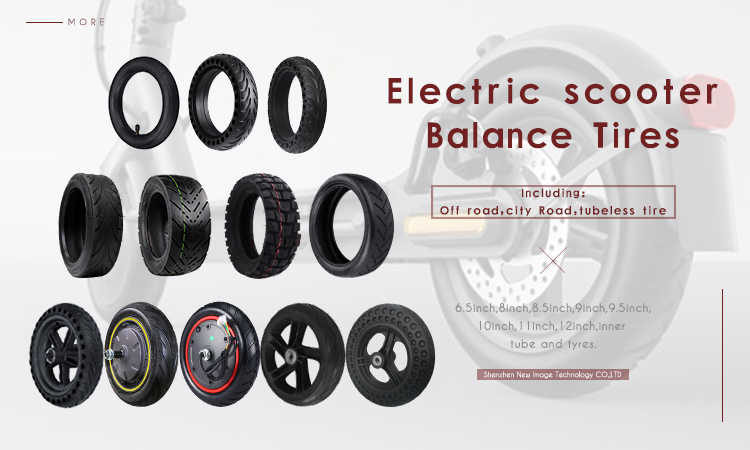
Understanding what distinguishes each type matters before comparing performance numbers. The four main options on the wholesale market today are solid, pneumatic, tubeless, and honeycomb — each suited to a different use case.
- Solid electric scooter tires are made from dense rubber or polyurethane foam with no air cavity. Nothing to go flat. They are the most common type found on budget and mid-range scooters sold into rental fleets and urban commuter segments.
- Pneumatic types (air-filled) come in two variants: tubed, where an inner tube sits inside the casing, and tubeless. Air provides the cushioning. Standard tubed pneumatic e scooter tyres are the original design and remain widely available for older model compatibility.
- Tubeless tyre scooter designs have no inner tube — the tire seals directly to the rim. Puncture repair is simpler because sealant can self-seal minor holes, and the risk of sudden blowout is lower than with tubed designs.
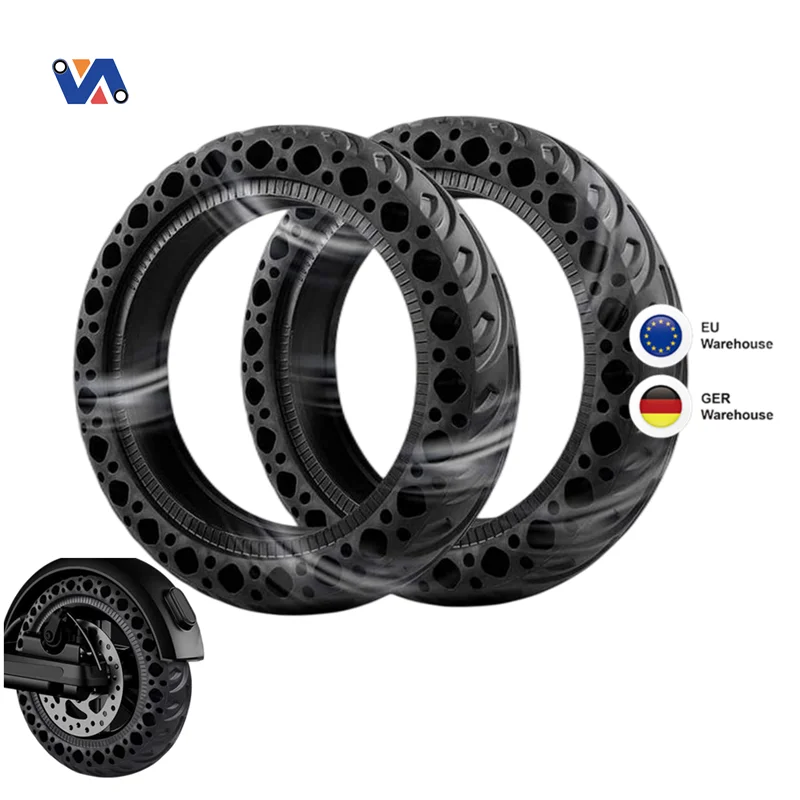
- Honeycomb variants are solid rubber with a lattice of hollow chambers inside. The honeycomb structure compresses on impact, providing more cushioning than standard solid rubber while maintaining the same flat-free reliability.
Side-by-Side Comparison: 6 Key Attributes
These are the differences that actually shape your customers' decisions — and your stocking priorities. The six attributes below cover what distributors most commonly get asked to explain.
| Attribute | Solid | Pneumatic (Tubed) | Tubeless | Honeycomb |
|---|---|---|---|---|
| Puncture resistance | Excellent — zero puncture risk | Moderate — vulnerable to sharps | Good — sealant reduces minor punctures | Excellent — no air to lose |
| Ride comfort | Low — hard on rough pavement | High — superior shock absorption | High — comparable to tubed pneumatic | Medium — noticeably smoother than solid |
| Weight | Heavier than pneumatic | Lightest option | Light — similar to tubed | Medium — heavier than air-filled |
| Maintenance burden | Minimal — no pressure checks | Regular — pressure monitoring, tube replacements | Low — less frequent than tubed | Minimal — no inflation or tube service |
| Terrain suitability | Smooth urban surfaces only | Mixed — handles uneven terrain well | Mixed to off-road depending on tread pattern | Urban and light mixed terrain |
| Expected lifespan | 1,000–3,000 miles | 500–1,500 miles | 500–1,500 miles | 1,000–3,000 miles |
One thing your buyers often get wrong: a more expensive pneumatic option does not automatically outlast a mid-range honeycomb. Lifespan is driven far more by usage conditions — pavement quality, rider weight, riding frequency — than by price point. This matters when customers are comparing e scooter tyres based on total cost of ownership rather than upfront price alone.
Decision Matrix: Matching Tire Type to Rider Profile
In practice, your customers typically fall into one of three profiles — each one points toward a different tire type:
Daily Commuter (Urban Paved Roads)
This rider logs consistent mileage on smooth city streets and values low-hassle ownership. Solid rubber or honeycomb options are both strong fits — no flats means no roadside stops. If ride quality is a concern, a tubeless tyre scooter setup is worth recommending: it handles the same urban terrain with noticeably more comfort, and minor punctures seal without requiring the rider to stop. Tubeless e scooter tyres are increasingly popular in this segment because they offer the comfort of air-filled designs with a lower maintenance profile than traditional tubed pneumatic options.
Off-Road or Mixed-Terrain Rider
For customers riding on gravel paths, rougher suburban roads, or light trails, pneumatic electric scooter tires — especially wider tubed options — still deliver the highest cushioning output of the four types. The trade-off is real: flats happen more often outdoors. A honeycomb variant is a reasonable middle-ground recommendation if the rider is not willing to manage inner tube replacements but still needs more cushioning than solid rubber can provide.
Commercial Rental Fleet Operator
Fleet operators share one priority: keeping scooters on the road with minimal per-unit service time. Both solid and honeycomb designs perform well in this segment — neither type requires the inflation checks or tube replacements that drive up maintenance costs. For high-volume fleet procurement of e scooter tyres, the longer expected lifespan of solid and honeycomb options — typically twice that of pneumatic designs under similar conditions — translates directly to lower replacement frequency and better margins per unit.
Compatibility Notes for Distributors
Tire type is only part of the sourcing decision. Size compatibility matters just as much — the wrong diameter will not fit regardless of how well the tire type matches the use case. The most common sizes in European and North American markets are 8.5-inch for compact commuter models like the Xiaomi M365 and M365 Pro, and 10-inch for larger performance models like the Segway Max G30 series.
Stocking a mix of solid and honeycomb options across both sizes gives you coverage for the majority of replacement requests without overextending inventory. For the 8.5-inch segment, solid honeycomb designs fit both casual commuters and fleet operators looking for flat-free reliability. For the 10-inch segment, a color honeycomb solid tyre covers the growing share of buyers upgrading or replacing larger-format wheels on performance models.

You can view available options in both sizes below:
- 8.5-inch Solid Honeycomb Electric Scooter Tires for M365 (EU Stock, 25-piece batches)
- 10-inch Honeycomb Solid Tyre for Max G30 / G30D
Common Questions About Electric Scooter Tires
Which option suits rental fleets?
For rental fleet operations, solid or honeycomb electric scooter tires are the standard choice. Zero puncture risk means riders do not get stranded, and maintenance teams do not spend time on flat repairs. Honeycomb e scooter tyres offer a slight comfort advantage over full solid designs, which can improve the rider experience without adding service burden.
Can I switch from tubed pneumatic to a tubeless tyre scooter setup?
Not in every case — the rim must be compatible with a tubeless tyre scooter configuration. Before recommending the switch, confirm that the scooter model supports tubeless mounting. On compatible models, switching to a tubeless setup typically reduces maintenance frequency and eliminates the risk of sudden inner tube failure.
Putting It Together
There is no single ideal choice among the four types of electric scooter tires — the right option depends on the rider's surface, maintenance tolerance, and weight preferences. What this comparison provides is a framework for asking the right questions before recommending a category, rather than defaulting to the lowest-priced or most familiar option.
For most wholesale distributors, a practical starting inventory covers solid or honeycomb designs in the most common sizes for fleet and commuter segments, plus a pneumatic or tubeless tyre scooter option for customers who specifically request better shock absorption. That combination handles the majority of buyer needs without requiring you to carry every variant on the market.
If you need help matching specific electric scooter tires to particular models in your catalog, feel free to reach out — that is exactly the kind of technical question we handle regularly for our distribution partners.