EN


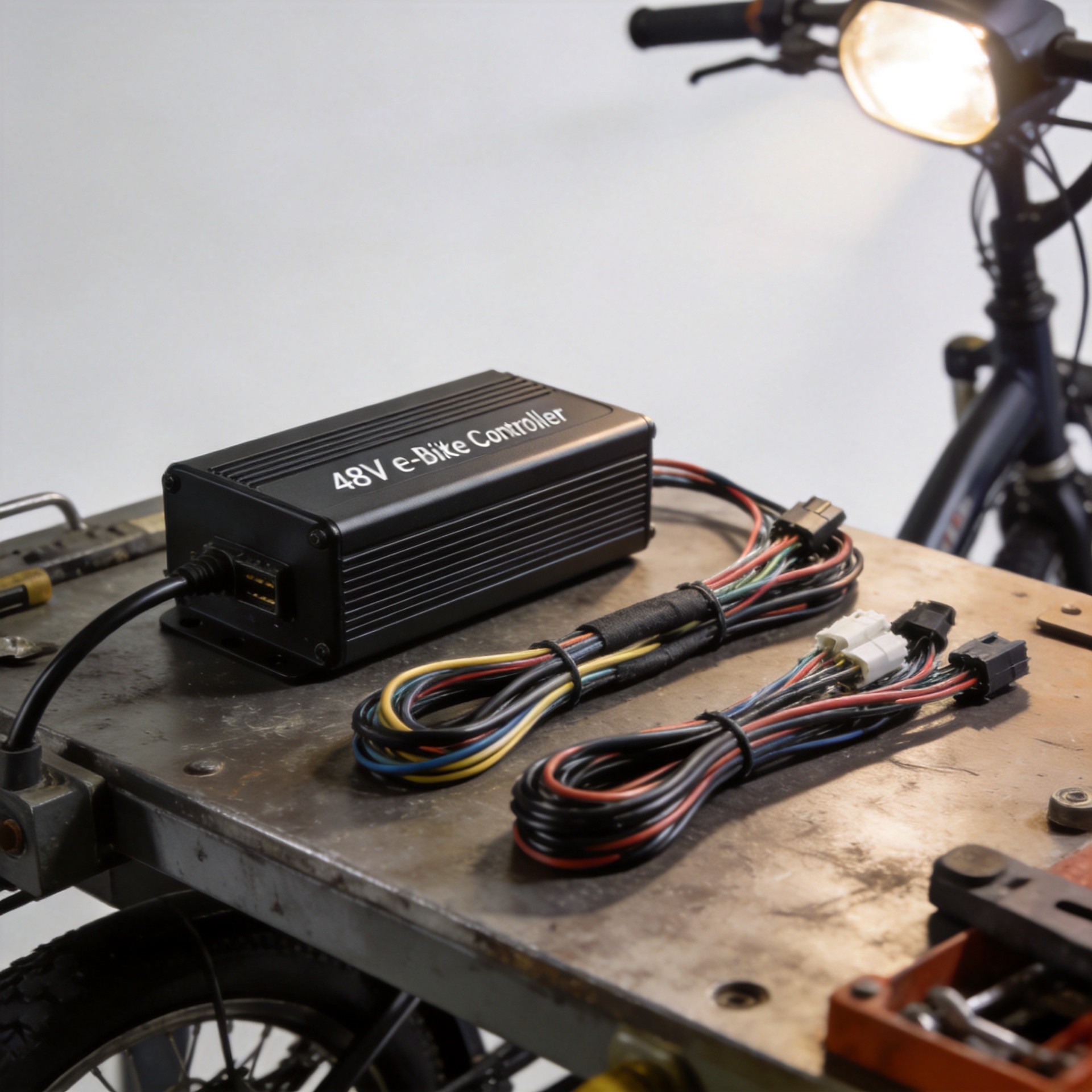
How to Compare 48V E-Bike Controllers for Hitway BK10 and BK6S Replacement
A replacement ebike controller 48v purchase should begin with identification, not with the voltage printed in a listing. Two bikes can both use a 48V battery yet need different current limits, connector layouts, display protocols, or motor-sensor arrangements. For service shops, distributors, and riders sourcing a replacement, the practical question is not “Is this a 48V controller?” It is “Does this ebike controller 48v match the original system well enough to install safely and work as intended?”
From a parts-selection perspective, actual fit matters more than a broad voltage label. The confirmed replacement options used in this comparison are a Hitway BK10 controller stated as 48V 20A and a Hitway BK6S controller stated as 36V/48V 15A. Those ratings are useful starting points, but they are not proof that either ebike controller 48v will work on every BK10 or BK6S build. Confirm the bike’s original label, connectors, display, motor wiring, and battery configuration before ordering.
Start with the Original Controller, Not the 48V Label
An ebike controller 48v manages the relationship between the battery, motor, throttle or pedal-assist signals, brakes, display, and lights. “48V” confirms only one part of that relationship: the nominal battery-system class. It does not identify the plug shapes, pinout, firmware, communication protocol, or allowable current.
Before removing the old unit, photograph every label and connector. Record the controller model code, nominal voltage, current limit, motor rating if shown, display model, and the number of pins in each plug. Photograph connector keyways from both sides. This one habit prevents a common mistake: buying an ebike controller 48v because the battery voltage matches, then finding that the display or Hall connector does not communicate with it.
- Battery: confirm the bike is actually configured for a 48V nominal pack and inspect the power connector and polarity.
- Motor: note whether the motor harness uses three phase leads plus a Hall-sensor connector, and count any additional speed-signal wires.
- Controls: identify throttle, brake-cutoff, PAS, light, ignition/lock, and display connectors individually.
- Labels: compare the original controller’s current limit and model reference instead of relying on motor wattage alone.
BK10 vs. BK6S: Compare the Confirmed Starting Specifications
The two confirmed records point to different replacement starting points. The Hitway BK10 Controller 48V 20A is listed as a 48V, 20A controller. The Hitway BK6S Controller 36V/48V 15A is listed as a 36V/48V, 15A controller. Treat those figures as product-record facts, not interchangeable fitment claims.
| Comparison point | BK10 controller record | BK6S controller record | What to verify on the bike |
|---|---|---|---|
| Stated voltage | 48V | 36V/48V | Original controller label and actual battery-system configuration |
| Stated current | 20A | 15A | Original current limit and the system’s designed electrical load |
| Replacement approach | Model-specific check | Model- and voltage-mode check | Connector family, display compatibility, and motor harness |
Current limit deserves special attention. A 20A ebike controller 48v and a 15A ebike controller 48v are not merely two labels for the same behavior. Current affects how the electrical system is asked to deliver power. Replacing a lower-current original unit with a higher-current unit without confirming the complete system can create poor behavior, overheating, error messages, or unreliable operation. Conversely, fitting a lower-current unit where the original specification calls for more may change performance or fail to meet the bike’s intended operating characteristics.
Use a Four-Part Compatibility Check
1. Match battery voltage and the original current specification
First, verify nominal voltage and the original controller’s current rating. Do not infer the correct ebike controller 48v from the battery sticker alone. For a BK10 replacement, compare the original controller with the stated 48V 20A BK10 record. For a BK6S replacement, confirm whether the bike and its original unit are configured for the stated 36V/48V, 15A option. If the label is unreadable, obtain the model and production information before selecting a replacement.
2. Check motor phase and Hall-sensor connections
Many brushless systems have three heavier phase wires and a separate low-voltage Hall-sensor connection. An ebike controller 48v may have a similar-looking harness while using a different connector shell or pin order. Do not assume that matching wire colors guarantee matching function. Compare the connector keying, pin count, and documented pinout. If the replacement is not an exact plug-compatible part, have a qualified technician verify the wiring map rather than forcing a plug or making color-to-color assumptions.
3. Verify display and control communication
The display can be the hidden compatibility barrier. A controller may power on but still fail to show speed, accept assist changes, clear an error code, or enable the motor if its display protocol differs. Before selecting an ebike controller 48v, identify the display model, connector type, pin count, and any original controller part number. Confirm compatibility with the supplier using clear photos of both sides of the connector and the original label.
4. Compare the small connectors one by one
Brake cutoffs, throttle, pedal-assist sensors, headlights, taillights, and ignition lines can use different plugs even when the main battery and motor connections look familiar. Build a simple checklist instead of relying on memory. Mark each plug on the old controller before disconnecting it, then compare each destination against the prospective ebike controller 48v. A missing or different accessory connector is a reason to pause and clarify the configuration, not to improvise.
A Practical BK10 and BK6S Replacement Workflow
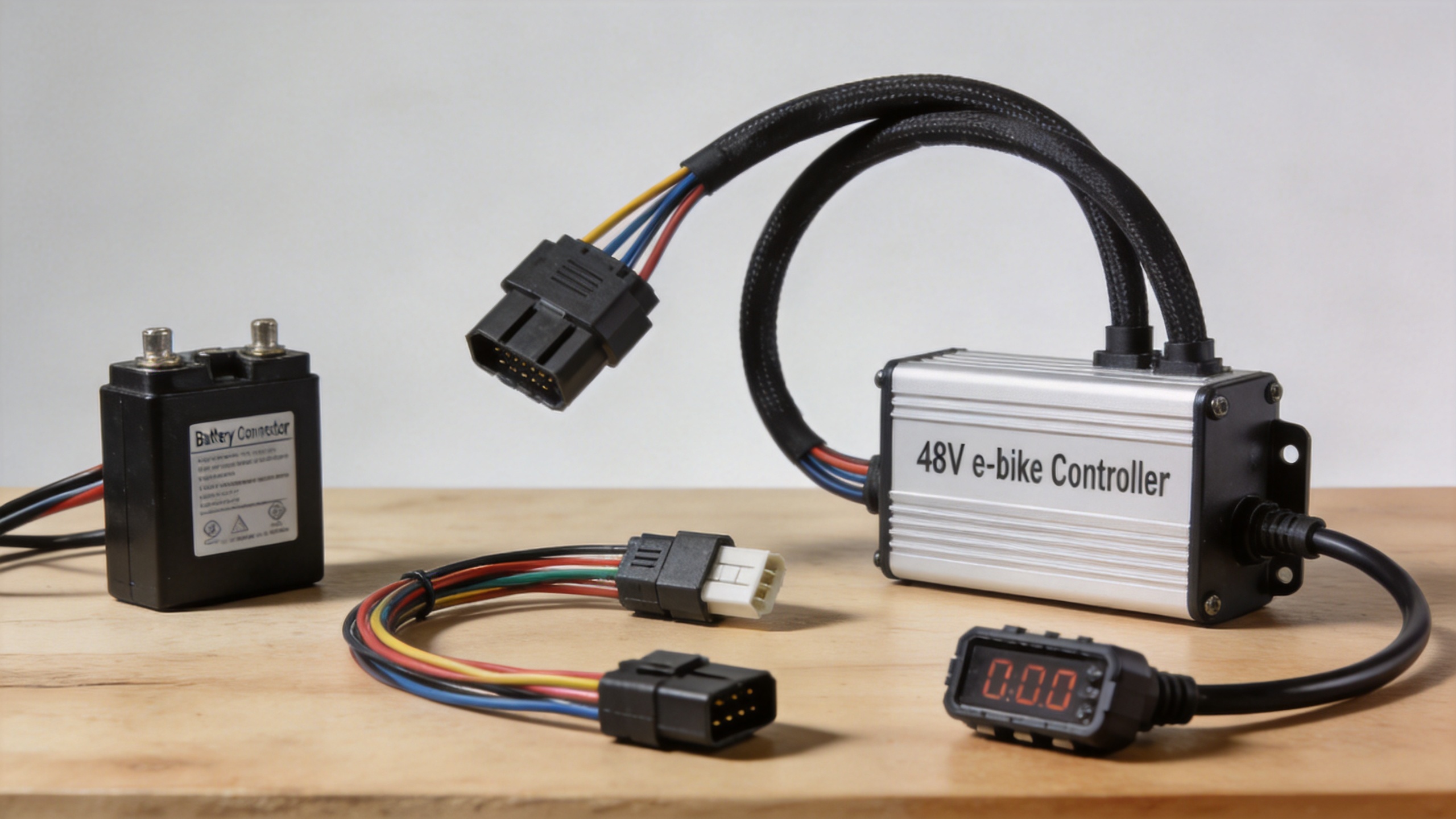
- Turn off the bike, disconnect the battery according to the manufacturer’s safety guidance, and photograph the original controller label and all plugs.
- Write down the bike model, controller reference, nominal battery voltage, stated current, display reference, and motor connector details.
- For BK10, use the confirmed 48V 20A record as a comparison point; for BK6S, use the confirmed 36V/48V 15A record as a comparison point.
- Send the supplier the photos and your comparison list. Ask for confirmation of controller-to-bike fitment rather than asking only whether the part is “48V.”
- After installation by a qualified person, test with the wheel safely unloaded first. Check display startup, brake cutoff, assist response, throttle response where applicable, and abnormal heat or error indications.
This workflow turns an ebike controller 48v purchase into an evidence-based replacement decision. It is especially valuable for wholesale orders, where an early connector or display mismatch can affect multiple service jobs.
Common Buying Mistakes to Avoid
Choosing by wattage only: Motor wattage does not identify every required controller characteristic. An ebike controller 48v still needs compatible voltage handling, current limit, wiring, and controls.
Assuming BK-series parts are cross-compatible: A shared brand or similar bike name is not a wiring diagram. Compare the exact original part and connectors.
Forcing connectors: If a plug does not seat naturally, stop. Connector shape, keying, and pinout protect the circuit and should be verified.
Skipping the display check: An otherwise plausible ebike controller 48v can still be unsuitable if its display communication does not match the bike.
Final Decision: Buy the Verified Match
For a Hitway BK10 or BK6S replacement, the most reliable choice is the ebike controller 48v that matches the bike’s original voltage configuration, current specification, connector layout, motor-sensor system, and display/control communication. The BK10 48V 20A and BK6S 36V/48V 15A records give useful comparison anchors, but neither removes the need to verify the original bike.
When sourcing e-bike parts for resale or repair, keep the original-controller photos and a connector checklist with the order. That documentation makes supplier confirmation faster, reduces avoidable returns, and helps ensure that the selected ebike controller 48v is a replacement decision based on fitment—not just a matching number on a listing.