EN


Rechargeable Bike Headlights: What to Check Before Buying
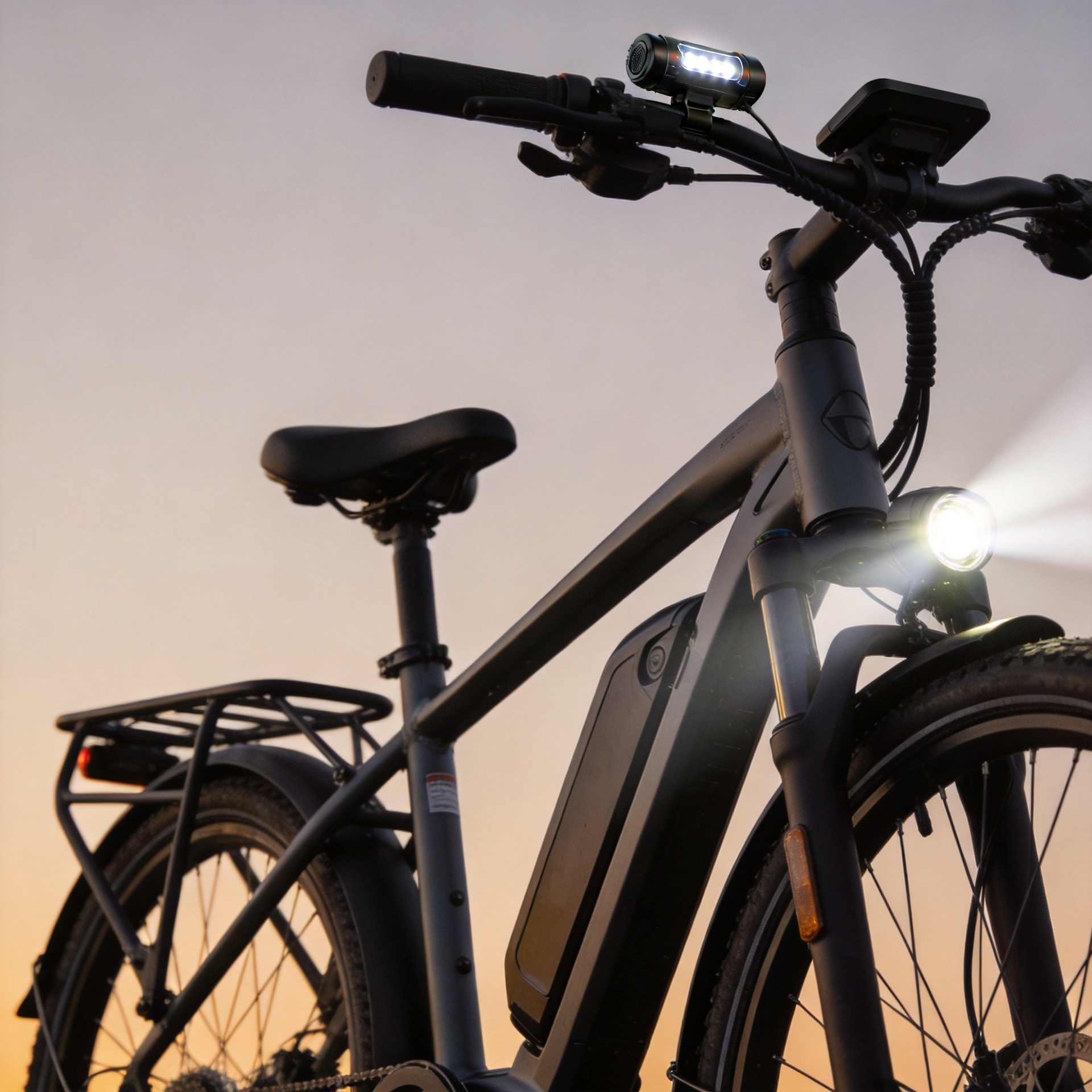
A rechargeable bike headlight is easy to buy badly: the listing looks bright, the price is attractive, and every specification appears to say “USB rechargeable.” Yet a front light has two different jobs. It must help other road users notice you, and—when you ride after dark—it must help you read the surface ahead without creating unnecessary glare. From a buyer’s perspective, the useful question is not “Which rechargeable bike headlight has the biggest number on the box?” but “Which specification can I verify for this rider, route, and order volume?”
For distributors, retailers, and repair-focused buyers, the same discipline matters even more. A rechargeable bike headlight that suits a short, lit commute may be the wrong item for an unlit trail or a wet-weather e-bike. Use the following checklist to compare samples and supplier documents before committing to a purchase.
1. Start with the riding environment, not the lumen claim
Ask whether the rechargeable bike headlight is mainly for being seen in daytime traffic, for urban night riding, or for illuminating an unlit route. Those uses call for different beam control, output modes, and runtime expectations. A high headline output may be helpful, but it does not by itself tell you how evenly the light is distributed or how long that setting lasts.
For road use, look for a usable forward beam with a controlled upper edge. Search research around road-oriented bicycle lighting commonly discusses a horizontal cutoff as a way to limit glare. That does not prove a particular light is compliant with any rule; it does explain why beam shape deserves attention alongside brightness. Ask the supplier for beam photographs, test conditions, and the mode used in the image. If those are unavailable, inspect a sample against a wall and then on the intended route.
2. Compare output modes and runtime as a pair
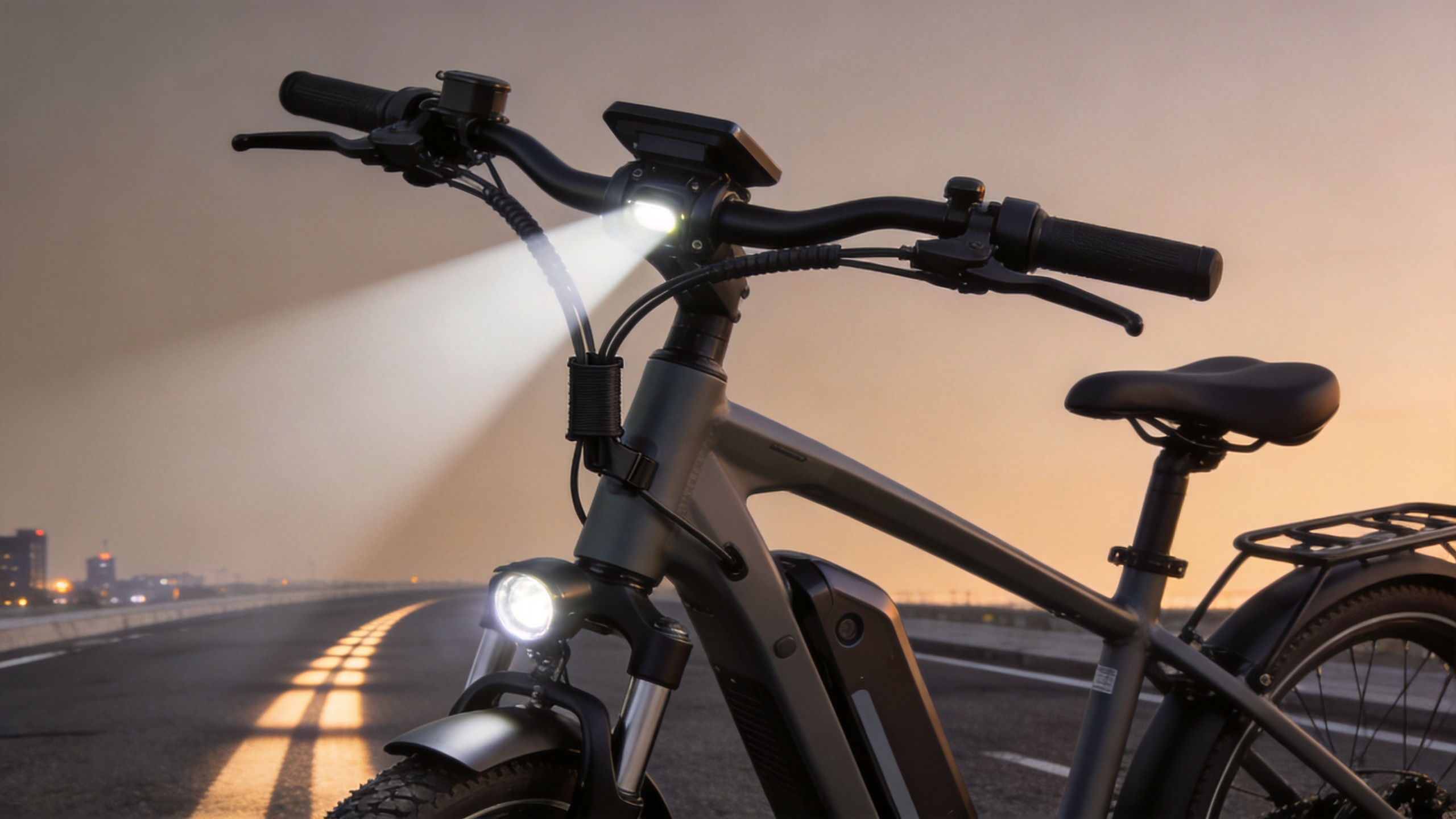
Every rechargeable bike headlight should have a mode table showing output level, stated runtime, charging time, and low-battery behavior. Treat the highest mode as a short-duration option unless the documentation gives a clear, testable runtime for it. For a practical assortment, compare the mode a commuter is most likely to use, not only the maximum setting.
Check these details:
- Does the rechargeable bike headlight step down automatically as the battery drains?
- Is the remaining runtime stated for each steady and flashing mode?
- Is there a battery indicator visible while riding and while charging?
- Can the rider use the rechargeable bike headlight safely while it is connected to external power, and is that use explicitly supported?
Buyers often focus on battery capacity alone. In practice, optical efficiency, thermal management, and the selected mode also influence usable runtime. A sample test—fully charge it, run the chosen mode, and log any output change—gives a much clearer comparison than capacity printed without a test method.
3. Verify the charging port, cable, and charging instructions
A usb c bike light can be convenient because the reversible connector is widely available, but “USB-C” is only the port shape. Before ordering, confirm the specified input, recommended charger range, included cable, charge indicator behavior, and whether the port cover remains sealed after repeated use. USB-IF materials distinguish cable and connector specifications, so do not assume every cable-and-charger combination will behave identically.
For a rechargeable bike headlight intended for retail, ask to see the charging manual and actual packaging. The instructions should clearly state whether a standard USB power source is expected and what users should avoid. If your customer base frequently travels, a usb c bike light with clear, simple charging instructions can reduce support questions—but only when the port and cable have been checked on real samples.
4. Check weather resistance and heat management honestly
Rain resistance is not the same as indefinite submersion. Request the documented ingress-protection rating if one is claimed, and make sure the claim is repeated consistently in the manual, packaging, and product data sheet. If no rating is documented, describe the product more cautiously and avoid making a waterproof claim in your own listing.
Also test the rechargeable bike headlight after a sustained run. The housing may become warm, particularly at higher output. What matters is whether the mount stays secure, controls remain usable, and the light behaves predictably. For an e-bike accessory range, a straightforward wet-weather and vibration sample check is more useful than relying on appearance alone.
5. Inspect the mount before deciding that the light is versatile
A rechargeable bike headlight is only useful if it remains pointed where the rider needs it. Verify handlebar diameter compatibility, strap or clamp material, tool requirements, quick-release operation, and resistance to rotation on rough pavement. A low-profile mount may look neat but still slip under vibration.
Do not stop at “universal mount.” Check whether the rechargeable bike headlight can be aimed without wobble and removed for charging without disturbing the setup. Where customers use accessories across different bicycles or scooters, confirm fit with the intended bar shapes rather than assuming that one mounting method covers every vehicle.
6. Review the front-and-rear visibility plan
A headlight supports forward visibility, but a complete safety setup also needs rear signaling or visibility. If you are building a coordinated accessory offering, evaluate the front light and rear light as separate products with separate specifications. This avoids the common mistake of using a rear-light claim to imply a headlight feature.
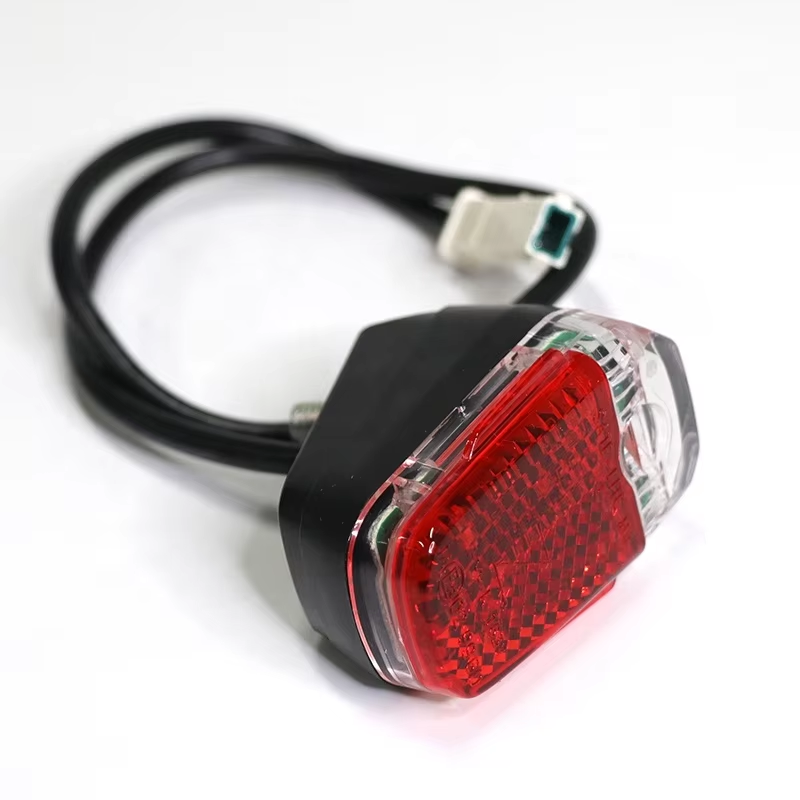
For buyers sourcing complementary products, New Image lists a 5 Modes Wireless Remote Control Turn Signal USB LED Back Light for Electric Scooter Bicycle Taillight Bike Cycling Light LED. Confirm its actual compatibility and functions separately; it is a rear-light option, not evidence of the front-light specifications discussed in this guide.
7. Use a supplier-ready final checklist
Before approving a rechargeable bike headlight, request a sample and document the answers: intended riding scenario; beam photos and aiming range; output and runtime by mode; battery indication; charging input and cable details; weather-resistance evidence; mount dimensions and vibration performance; manual language; packaging contents; and replacement or warranty process. For a usb c bike light, add repeated charging-cycle and port-cover checks to the sample plan.
A suitable rechargeable bike headlight is not defined only by its peak output or initial price. Choose the one whose beam, runtime, charging method, weather claims, and mounting method are clear enough to match the rider’s actual use. A specification-led comparison makes purchasing safer for end users and easier to support for sellers.