EN
EN


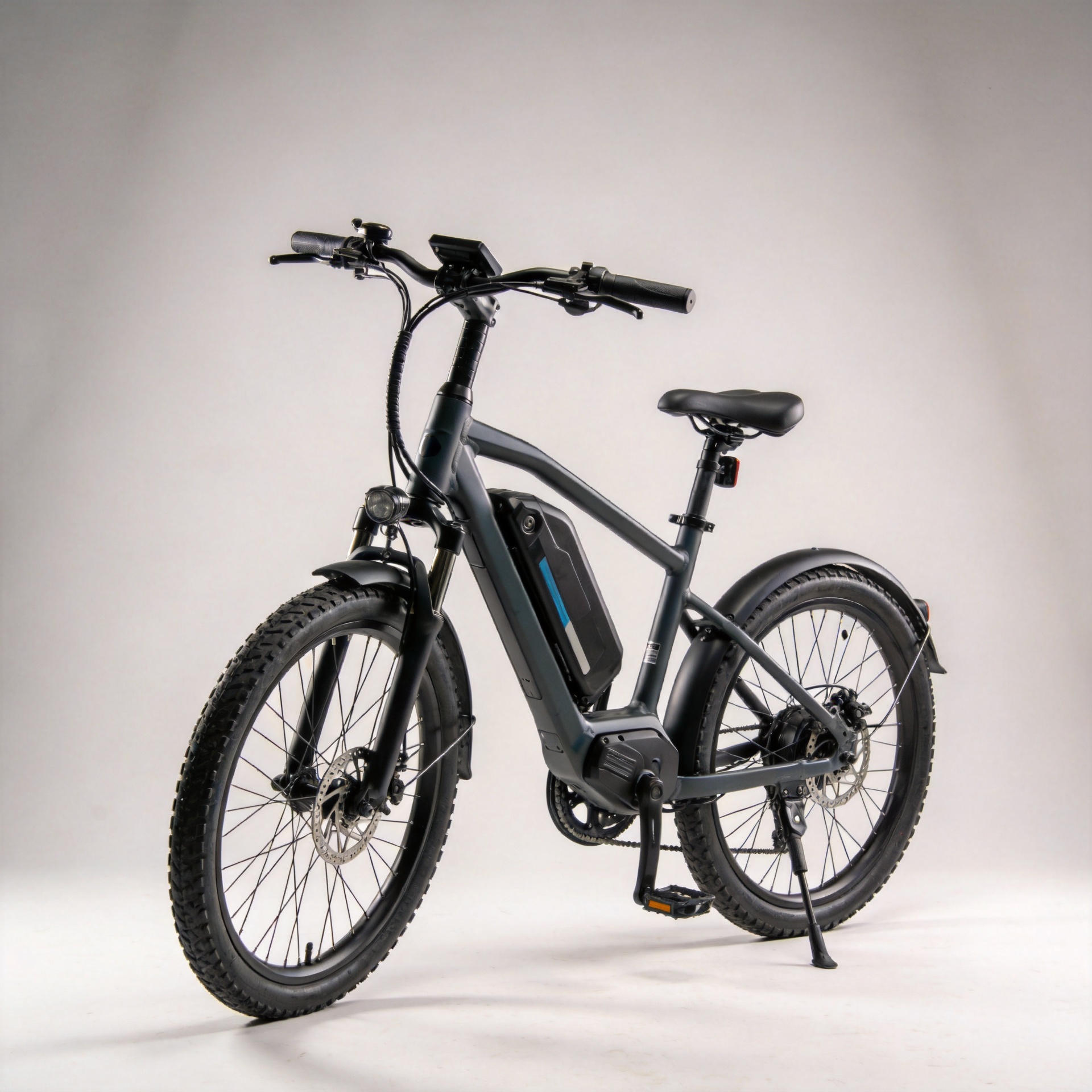
E-Bike Battery Replacement Guide: When to Replace, What Voltage to Choose, and How to Buy
An e bike battery replacement is one of the most consequential purchases a rider or distributor makes. Get it right — matching voltage, capacity, and BMS quality to the specific motor system — and the bike performs as intended. Get it wrong, and you risk controller damage, reduced range, or an early second replacement. This guide covers the three signs that indicate a battery needs replacing, the technical criteria that determine which replacement pack will actually work, and what to look for when sourcing one.
3 Signs Your E-Bike Battery Needs Replacement
E-bike lithium-ion batteries typically last between 500 and 1,000 charge cycles, which translates to roughly 2–5 years for most riders under normal conditions. With careful maintenance, some packs reach 700–1,000 cycles and last 5–7 years. Here are the three clearest signals that an e bike battery replacement is due:
- Range has dropped below 60% of the original figure. If a battery that once delivered 50 km of range now struggles past 30, that is not a bad day of riding. Consistent range reduction of 40% or more is a reliable indicator of significant cell degradation. At this point, an e bike battery replacement is the only reliable fix — charging cycles and balancing cannot restore capacity lost to cell aging.
- Visible swelling or physical deformation. A swollen battery is not just a performance issue. Lithium cells that expand can become a fire risk. If the casing has changed shape, stop using the battery immediately and do not attempt to charge it. Schedule an e bike battery replacement before using the bike again.
- Failure to hold charge above 80% of rated capacity. If your battery shows 100% on the display but the range drops sharply within the first few kilometers, the cells are no longer accepting a full charge. This is particularly noticeable in cold weather and tends to worsen quickly once it begins.
Battery condition is not visible from the outside. A pack that looks clean and undamaged can have seriously degraded cells internally. The three indicators above — range performance, charge retention, and physical condition — are the only reliable diagnostic signals available without specialist equipment. Do not delay the e bike battery replacement if two or more of these signs are present simultaneously.
How to Choose the Right E Bike Battery Replacement
Choosing the right e bike battery replacement requires checking five criteria in sequence. Skipping any one of them can result in a pack that technically fits but underperforms or damages the drivetrain.
Voltage: The Specification You Cannot Compromise
Voltage is the most critical specification in an e bike battery replacement. Put simply, voltage tells your motor controller how much electrical pressure to expect from the battery pack. Use a battery with the wrong voltage and you risk damaging the controller, the motor windings, or both — the failure may not be immediate, which makes it harder to trace back to the battery purchase.
The three most common voltage ratings are:
- 36V — Standard for lower-power systems around 250W. Common on entry-level city bikes and older models. A fully charged 36V pack outputs approximately 42V.
- 48V — The most widely used voltage on modern e-bikes. A fully charged 48V battery outputs 54.6V; the controller must be rated to handle that full range, not just the nominal figure on the label.
- 52V — Premium tier, used for high-performance builds on steep gradients or carrying heavy loads. At full charge, a 52V pack outputs 58.8V. A 52V e bike battery replacement on a system designed for 48V requires a controller rated for at least 60V — the peak voltage, not the nominal label value, is the relevant limit.
For a like-for-like e bike battery replacement, match the voltage exactly. If you are considering an upgrade, check the controller's maximum input voltage rating first. That number, not the battery label, is the real compatibility ceiling.
Ah Capacity: What Actually Determines Your Range
Amp-hours (Ah) work like a fuel tank — more Ah means more stored energy and more range at the same voltage. However, the most useful number to compare across different e bike battery replacement options is Watt-hours (Wh), calculated as:
Wh = Voltage × Ah
A 48V 15Ah replacement battery holds 720 Wh of usable energy, while a 52V 10Ah pack holds only 520 Wh — even though its voltage is higher. Many buyers prioritize voltage and assume higher means more range. When comparing e bike battery replacement options at different voltages, calculating the Wh figure first gives a more reliable range comparison than voltage alone.
Cell Chemistry: 18650 vs 21700
Most e bike battery replacement packs use one of two cylindrical lithium cell formats:
- 18650 cells (18mm × 65mm) — The established standard for most current e-bike packs. Widely available, well-tested, and cost-effective. A solid choice for standard replacement where weight reduction is not a priority.
- 21700 cells (21mm × 70mm) — Higher energy density per cell. Packs built with 21700 cells can achieve the same Wh figure in a lighter or more compact housing. Worth considering for performance-oriented builds where pack weight matters.
BMS Quality: The Component That Protects Everything Else
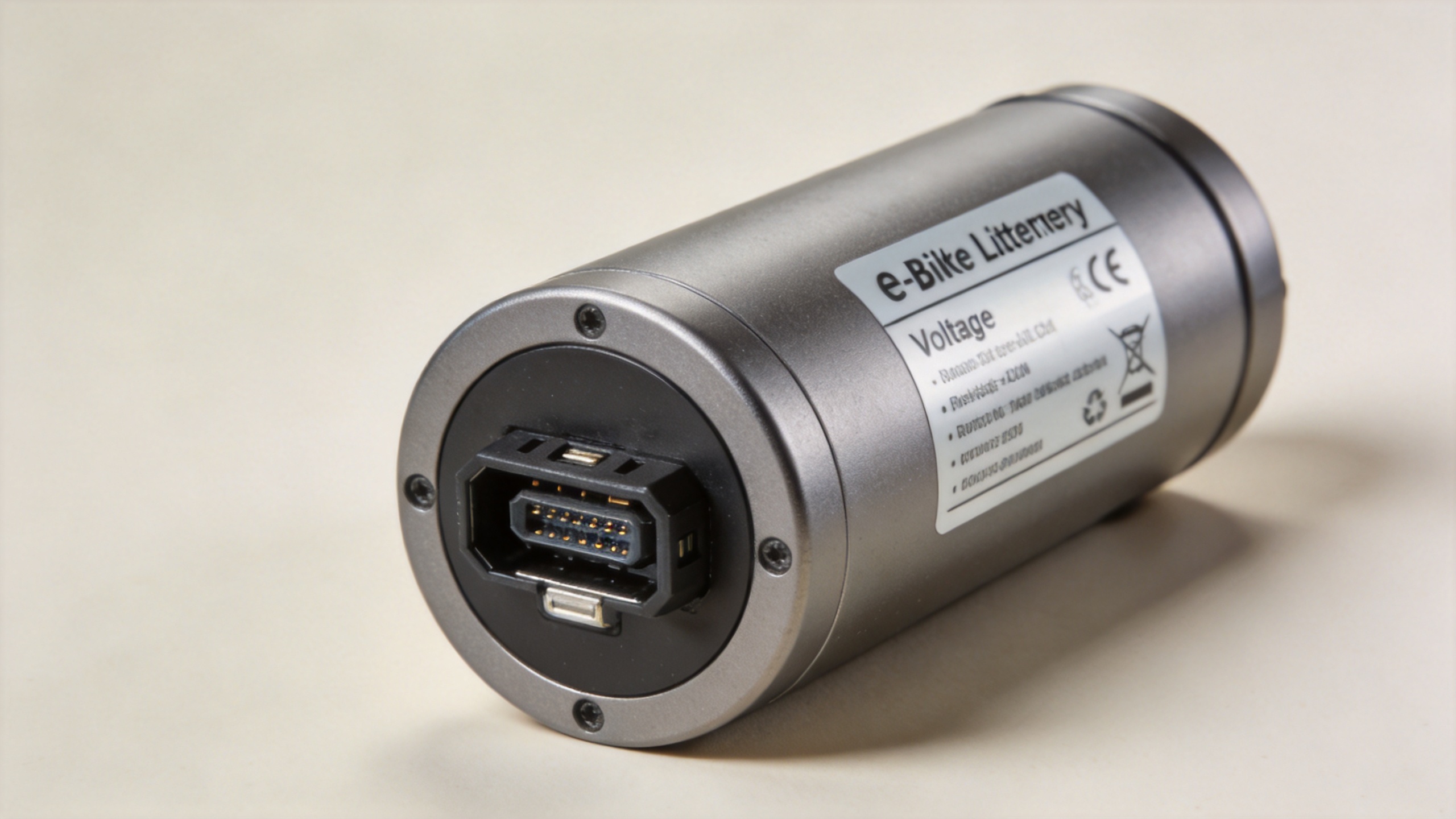
BMS stands for Battery Management System — in plain terms, it is the circuit board inside the e bike battery replacement pack that monitors cell voltage, temperature, and current flow to prevent overcharging, over-discharging, and thermal runaway. A weak BMS is one of the most common causes of early battery failure and controller damage, and you cannot assess it from the outside of the pack.
When evaluating an e bike battery replacement, look for explicit documentation of:
- Overcharge protection and accurate charge cutoff voltage
- Over-discharge cutoff to protect cells from deep discharge damage
- Temperature monitoring with thermal cutoff
- Cell balancing to ensure all cells charge and discharge evenly
- Short-circuit protection
A replacement pack where the connector fits and the voltage label matches can still damage your motor controller if the BMS charge cutoff voltage is miscalibrated. This is the kind of detail that rarely appears prominently in a listing but shows up clearly in long-term reliability.
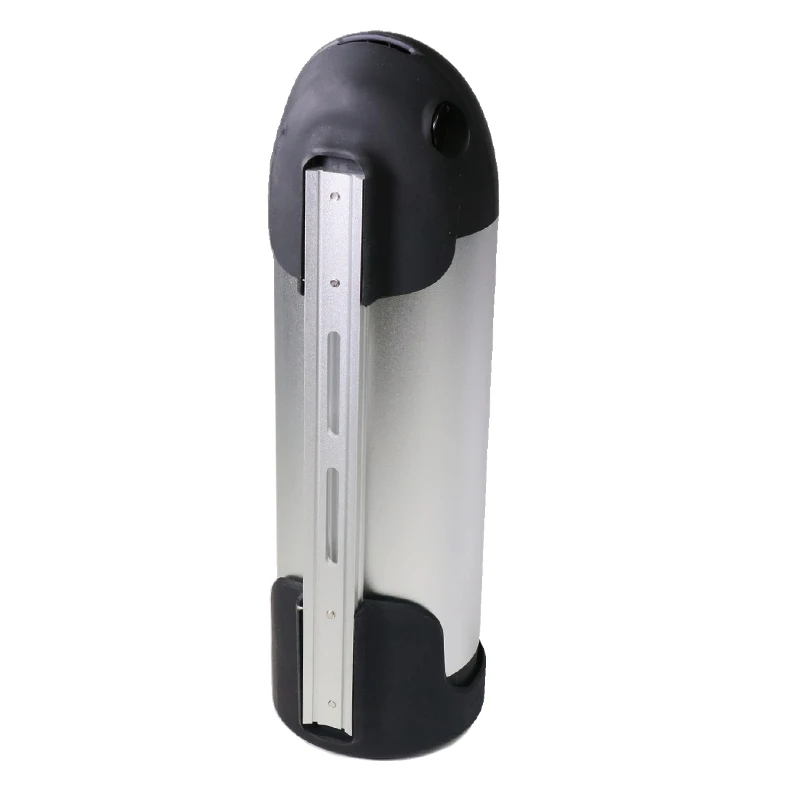
Physical Form Factor: Bottle vs Rack Mount
Any e bike battery replacement must match the frame's mounting configuration. A technically correct battery that uses the wrong mounting format cannot be installed without modification:
- Bottle (downtube) mount — Attaches to standard water bottle cage bosses on the frame downtube. The most common format for aftermarket replacements. Compact, widely compatible, and easy to remove for charging.
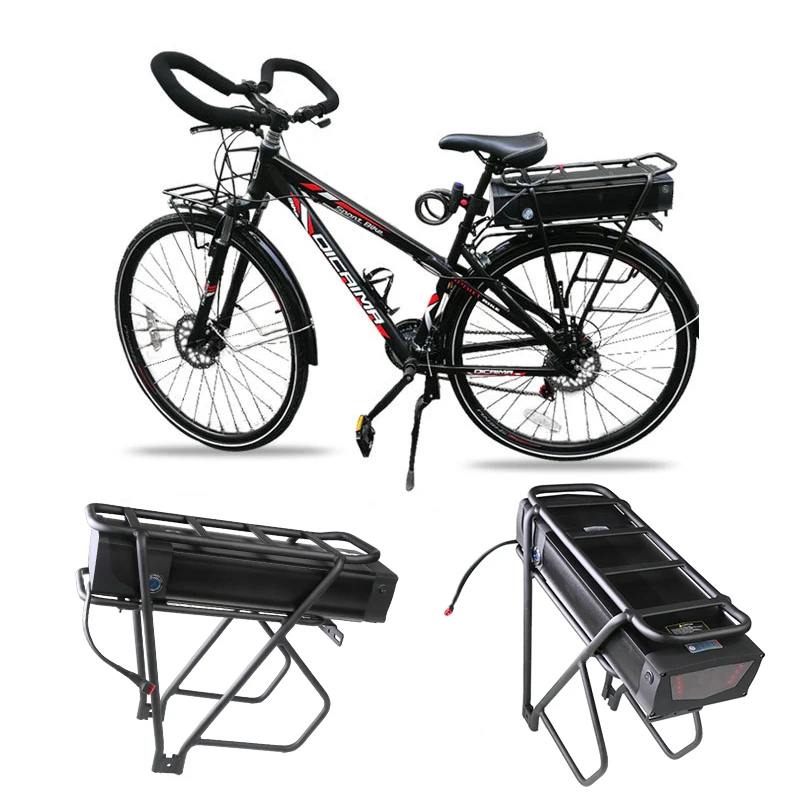
- Rack (rear carrier) mount — Sits on a dedicated rear rack. Typically allows for larger Ah capacity and provides more stable weight distribution for heavy packs. Requires a compatible rear rack installed on the frame.
For bottle-style e bike battery replacement, the New Image X-go 36V/48V Bottle Battery is compatible with 250W, 350W, and 500W motor systems and uses 18650 cells. For rack-mounted e bike battery replacement requiring broader voltage compatibility, the New Image 36V 12Ah Rack Battery supports 36V through 60V configurations.
Battery Lock and Key Replacement: A Separate Issue
If you are managing a locked battery that cannot be opened — because the key was lost or the lock cylinder failed — electric bike battery lock replacement is a separate process from swapping the battery cells or pack itself. In most cases, a compatible lock cylinder can be sourced from the battery manufacturer or a specialist parts supplier using the battery model number.
For electric bike battery key replacement, many manufacturers can supply a duplicate key if you provide the battery's serial number. Some distributors also stock compatible key sets for common battery lock formats. Avoid forcing a jammed lock; damaging the latch mechanism makes the casing harder to service and may require a full electric bike battery lock replacement rather than just a key cut.
When ordering an electric bike battery lock replacement or arranging an electric bike battery key replacement, confirm the lock format (barrel lock vs. key switch) and cylinder dimensions before ordering, as these vary across battery brands and form factors.
What to Look for When Sourcing a Replacement
Many buyers source an e bike battery replacement based on price alone and end up with a pack that damages the controller within a season — because the BMS cutoff is wrong, or the stated cell capacity degrades sharply after the first few charge cycles. A reliable approach: confirm voltage match first, then calculate the Wh you need for target range, verify the physical form factor, and compare within that qualified subset.
For wholesale e bike battery replacement sourcing, New Image supplies packs direct from Shenzhen with options from 36V to 60V in both bottle and rack formats. Small trial orders are available before bulk commitments, with compatibility support included.