EN
EN


42V vs 54.6V vs 67.2V Scooter Charger: Matching Voltage to Your Electric Scooter Fleet
If you manage a mixed-brand electric scooter fleet or stock chargers for resale, you have almost certainly run into this problem: three chargers that look nearly identical, priced within a few dollars of each other, but they are not interchangeable. The choice between a 42v scooter charger, a 54.6V model, and a 67.2V unit comes down to which battery system each one was built for—and getting that wrong means undercharged packs, accelerated cell degradation, or, in worst cases, a damaged battery you cannot recover.
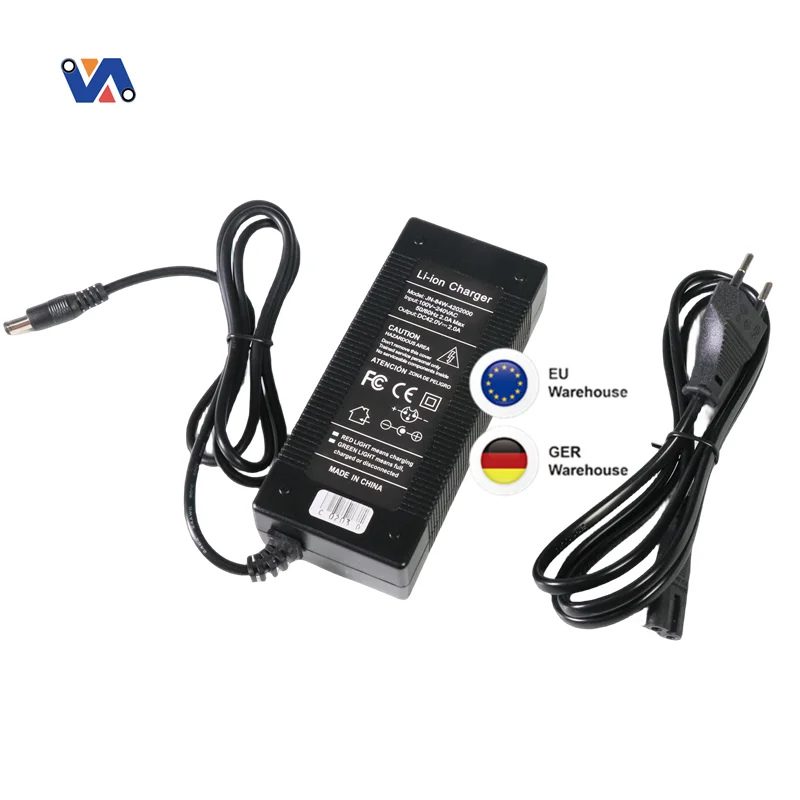
After sourcing chargers across dozens of scooter brands and voltage tiers, the single most reliable rule is this: match the charger output voltage to the full-charge voltage of the battery, not its nominal rating. That distinction is where most ordering errors originate when buyers treat a 42v scooter charger, a charger 42v 2a format, and a 54.6V unit as interchangeable specifications.
Why the Numbers Don't Mean What They Seem
A 36V battery is not charged by a 36V charger. A 36V lithium-ion pack, configured in a 10S (ten cells in series) arrangement, reaches full charge at approximately 42V—which is exactly what a 42v scooter charger delivers. The "36V" label describes the average operating voltage, not the top-of-charge figure. This is why the standard charger 42v 2a specification exists: 42V represents the full-charge ceiling for a 36V / 10S lithium pack, and 2A is the current rating sized for 10–20Ah batteries common in entry-to-mid-range scooter models.
The same logic applies across the full range:
| Battery Nominal Voltage | Cell Configuration | Required Charger Output | Common Specification |
|---|---|---|---|
| 36V | 10S lithium-ion | 42V | charger 42v 2a / battery charger 42v 2a |
| 48V | 13S lithium-ion | 54.6V | 54.6V 2A scooter charger |
| 60V | 16S lithium-ion | 67.2V | 67.2V 2A scooter charger |
Using a 54.6V charger on a 60V battery does not simply slow the charge—it caps the pack at roughly 75% of its designed capacity. Used regularly, that cycle pattern shortens cell life and reduces range. Using a higher-voltage charger on a lower-voltage battery is more immediately dangerous: the cells exceed their upper voltage limit per cycle, and thermal runaway becomes a real risk over time. A battery charger 42v 2a applied to a 48V pack creates exactly this condition—it over-charges each cell by a meaningful margin on every cycle.
Connector Compatibility Across Voltage Tiers
One detail that catches even experienced buyers off guard: Many 42v scooter charger models and 54.6V chargers share the same DC 5.5×2.1mm barrel connector—which means a 54.6V charger can physically connect to a scooter wired for a 42V system without any visible warning. The plug fits. The charger works. And the 36V battery inside receives more voltage than it was designed for on every single charge cycle.
For wholesale buyers stocking multiple voltage tiers, this physical interchangeability is a serious inventory management issue. A charger 42v 2a and a 54.6V 2A unit can occupy the same shelf position, use the same connector, and even look identical from the front label. Relying on visual inspection or connector shape alone to prevent mismatched use in the field is not a reliable system.
Steps that reduce cross-voltage errors in a managed fleet:
- Label each charger with the target battery voltage, not just the charger output voltage
- Maintain separate storage locations for each voltage tier
- Train technicians to verify battery pack voltage before selecting a charger
- Consider chargers with voltage labels printed in high-contrast colors if your service environment is high-traffic
- For new procurement, source a 42v scooter charger separately from higher-voltage units and store them in clearly segregated bins
67.2V chargers more often use a different connector type—round-pin or proprietary configurations are common in 60V platform scooters—so that tier is usually less prone to cross-use errors, but it is still worth confirming per model before placing a wholesale order.
Current Rating and Fleet Charging Speed
Beyond voltage, current output—measured in amperes—determines how quickly each battery charges. The standard battery charger 42v 2a specification suits packs in the 10–20Ah range and typically delivers a full charge in four to eight hours depending on state of discharge. The same 2A rating applies across the 54.6V and 67.2V tiers in most standard scooter charger configurations.
Operators with overnight charging windows will find a standard charger 42v 2a usually sufficient. For rental or shared-fleet operations where vehicles turn over multiple times per day, 5A variants at 42V or 54.6V become worth considering. Keep in mind: faster charging accelerates heat generation in the cells, so thermal management—whether from charger-side protection or the battery's own BMS—matters more at higher currents.
When sourcing in bulk, verify that each unit includes over-charge protection, short-circuit protection, and temperature cutoff. These are not premium features—they are baseline requirements for any 42v scooter charger going into regular fleet service or retail channels. The same standard applies to 54.6V and 67.2V units entering a managed fleet.
Building a Stock Strategy for Mixed-Voltage Fleets
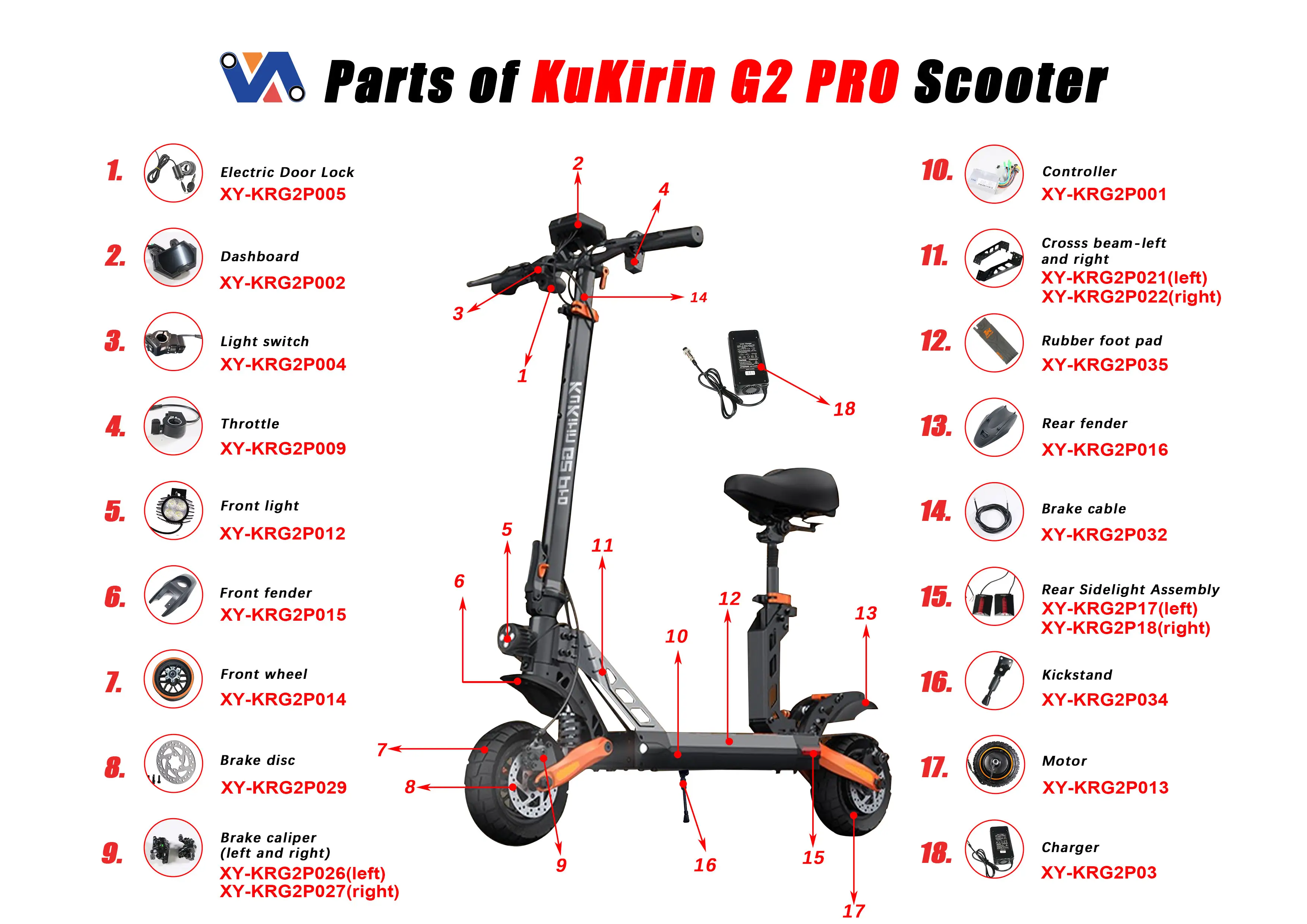
Most wholesale buyers serving repair shops, rental operators, or resale channels deal with mixed fleets. A single operator may run Kugoo G2 Pro scooters (36V / battery charger 42v 2a) alongside 48V performance models and a small number of 60V units. Stocking chargers requires knowing the voltage distribution of that fleet, not just the total unit count.
One way to structure initial procurement:
- Audit existing fleet or customer base by battery nominal voltage—36V, 48V, or 60V
- Allocate charger stock proportionally, with a modest buffer on the most common tier
- Keep a small number of universal multi-voltage chargers (units that cover 36V/48V/60V with selectable output) available for service technicians who need flexibility across battery types
- Reorder individual voltage chargers as consumption data clarifies actual demand per tier—in most EU-market fleets, the 42v scooter charger is the highest-volume SKU
For fleets built primarily around mainstream 36V scooters—Kugoo S1, Kugoo G2 Pro, and similar entry-to-mid-range models popular in EU markets—the 42V 2A charger with DC 5.5×2.1mm connector remains the highest-volume item. New Image stocks this charger 42v 2a configuration in EU-compliant batches, reducing customs friction for European buyers.
Choosing the Right Charger for Your Fleet
The three voltage tiers—42V, 54.6V, and 67.2V—are not competing options. They serve different battery platforms, and a well-managed fleet needs the correct charger for each platform it operates. What changes between tiers is the battery system inside the scooter, not the quality or feature set of the charger itself.
When evaluating chargers across all three voltage levels, the core checklist stays the same: correct output voltage for the battery system, matching connector type for the scooter model, appropriate current rating for your charging schedule, and verified protection features for fleet-grade reliability. Whether you are ordering a battery charger 42v 2a for a 36V fleet segment or a 67.2V unit for 60V high-performance models, those four criteria apply equally.
New Image supplies chargers across 42V, 54.6V, and 67.2V output specifications, with connector options covering the major standards used in EU and North American markets. If you are configuring a multi-voltage procurement order or need to confirm compatibility against specific scooter models, the team can advise on which SKU aligns with your fleet's battery platforms before you commit to volume.