EN
EN



What Is a Fat Tire Electric Bike? Off-Road Benefits, Structure, and How It Differs from Standard E-Bikes
If you're sourcing parts for two-wheeled electric vehicles, you've probably noticed that the fat tyre electric scooter category is expanding faster than almost any other segment — especially in European and North American markets where buyers demand year-round riding capability. But what actually defines this category, and why does a fat tyre electric scooter require different frame geometry, hub specifications, and tire sourcing compared to a standard e-bike? This breakdown covers the category from a component and supply perspective.
What Makes a Tire "Fat"? Defining the Category
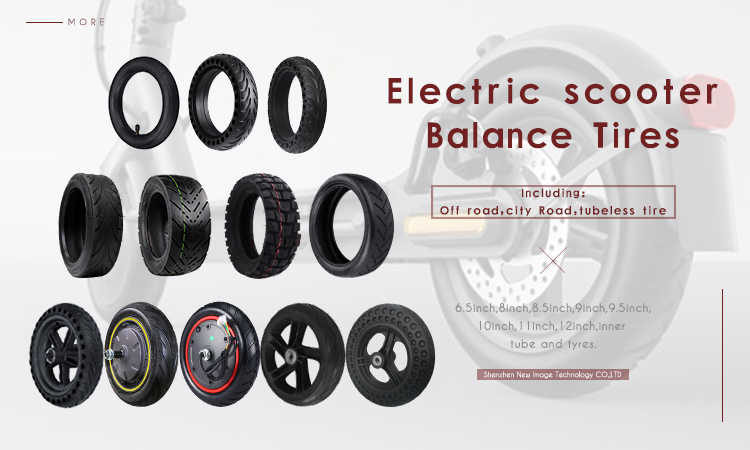
The term "fat tire" applies to any pneumatic tire measuring 3 inches (approximately 76mm) or wider. Most compact fat e-bikes — including widely stocked models like the Ouxi V8 and QM V20 Fatbike — use a 20×4.0 spec, meaning a 20-inch rim diameter and a 4-inch (100mm) tire width. Larger platform bikes often scale up to 26×4.0 or 24×4.0 configurations for additional load capacity and frame strength.
For buyers handling parts procurement, the cst bft 20x4 0 tire format has become a recognizable reference point in the compact fat bike segment. When distributors specify this size, they're looking at a 20-inch fat tyre electric scooter or fat e-bike build that requires a rim with an inner width of 80–100mm — a dimension that standard folding e-bike rims simply don't support. Getting this spec right upfront prevents the most common fitment problems before parts ship.
If you primarily source standard e-bike tires in the 1.75–2.5 inch range, treat fat tire components as a separate product line rather than a size variant of your existing inventory — the structural requirements are different enough to warrant it.
How the Structure Differs: Frame, Fork, and Hub
A wider tire isn't just a rim swap. Fitting a 4-inch tire forces changes across several structural components of the bike. Understanding these dependencies helps when advising customers on compatibility or building out an accurate sourcing checklist.
- Frame clearance: Fat bike frames have significantly wider chainstays and fork legs to accommodate the broader tire profile. A standard e-bike frame will not physically clear a 4-inch tire without modification.
- Fork design: On a fat tyre electric scooter or fat e-bike, the fork must be engineered with wider dropout spacing — typically 135mm or 150mm at the rear axle, versus the 100mm standard on most compact folding models.
- Hub and rim specifications: Fat bike hubs use wider flange spacing and lacing matched to rims in the 65–100mm internal width range. The rim's inner width determines whether the tire bead seats safely and maintains the correct tire profile under load.
- Operating tire pressure: Fat tires run at 5–15 PSI rather than the 40–65 PSI range typical of standard e-bike tires. This low pressure is deliberate — it's the mechanism behind most of the performance advantages.
A common sourcing error involves verifying only the outer diameter and missing the rim inner width. The outer diameter of a 20-inch fat tire is technically similar to a standard 20-inch tire, but the internal rim dimension required is nearly three to four times wider. Standard e-bike rims are not interchangeable with fat bike rims, even when the outer tire diameter appears compatible on a spec sheet.
Off-Road Performance Benefits: Why Buyers Are Asking for This Category
The practical performance case for a fat tyre electric scooter comes down to two physical properties working together: a wide contact patch and low operating pressure. Together, they enable behavior that narrow tires cannot replicate on challenging terrain.
- Sand and loose gravel: The wider contact patch distributes rider weight across a larger surface area, allowing the tire to float rather than dig in. Fat tires rated at 4 inches or wider tend to outperform narrow tires on loose surfaces — beach sand, unpacked gravel, and soft dirt are where the wider contact patch makes a measurable difference.
- Snow and soft ground: Running at 8–12 PSI causes the tire to deform and mold around surface irregularities, generating grip that functions similarly to a snowshoe. This makes a fat tyre electric scooter a practical year-round option in regions with winter road conditions.
- Trail vibrations and comfort: At low pressure, the tire itself acts as a suspension buffer, absorbing vibration from packed dirt, cobblestones, and root-crossed paths. Riders who switch from rigid-fork standard e-bikes to fat tire builds often report noticeable reductions in arm fatigue on mixed-surface commutes.
Fat tires do add weight — typically 600g to 1,200g more per tire compared to standard e-bike tires. On flat urban asphalt, the additional rolling resistance is perceptible. If a buyer's customers ride predominantly on smooth pavement, standard tires remain the more efficient option. But for anything involving gravel, soft ground, or winter surfaces, the trade-off favors fat tires clearly.
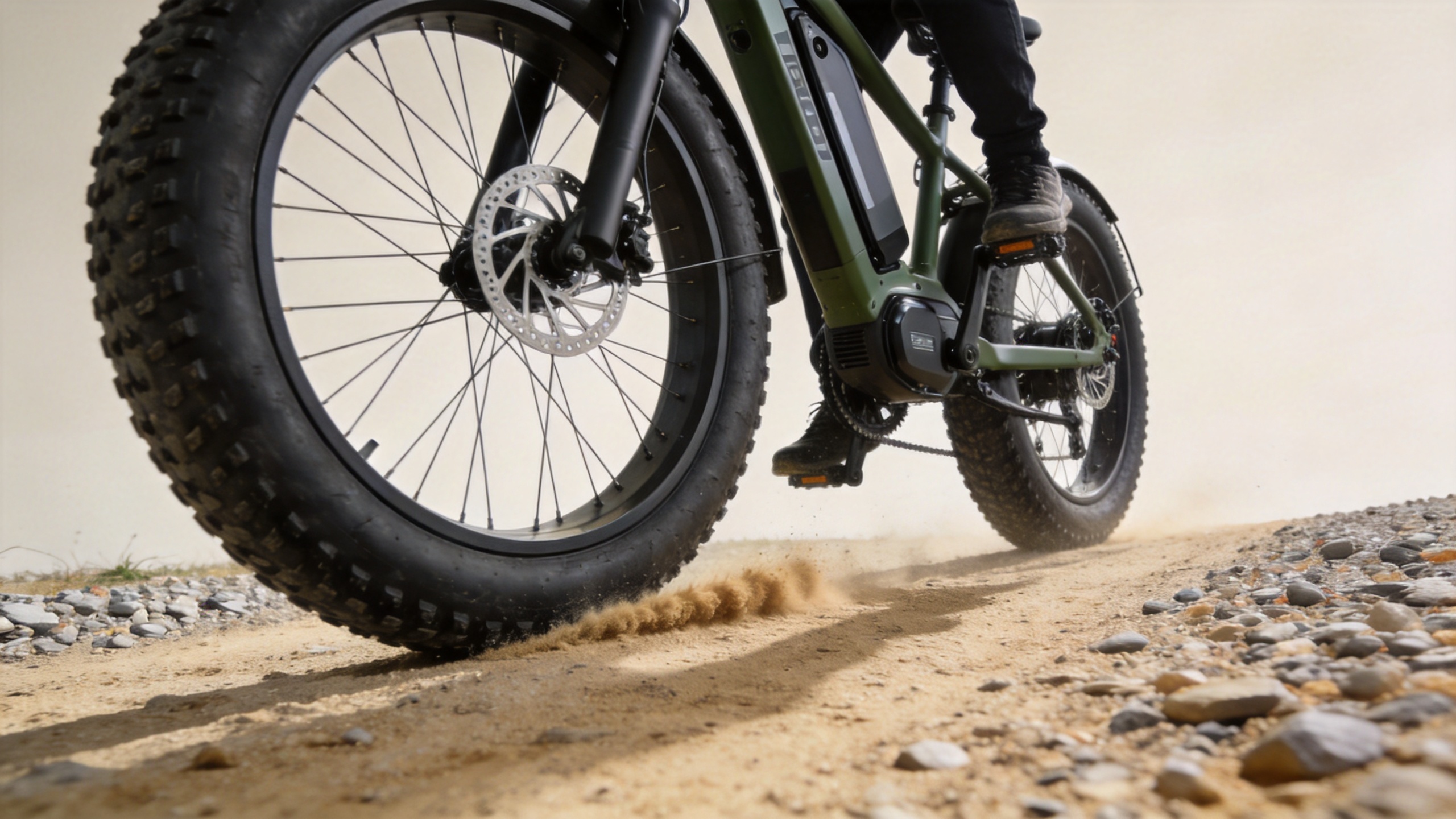
Fat Tyre vs. Standard Tyre: Side-by-Side Comparison
| Specification | Fat Tire (e.g., 20×4.0) | Standard E-Bike Tire (e.g., 20×2.0) |
|---|---|---|
| Width | 3"–4"+ (76–100mm) | 1.75"–2.5" (44–63mm) |
| Operating Pressure | 5–15 PSI | 40–65 PSI |
| Rim Inner Width | 65–100mm | 19–30mm |
| Suited For | Sand, snow, gravel, packed dirt | Paved roads, smooth paths |
| Frame Requirement | Fat-specific frame & fork | Standard e-bike frame |
| Tire Weight (approx.) | 900g–1,400g per tire | 300g–600g per tire |
Sourcing Fat Tyre Components: What to Verify Before Ordering
For distributors building stock for European or North American fat e-bike markets, the 20×4.0 format currently represents the majority of compact fat tyre electric scooter and fat bike repair demand. When confirming compatibility for a replacement tire order, three dimensions matter most: the ETRTO bead diameter (typically 406 for 20-inch fat bikes), the valve type (Schrader is standard on most mass-market fat e-bikes), and the rim inner width of the specific wheel being fitted.
New Image stocks a range of fat bike tire and tube sets matched to popular OEM fat e-bike models. The EU Stock 20×4.0 Fat Tire (Inner and Outer) for Ouxi V8 / QM V20 Fatbike — KENDA Tyre is held in EU warehouse inventory to support distributors who need shorter lead times and prefer to avoid the documentation overhead of direct China-origin imports.
Key Takeaways
A fat tyre electric scooter or fat e-bike is not a standard e-bike with a wider wheel — it's a structurally distinct category built around low tire pressure, wide rim geometry, and fat-specific frame clearances. For component buyers, understanding these interdependencies is the foundation of accurate sourcing: verify rim inner width, not just outer diameter; confirm ETRTO bead diameter for the specific model; and treat fat bike frames and forks as non-interchangeable with standard e-bike hardware. As European demand for off-road and all-season e-bikes continues to grow, fat tyre components are becoming a core stocking category rather than a niche request.