EN
EN


Class 2 E-Bike Throttle Guide: What Buyers Should Compare Before Choosing a Model
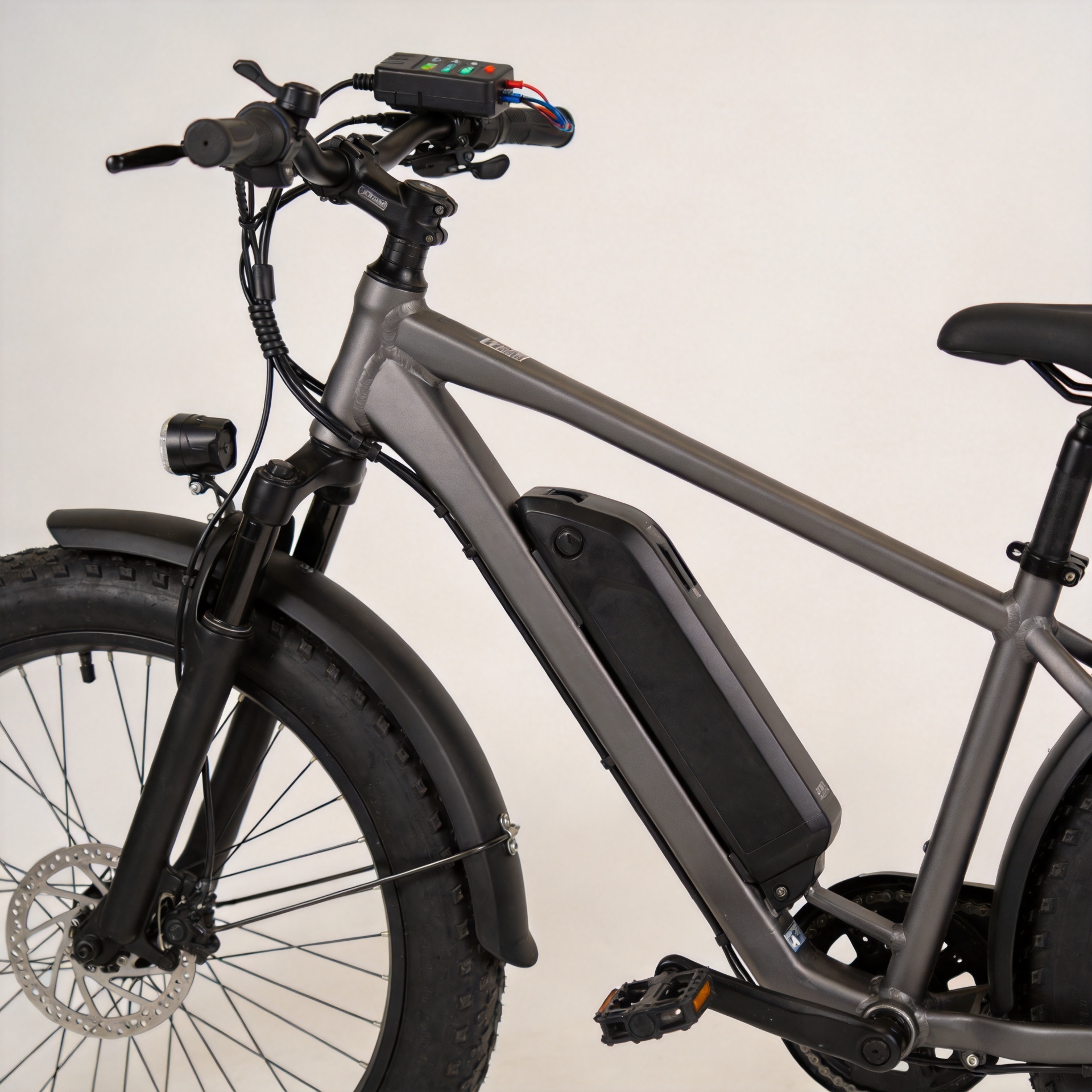
A class 2 electric bike with throttle can be a practical option when riders want pedal assistance for regular trips and on-demand power for starts, short hills, or brief breaks from pedaling. For distributors, assemblers, and aftermarket buyers, the important question is not simply whether a bike has a thumb or twist throttle. It is whether the throttle, controller, battery, motor, display, and pedal-assist system work together as one defined configuration.
In the common North American three-class framework, a Class 2 e-bike can use a throttle and motor assistance typically cuts out at 20 mph (32 km/h). Local rules can vary by country, state, municipality, trail operator, and riding location, so a classification label should be verified against the destination market before an order is finalized.
Start with the Class 2 use case—not just the throttle
Buyers often compare a class 2 electric bike with throttle against a pedal-assist-only Class 1 model or a higher-speed Class 3 model. The Class 2 format can suit stop-and-go commuting, shared fleets, recreational riding, or riders who value an easier launch. But the same throttle behavior does not guarantee the same riding feel. Controller programming, current limits, motor winding, wheel size, battery voltage, and PAS calibration all affect how smoothly power arrives.
Use the intended route to frame the comparison. Flat urban riding may favor predictable low-speed control and a compact battery. Hilly or heavier-load use may require more attention to motor heat, controller current limits, brake cutoffs, and battery discharge capability. A purchasing team should also ask whether throttle use is intended as occasional assistance, a primary low-speed control, or an accessibility-oriented feature. Those answers drive the component specification.
Compare the controller before comparing the handlebar control
The controller is the decision point behind every class 2 electric bike with throttle. It interprets the throttle signal, applies programmed speed and current limits, manages pedal assist, and regulates power sent from the battery to the motor. A throttle that fits the handlebar may still be unsuitable if the controller does not support its signal type, connector, or control logic.
| What to verify | Why it matters | Buyer question |
|---|---|---|
| Battery voltage | Controller, battery, and motor system must share the approved voltage range. | Is the complete system specified for 24V, 36V, or 48V? |
| Motor type and power range | Brushless motor operation and programmed current affect acceleration and heat. | Is the controller matched to the motor’s intended power and connector? |
| Throttle input | Connector format and signal range are not universally interchangeable. | Does the controller explicitly support this throttle and wiring harness? |
| PAS support | Cadence or torque sensing requires compatible hardware and settings. | Which PAS sensor type and assist levels are supported? |
| Speed-limit programming | A Class 2 label depends on the final configuration and market rules. | Can the requested cutoff be documented and validated on the finished bike? |
For example, New Image lists a brushless dual-mode e-bike controller kit with LCD display, throttle, and PAS for specified 24V/36V/48V and 250W–350W applications. Treat those figures as a starting point for a compatibility conversation, not as proof that the kit fits every e-bike. Confirm the full wiring, motor, battery, display, and destination-market requirements for the exact model.
Throttle type and response: check the rider interface
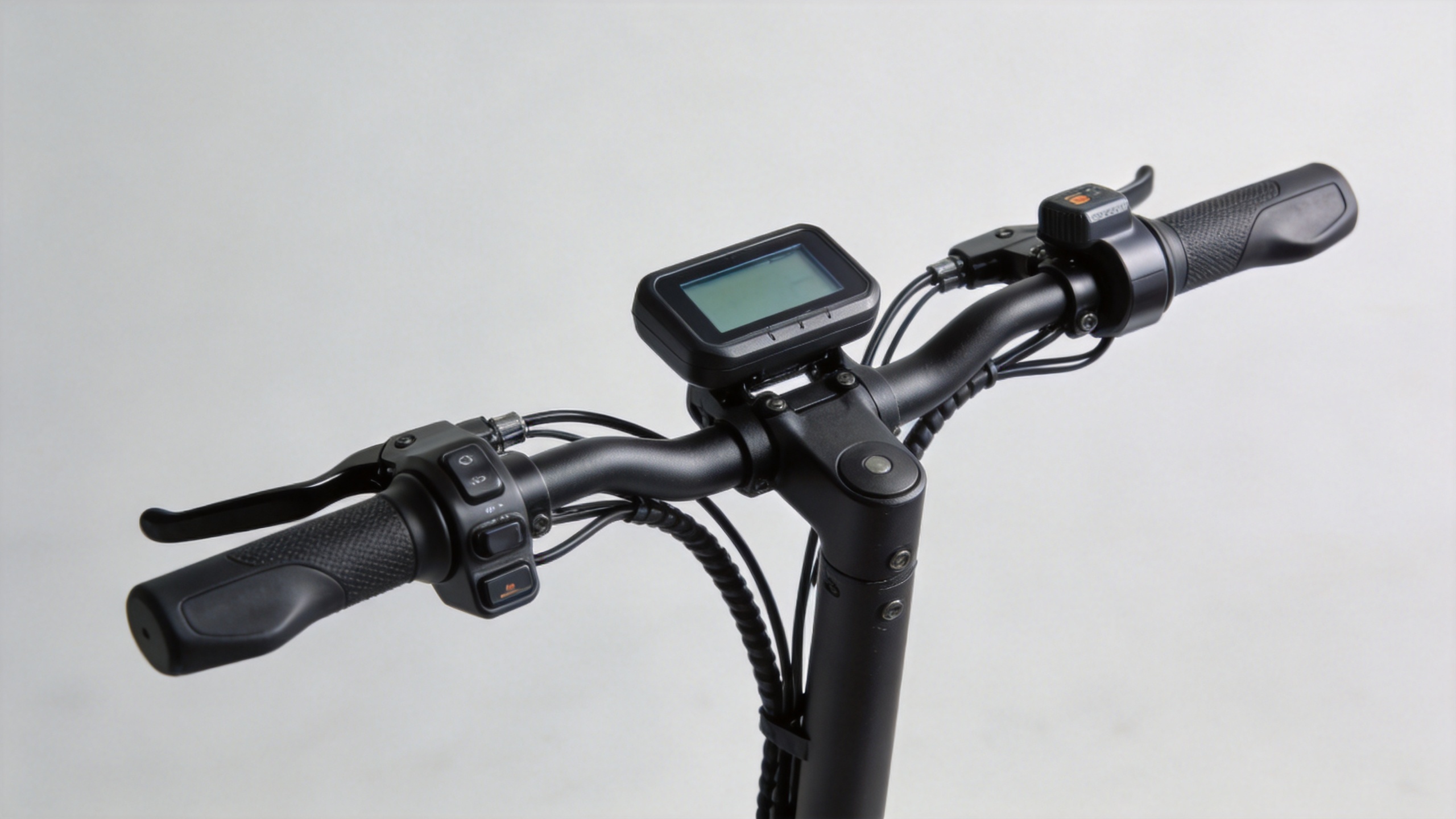
A class 2 electric bike with throttle may use a thumb throttle, half-twist throttle, full-twist throttle, or a button-style control. The form factor changes comfort and control, especially with gloves, cargo handling, or frequent starts. It also changes the practical risk of accidental input. Test the resting position, travel, return action, grip clearance, and cable routing on the actual handlebar layout.
Response calibration deserves equal attention. Buyers should ask how the bike moves from standstill, whether ramp-up is progressive, whether the throttle is active from zero speed, and how it behaves at the speed limit. A controlled, repeatable launch generally matters more than a dramatic initial surge for fleet, commuter, and entry-level use. If a display is included, confirm which settings are visible to the end user and which remain controlled at factory or service level.
Evaluate throttle and PAS as a matched system
Pedal assist and throttle should be evaluated together. PAS can be based on a cadence sensor or, on some systems, a torque-sensitive input. A basic cadence system may deliver assistance after pedal movement is detected; a torque-sensitive design may feel more proportional to rider effort. Neither approach is automatically right for every price point or market. The key is to define the expected behavior and make sure the controller configuration supports it.
- Check whether throttle input overrides, blends with, or is limited by the selected PAS level.
- Confirm that brake cutoffs cancel motor output from both PAS and throttle commands.
- Verify start-up behavior after a stop, after power cycling, and after a display error.
- Ask for a wiring diagram and connector map rather than relying on cable color alone.
- Run a sample-bike test with the final battery, motor, display, and sensor combination.
Voltage, wiring, and serviceability can decide the real cost
Compatibility failures often become service problems after shipment. A class 2 electric bike with throttle needs a controller rated for the battery’s nominal voltage and a system-level match across connectors, waterproofing, display protocol, brake levers, PAS sensor, and motor phases. Do not assume plugs that look similar share the same pinout or communications protocol.
For procurement, request a bill of materials tied to the specific build, plus connector photos, harness lengths, controller dimensions, labels, and test records. Ask what can be replaced independently: throttle, display, PAS sensor, controller, or harness. Spare-part availability and clear fault isolation can be more valuable than a small initial component saving. This is particularly important for dealers that need to support multiple wheel sizes or regional versions of one platform.
Build market compliance into the comparison
Class labels are useful shorthand, but they are not a substitute for a compliance review. A class 2 electric bike with throttle may be treated differently on public roads, cycle paths, trails, or private property. Speed limits, power limits, helmet rules, minimum ages, and throttle permissions can differ across target markets. Buyers should validate the completed vehicle classification, not only the capability of an individual controller or throttle.
Create a market checklist that names the destination, intended riding environment, required labeling, restricted features, and final programmed speed limit. Keep the approved configuration under version control. If a product is sold with different batteries, displays, or controller firmware, each variant should be checked separately. A change that seems minor at component level can change the final vehicle behavior.
A pre-purchase checklist for Class 2 builds
- Define the rider, route, load, and destination-market use case.
- Confirm the Class 2 target behavior and local requirements for the finished model.
- Match battery voltage, controller rating, motor type, and intended power range.
- Verify throttle signal, connector, mounting position, and programmed response.
- Confirm PAS sensor type, assist levels, brake cutoffs, display compatibility, and fault behavior.
- Review drawings, sample-bike test results, spare-part strategy, and configuration records before mass purchase.
A sound class 2 electric bike with throttle specification is the one that is consistent from rider interface to controller logic to final market use. By comparing the complete electrical system instead of selecting a throttle in isolation, buyers can reduce compatibility questions, simplify after-sales support, and build a clearer model-selection process.