EN
EN


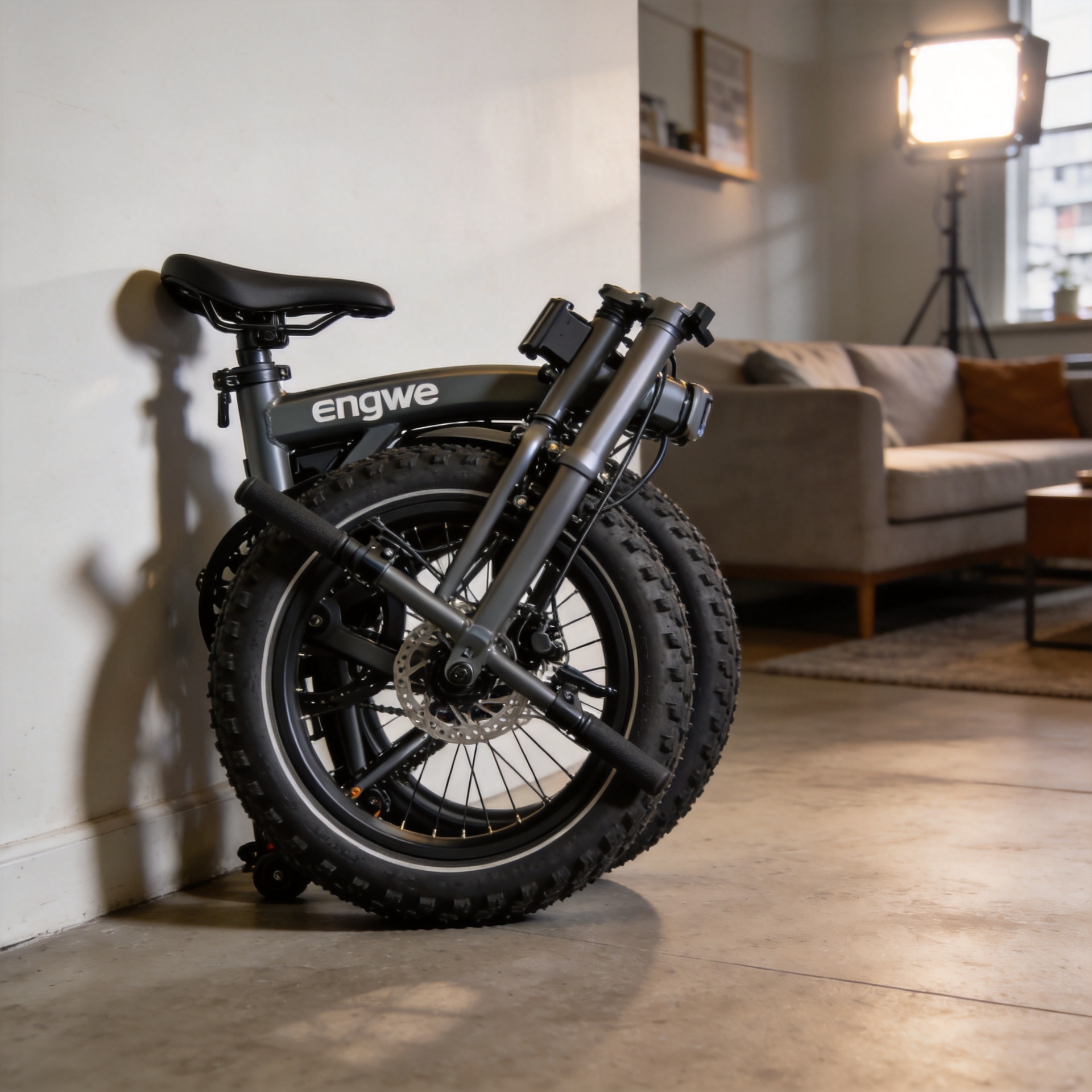
Foldable Electric Bikes Explained: How Engwe's Folding Frame Design Saves Storage Space
When evaluating a foldable electric bike, the fold mechanism is rarely just a convenience feature. It determines whether the bike genuinely fits into an apartment hallway, a train vestibule, or a car trunk. Working with Engwe e-bike components across model generations, I've found that fold design is the variable most buyers underestimate, and the one that most affects long-term usability.
Below you'll find a breakdown of the three main fold mechanisms used in current fat-tire foldable electric bike designs, a comparison of how Engwe's EP-2 Pro and Engine Pro 2.0 implement them, and straightforward answers to common buyer concerns about fold lock safety and frame fatigue.
Three Folding Mechanisms Every Foldable Electric Bike Buyer Should Know
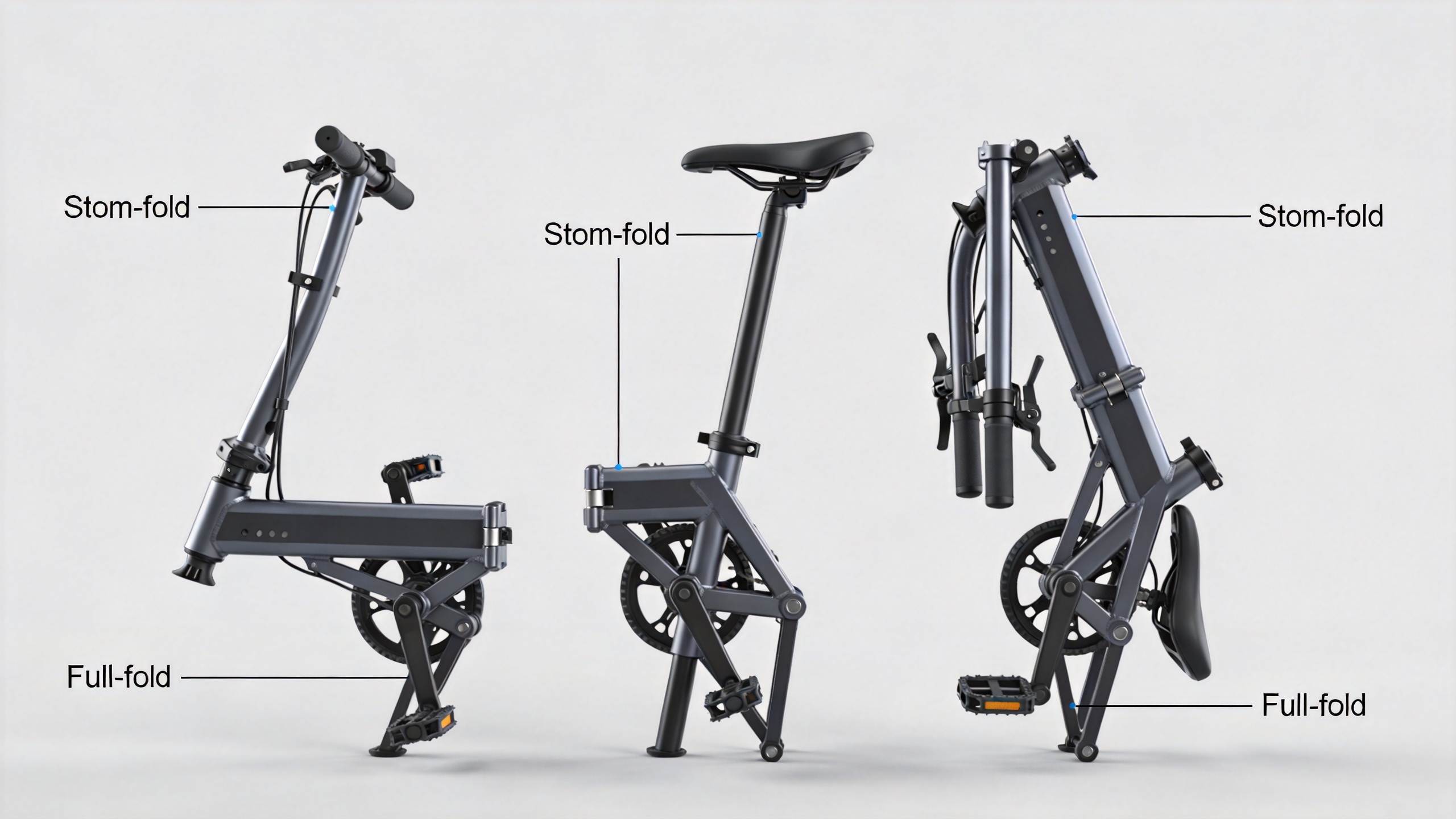
Not every collapsible electric bike folds the same way. The term "foldable" covers three distinct engineering approaches, each with different trade-offs for storage footprint, carry ergonomics, and hinge complexity.
Stem Fold (Handlebar Stem Only)
Only the handlebar column collapses, usually via a quick-release clamp. The main frame, wheels, and battery stay in their riding position. A stem fold cuts the height profile but does almost nothing for floor footprint. If your storage concern is a low ceiling in a cargo area, this type helps; if you need to reduce the floor footprint of a collapsible electric bike to under 18 inches, it generally falls short.
Mid-Fold (Central Frame Hinge)
A hinge point added to the main frame tube, typically near the bottom bracket, allows the front wheel to fold back toward the rear, cutting the bike's length roughly in half. Most fat-tire folding e-bikes use a mid-fold as their primary space-saving mechanism. The folded footprint ends up roughly equivalent to a medium suitcase, which is a genuine improvement for apartment storage and car loading.
Full-Fold (Multi-Point)
Full-fold designs combine a mid-fold on the main frame with a stem fold on the handlebar, often paired with folding pedals. Taken together, these reductions make a fold up electric bike practical for commuter rail, compact car trunks, and narrow hallway closets. The trade-off is added mechanical complexity: more hinges create more wear points and more fasteners to check during routine inspections.
Engwe EP-2 Pro vs Engine Pro 2.0: Folded Dimension Comparison
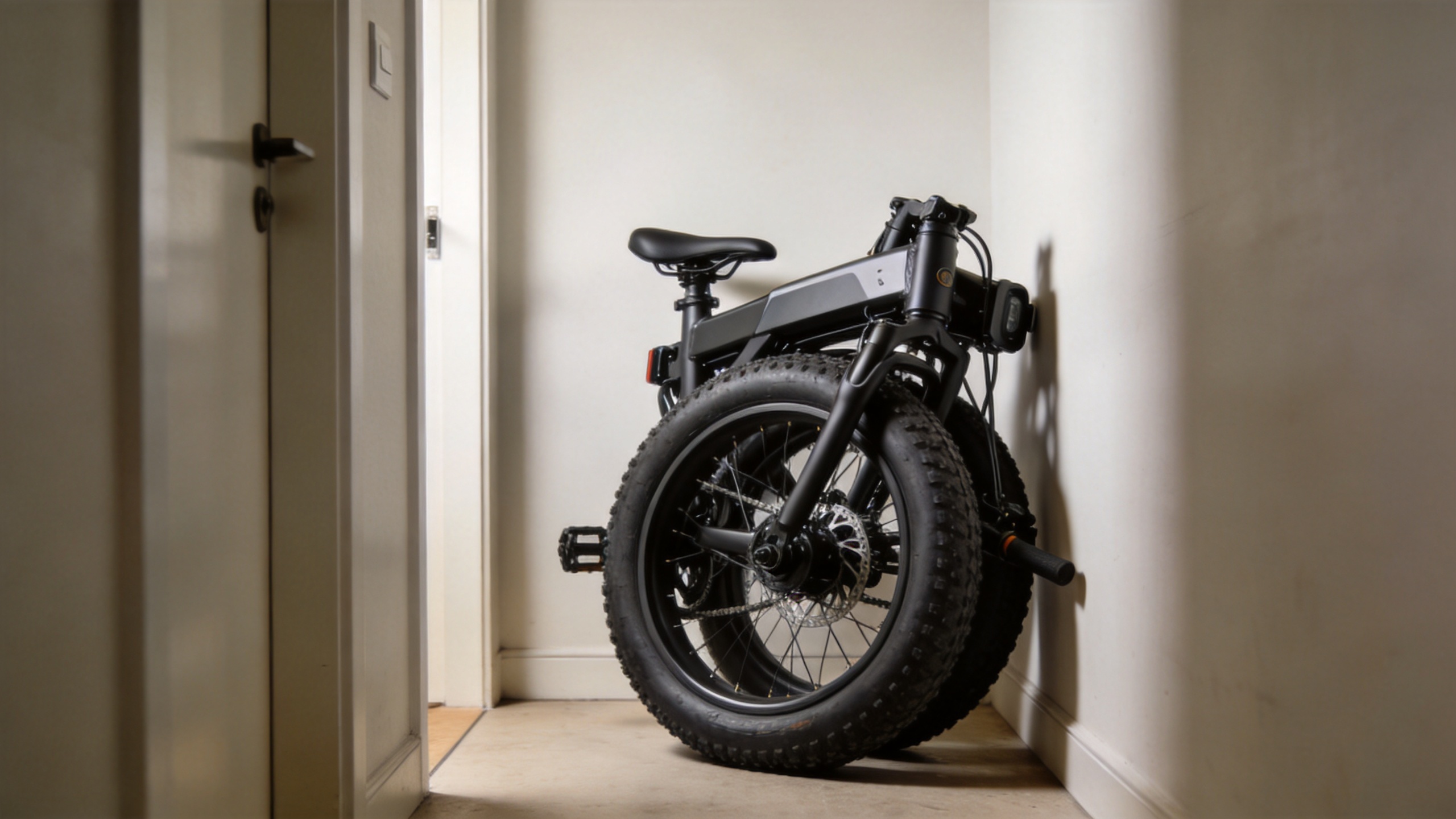
Both Engwe models are full-fold foldable electric bike designs, using a central frame hinge combined with a folding handlebar stem. Their folded sizes differ in ways that matter for storage planning.
| Model | Unfolded Length | Folded Size | Weight |
|---|---|---|---|
| Engwe EP-2 Pro | ~67 in / 167 cm | ~30 × 32 × 24 in (76 × 81 × 61 cm) | ~66 lbs / 30 kg |
| Engwe Engine Pro 2.0 | ~67 in / 170 cm | 40.9 × 21.6 × 33.0 in (104 × 55 × 84 cm) | ~69.6 lbs / 31.6 kg |
The EP-2 Pro folds shorter (about 30 inches long) but wider (32 inches). The Engine Pro 2.0 folds longer (40.9 inches) but notably narrower (21.6 inches), making it easier to slot into tight side storage like a hallway gap or behind a sofa. If width is the binding constraint, the Engine Pro 2.0's folded profile wins; if you need the shortest length, the EP-2 Pro is the better fold up electric bike for that situation.
The Engine Pro 2.0's rear dual suspension benefits from a neutral shock-compression state before the frame hinge engages cleanly, unlike the EP-2 Pro's front-only suspension setup. Good to know for riders who fold daily as part of a commuting routine. When the rear suspension needs attention, wholesale replacements for the Engwe Engine Pro 2.0 rear suspension are available for part-level repair rather than full assembly replacement.
Hinge Durability and Maintenance for a Foldable Electric Bike
Hinge wear is the most common durability concern with a collapsible electric bike, and it's worth understanding where the actual risk lies. The hinge pin rarely fails first. More often, it's the locking latch that degrades.
The locking mechanism (lever, latch, or clamp) undergoes more stress cycling than the hinge barrel does. Latch springs can weaken over time and contact surfaces develop small amounts of play. An early warning sign: a faint lateral rattle when riding over rough ground with the bike fully extended and latched. This is not structural failure — it means the latch tension needs adjustment or a contact pad needs replacing.
For maintenance: open and re-close the fold mechanism at least every two weeks, even if you rarely fold. This keeps the hinge barrel from developing surface corrosion that makes future opening stiff. Wipe the hinge area dry after wet rides. For EP-2 Pro owners working on electrical components at the same time, the Engwe EP-2 Pro 48V 18A controller replacement is available through specialist wholesale parts channels.
Carrying a Folded Foldable Electric Bike: Weight and Ergonomics
A fold up electric bike in the 66–70 lb range takes two hands to carry properly. The battery (at the down tube or rear) sits low in the folded package, pulling the center of gravity lower than most people expect when they first lift one.
Most riders settle on a two-point grip: one hand at the frame near the fold hinge (where weight concentrates), the other steadying the handlebar stem. This keeps the package close to the body and reduces swing on stairways. For turnstiles and narrow doorways, holding the bike vertically with wheels down keeps the width footprint minimal. Neither Engwe model ships with a factory carry handle, but aftermarket straps for fat-tire folding e-bikes attach near the frame's balance point and make frequent folding easier.
Airline and Transit Rules for Foldable Electric Bikes
For air travel, the frame can typically be checked as oversized luggage, but the battery creates complications. Most airlines ban lithium-ion batteries above 160 Wh in checked luggage. Both Engwe models exceed this limit by a wide margin — a 48V × 13Ah pack is approximately 624 Wh, and the Engine Pro 2.0's 52V × 16Ah version reaches approximately 832 Wh. Traveling with the complete foldable electric bike under standard baggage rules is not permitted on most carriers.
If air transport is genuinely necessary, the practical workaround is checking the frame as oversized freight and shipping the battery by ground, or sourcing one locally at the destination. Rules vary by airline and route, so confirming with the carrier before booking is always the right move. For public transit, most European and North American commuter rail and metro systems accept folded bikes off-peak, with full folding required before boarding. The Engine Pro 2.0's 21.6-inch folded width clears most metro door frames when held vertically; the EP-2 Pro at 32 inches wide needs more careful maneuvering.
FAQ: Fold Lock Safety and Frame Fatigue
Is the fold lock safe at riding speed?
Yes, when fully engaged. The concern is not the lock's rated strength but whether it was completely closed before riding. A partially engaged latch can release under road vibration or cornering loads. Before every ride, check for zero lateral movement at the fold point and confirm the latch lever is fully closed. If you notice lateral play mid-ride, stop and re-latch before continuing.
Does repeated folding fatigue the frame?
The timeframe is longer than most buyers assume. Aluminum alloy folding frames are typically rated for tens of thousands of fold cycles at rated load. One fold per day puts years of normal use before fatigue becomes a real concern. The factor that shortens this timeline is corrosion combined with load cycling. A damp collapsible electric bike stored without drying after salt-water exposure will show hinge wear far sooner than one maintained dry. Regular fold exercises and post-ride wipe-downs are the simplest preventive steps.
Can I fold with the battery installed?
Yes, both Engwe models fold with the battery in place. Removing it shifts weight distribution slightly toward the front of the folded package and reduces carry weight. Most daily riders leave the battery installed, which is the practical default. The one scenario where removal makes sense is when the folded package needs to hit specific check-in weight limits — pulling the battery saves approximately 6–9 lbs.